Saturday, May 13, 2006

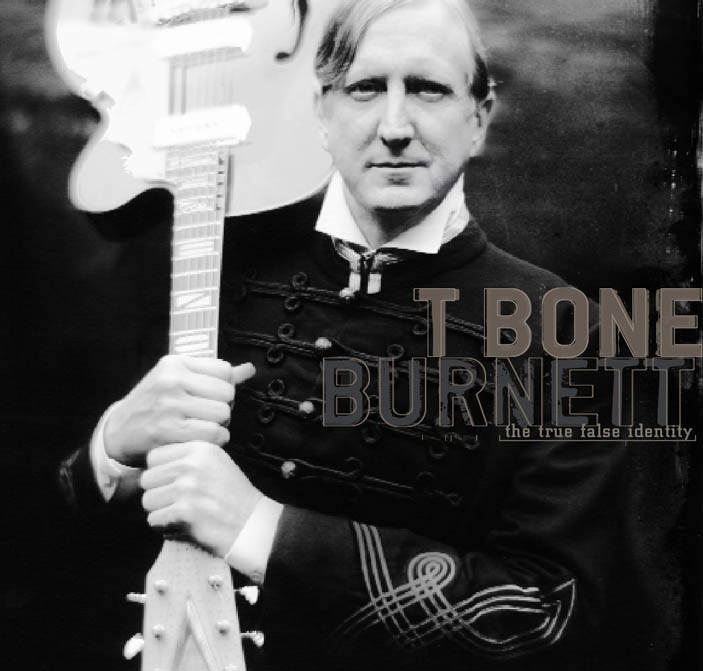
T Bone Burnett: The True False Identity


Written by Fantasma el Rey

T Bone Burnett is a name that you may not recognize, even though I’m sure we’ve all heard something he has had a hand in creating. In the fourteen years since his last album, Burnett has been busy working on movie soundtracks and producing other artist’s albums. He has taken part in films such as Walk The Line, The Big Lebowski and has won a Grammy for his production of the O Brother, Where Art Thou? soundtrack. Not only involved with major motion pictures, Burnett has collaborated on projects with some major musicians including the Wallflowers, Elvis Costello, Roy Orbison and Tony Bennett. He has also teamed with the Coen brothers to form their own indie record label DMZ Records, which has so far released mostly soundtracks. Now T Bone has turned once again to his own music with a 40-track retrospective 20/20: The Essential T Bone Burnett and his new solo record The True False Identity.

T Bone's latest album has a dark, moody feel to it, which is a sound I’m drawn to like a moth to a flame. After a sample listen of “Zombieland,” sent to me by El Bicho, I was hooked and had to hear the rest of the CD.

The twelve tracks on The True False Identity are divided into two parts, six each, kind of like some bands would do in the old days with their vinyl L.P.s. The first six fall under the title “Art Of The State”, the next six “Poems Of The Evening.” The mood from the first to the second half doesn’t change much at all and the lyrics still ring with social and political sting; Burnett’s lyrics are filled with creative wordplay, so you have to listen and bring your own interpretations to the table.

“Zombieland” gets this disk off to a good start. With its heavy upright bass and slow drum thump, T Bone’s guitar slips in and out though the background rhythm, which is soaked in a New Orleans/Haitian voodoo vibe, complete with maracas and other shake and rattle instruments. As a matter of fact, the whole album has that mysterious vibe throughout.

“Palestine, Texas” is what sets this disk on fire for me. The drums kick out a steady rumble-drum-march sort of beat, which makes you want to stomp your feet, while the guitar soars and gets your head to thump in time with your foot. More steady bass work and this wonderful swirling sound that’ll make your head spin as you turn up the volume. Burnett’s rap-like vocal delivery of his Rat Pack inspired lyrics puts the icing on the cake and makes this track the one to watch. With the heavy beat Burnett shows that older folks can still crank out some very solid catchy tunes, without being pretentious or sound forced. “Seven Times Hotter Than Fire” keeps the momentum going, with its loud, straightforward rocking sound. This track brings to mind the primal/noisy sound of The White Stripes, making tracks two and three the power punch on this disk.

“There Would Be Hell To Pay” and “Every Time I Feel The Shift” slow the pace a little while highlighting Burnett’s songwriting abilities. In “Hell To Pay” we learn the fates of Curtis and Delia, another dark number that goes right to the heart. Whereas “Every Time I Feel The Shift,” focuses on the political issue of church and state, or rather faith and state and how the masses seem to forget what has gone before them in just a few years.

“I’m Going On A Long Journey Never To Return” has the most infectious and peppy feel to it, while its lyrical content remains on the darker side of relationships. T Bone’s straightforward, easygoing vocals are excellently showcased here. On the chorus, I’m reminded a little of Rodney Crowell.

The second half of the disc opens with “A Poem Of The Evening: Hollywood Mecca Of The Movies.” The guitar and bass slow down the tempo, allowing him to just speak the lyrics, while losing none of the intensity; T Bone’s piercing lyrics about the industry are delivered with a force that is intensified by the heavy slow drum thump behind him. On “Fear Country” Burnett’s vocals continue to cruise slow and low. The way the instruments come together in the middle of the song add to Burnett’s lyrics, giving off this odd sense of a city or nation on fire, the drums, both brushed and heavily struck, light guitar and bass swirl all around you, creating an air of doom.

“Baby Don’t You Say You Love Me” picks up the pace and gets you jumping once again. The bass gets drawn out and has that stretched rubber band sound, while the drums slow-to-mid tempo thump drives the tune forward, blending together well with the distorted guitar sounds.

“Blinded By The Darkness” brings up the faith/state/crime issue once more and asks who should judge between the laws of God and the laws of man. “Shaken, Rattled And Rolled” closes the album on a slow, somber note about “it all slipping away from me” and being “lost and detached,” yet it is fitting end to this dark and moody disk.

On this CD you can hear T Bone Burnett’s influences, such as the Howlin’ Wolf and Bo Diddley. Some of the songs sound as if they could have been recorded by Alan Lomax sixty-odd years ago in the deep South by old sharecroppers. At the same time the sounds are very modern and if you listen you can hear slight nods to some of most creative bands of their day from Portishead to Love and Rockets. Throw all these sounds into a Haitian Juju bag and shake it around, mix in some Dark Side Of The Moon wit and there you have the long-awaited new album by T Bone Burnett, The True False Identity. T Bone Burnett has put together a sound that is unique and enjoyable, adding three drummers on most of the tracks to the usual bass/guitar sound works masterfully. I for one am glad to have him back and I hope he continues to explore and push boundaries, turning out new records at a quicker pace.

Wednesday, May 10, 2006

DESPERATELY SEEKING SEKA


Written by Fumo Verde

Back in the late '70s and early '80s the adult film industry was in it's golden age-- although it wasn't realized yet, and through that sexual revolution, certain stars rose to the top. One of these great goddesses of the silver screen was a woman named Seka, star of films like Blonde Fire and A Taste of Seka. This was a time when a porno actually had a plot and the people who made these films truly believed they were making a real movie-- just with some fucking. This was also the time before the big video boom, when porn movies held premieres, and the stars and directors walked down red carpets. During this time, Seka ruled supreme. She had worshipers by the millions, and just her name alone brought out fantasies in men of all ages. This is a documentary, but it's more of one man's adventure to find the woman, a woman named Seka.

Stefan Nylen is a journalist from Sweden, who as a young adult discovered the porn industry and its number one star at the time Seka. In this movie, he seeks her out to ask her questions about her career, her life, and why she stopped doing porn. The movie starts out with a thirty-second montage of porn clips featuring Seka. We are then whisked away to a porn convention in Las Vegas. Here Nylen interviews a few adult stars that worked with Seka, including a talk with Nina Hartley and Randy West. Neither of them gives real clues into who Seka was or why she stopped doing porn. From there he goes to L.A.-- mainly “the Valley". The San Bernardino Valley is where the porn industry settled and still lives today. Here he finds directors such as Al Goldstein and Bob Burns, who made some films starring the blond bombshell. These men give a little more insight to who Seka was, but not to why she stopped being a porn star.

Most of the interviews that Nylen gets shed little light on Seka, with the exception of Jane Hamilton, who worked with Seka on a few occasions and who gave her the best advice in her life, "if you don't want to do something or you feel uncomfortable, then don't do it…these guys are just happy to have you here." Hamilton is now a producer and director and since her beginning with porn in 1977, has made a great living from the industry. Her very first scene, a girl on girl, was with, of course, Seka.

From L.A., Nylen flies to Chicago, where Seka now lives with her husband and cats. Here is where he finally gets to meet his boyhood fantasy. Seka, whose real name is Dorothea Patton gives a great interview about how she started, what was happening at the time, and why she did finally stop making porn. She first stopped in 1985 after Careful He May Be Watching, but then made a comeback performance in 1993 in American Garter. She also discusses what it's like being a normal housewife.

This movie isn't about trying to find Seka as it a window into the porn industry of the '70s and '80s, and it sheds some light on what is happening now. The interview with Goldstein and Burns explained what it was like making films back then, as Scott Taylor, a current producer and director, explains what it's like now. Seka explains her life to Nylen with the same charismatic sense of humor that made her a star, and her reasons for quitting when she did are as simple as the reasons for her starting.

The extras on the disc are pretty cool, some extra interviews with Seka about what it was like working with John Holmes, and Ron Jeremy. And, for you total horndogs, yes there are some sex clips that pop out through out the movie. There are also little blurbs that pop up here and there and explain certain things to you as you go along. Unfortunately, they aren't easily read, and if you focus on them, you may miss out on what the person being interviewed is saying. I got tired of pausing it all the time just to read the blurb, but they did have insightful information that gives one the idea of how big the porn industry is in the U.S. and around the world.

Desperately Seeking Seka
is a fun little documentary for those of us who remember the golden age of porn and all it's freakiness, and the golden goddess with the one word name that could make anyone horny. Thank you Seka, for everything.

This is Fumo…stay horny, babies.

Tuesday, May 09, 2006

KAL


Written by Fumo Verde


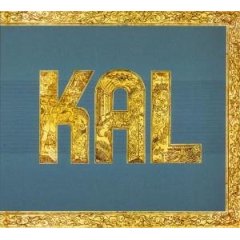
Here comes a sound that you probably haven't ever heard. They are called KAL and were formed by the brothers Ristic, Dushan, and Dragan. They are Romani Gypsies from Belgrade, Serbia who have blended their traditional Balkan Gypsy sounds with the more contemporary music of what they listened to in the clubs of Belgrade and Budapest. With energy to spare, KAL has an exotic sound all their own, and this self-titled CD packs 12 incredible tracks that bring you into the traveling troop of Gypsy life before turning around and booming you out into the stratosphere with hard beats that keep the party going.

The Ristics wanted to keep their traditional music alive, yet they were also influenced by the techno and house music that was thumping out of the discos in Eastern Europe. While growing up in central Serbia and feeling the repression that all Gypsies feel, they formed a band to bring to light the harshness and discrimination the Romani Gypsies felt after Yugoslavia was broken up when Tito fell. I don't speak Slavic or Gypsy let alone Romani Gypsy, so I can't understand what they are saying, but their groove is unstoppable.

"Duj Duj" is the first track, and it starts out with a single guitar and a double bass, that brings to mind images of Ali Baba and the forty thieves. Its percussion beats are hypnotic and the blending of the clarinet and the accordion create an aura of mysticism. The whole CD has that mystic root to it, the root of the Gypsies, the root of surviving. It’s followed by "Dvojka", which sounds like Gypsy-ska combined with whatever Dragan is singing. He creates a "Squirrel Nut Zipper" sound with a Gypsy scat halfway through the song.

"Boro Boro" is another hypnotic track that gives you the feel of the old caravan, as the sole voice sings out the cries of what could be anything. I figured it might have to do something with a lost burro, but like I said, they could be saying, "Kill you American pigdogs" and I honestly wouldn't know. The sound is sweet and the music has a trance-like rhythm, as does the whole album.

There are also a few “love songs,” I guess you could call them, or should I say "romantic" songs. "Djelem, Djelem" is one that seems to have a bit of a ‘70s soft-rock underbelly with Dragana Berakovic’s voice slowly caressing the words as she evokes the warm summer days on the Mediterranean coast. With the accordion joining in, all I can picture is stone white houses set upon rocky hills facing a blue sea.

KAL hired Mike Nielsen to produce, arrange, mix and find new beats for this album of 21st century Gypsy soul. Nielsen’s experience involves everything from mixing Dizzy Gillespie's live sound to working with Maori and other Turkish music as well as producing bands like Underworld, Jamiroquai and Natasha Atlas (She is another great sound coming out of that area of the world).

When all is said and done, KAL has a great sound that transcends through the generations and brings about the new soul of Gypsy music while holding onto the old traditions. The blended sounds mirror the spirit of the Gypsy. The fire has been rekindled and the young Gypsies have grown up, bringing a new perspective to the old stories, so join KAL and travel where ever the road takes you with a new band of Gypsies.

Hang loose, babies..........FV.

Monday, May 08, 2006

Red Hot + Blue: A Tribute To Cole Porter


Written by Ladron de Tebeos

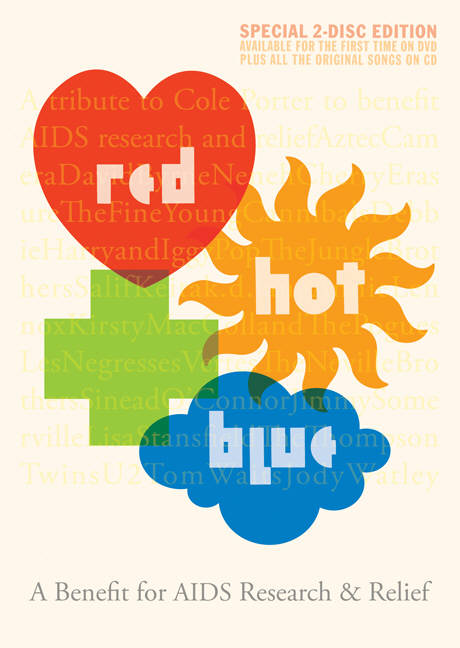
Greeting, all you fine and wonderful folks who’ve decided to stop looking at porn for five minutes and tune in to my little review. Today’s topic of conversation is a 2-disc special edition of Red Hot + Blue, which if you remember, was originally issued in 1990 as a Tribute To Cole Porter that created massive media attention for AIDS relief and became the first release in a 15-album series. It featured such world-class artists as U2, Annie Lennox, Tom Waits, and Sinead O’Connor, and such acclaimed directors as Wim Wenders, Alex Cox, and Jonathan Demme, and is now finally being released with the care that it deserves. An eclectic musical homage to the legendary songwriter Cole Porter, it went platinum, spent 24 weeks on the Billboard charts, and generated $3 million dollars for AIDS charities worldwide, but its companion piece, a VHS collection of music videos, (you remember VHS, don’t ya?) was somewhat relegated to the background. That changes with the 2-disc Special Edition package of Red Hot + Blue, which contains all the music videos on a DVD and the remastered album on a CD together.

The assemblage is in the form of a television special that promotes AIDS education and support, which is rather appropriate being that this is the reason the Red Hot project was kicked off in the first place (and all of the proceeds of the DVD still go to that cause). The program does get a bit preachy, along the line though, with lectures from such personages as Richard Gere and John Malkovich, who looked as uncomfortable as your father, persistently advising use of a condom. I had to fast forward through him (sorry, John).

Several of the videos (most notably the rap versions of songs, such as Neneh Cherry's “I've Got U Under My Skin”) bring the message into the lyrics of the songs themselves. One of the videos, directed by John Pellington is The Jungle Brothers' rendition of “I Get a Kick Out of You” that cleverly incorporates latex into many of its visuals, underlining the theme without being overtly obvious.

The AIDS theme is carried on in several other videos, such as the most political contribution, Erasure's “Too Darn Hot”, incorporating then-current protest movements such as ACT-UP, (No, I don’t remember them,) while running AIDS factoids across the bottom of the screen. Several of these caught me by surprise, such as the facts that the U.S. and South Africa are the only two industrialized countries to deny healthcare to people without money and that the U.S. spends more money on defense in one hour than we spend on health care in one year. I haven’t looked these up myself, so don’t write me any pissy e-mails if either of those turn out to be wrong. One of the more touching videos is k.d. lang's “So in Love”, directed by Percy Adlon, which takes a look at the everyday struggles of dealing with the disease in a loved one through the simple expression of lang doing her laundry.

Although most of the videos dodge expressions of male homosexuality, Jimmy Somerville’s “From This Moment On” directed by Steve McLean, embraces it wholeheartedly; there’s men rolling around and groping all over the place, so I had to fast forward through this too (sorry, Jimmy), but at least this is certainly a highlight of honesty in the program.

Several notable directors are along for the ride: Jim Jarmusch gives “It's All Right with Me” by Tom Waits a strange hyper activity despite using slow motion, heightening the already disturbing vibe of Waits' rendition. It’s like watching Tom run around drunk for four minutes, highly entertaining. Neil Jordan presents Kirsty MacColl and The Pogues as a nightclub show for “Miss Otis Regrets/Just One of Those Things”.

On the whole, however, the videos are somewhat lacking in originality or in adding extra dimension to the music. Wenders directs U2’s version of “Night and Day” and both the song and the video do absolutely nothing interesting, it’s like both the director and the band decided to phone it in. The rest of the videos all too often are rather literal or bland, though the presentation of Sinead O'Connor as an ersatz Veronica Lake on “You Do Something to Me” is undeniably inspired (and may I say, she looks pretty hot with hair).

That said, however, the music still holds up very well, with only a few slow moments: the dull and synthy “Do I Love You?” by Aztec Camera being the biggest pain to sit through. (fast-forwarded through that too; sorry, Aztec) Most of the songs have an undeniable energy, with some great favorites being Salif Keita's tribalized version of “Begin the Beguine”, the unlikely duo of Iggy Pop and Debbie Harry showing these young kids how it's done by rocking out to an energetic version of “Well, Did You Evah?” Plus, there's no going wrong with Porter's “In The Still of The Night”, and The Neville Brothers do a nice, if rather uninspired, rendition of it. The finale is the touching rendition of “Ev'ry Time We Say Goodbye” by Annie Lennox, seen tearfully watching old home movies. It's quite emotional, doubling the effect of the music to give a palpable sense of loss that drives the entire project. Even with the shortcomings of some of the videos, still a very worthwhile disc with messages that still need to be spread.

Saturday, May 06, 2006

Gumball 3000: 6 Days in May


Written by Fumo Verde

The Gumball 3000 is a six-day race that hits three countries, France, Spain, and Morocco, over two continents, Europe and Africa 'case you couldn't figure that one out, and takes place over 3000 miles. It features 192 super-expensive, tricked-out cars and has loads of characters who drive them.

Director Ruben Fleischer was one of eight cameramen that covered the event along with help from some mounted cams that were put in a few of the cars. This isn't a movie like Cannonball Run; it's a documentary that covers the race in May 2004. Everything you see here is real. There are no stunt drivers or stunt cars. This shit is the real deal.

At first, when El Bicho asked me to do this, I thought it would be pretty mundane, but right from the intro, I could tell this documentary would be like no other. The cast of lunatics participating in this race range includes European playboys, Saudi Princes, super models such as Jodie Kidd, actors like Adrian Brody, and even regular working-class stiffs like plumbers Ben James and Tim Masterson. Ben and Tim, unlike almost everybody else, scrapped all the money they had just to get here, and for them like the rest, this race was going to be a real adventure.

The show starts somewhere in the race, where, on a busy, two-lane road, that's one lane going one way and the other lane going the other, a Porsche is weaving in and out of traffic, passing on both the left and right shoulder lanes. A rally driver shouts, "This guy is fucking crazy!" as the cameraman in the back tries to follow the Porsche as it darts away. Then the intro starts. Here you get introduced to some of the competitors, mainly the ones the camera guys ride with.

During registration is when Fleischer tries to figure out who he wants to ride with during this race. Instantly, you come across a host of wily characters who, if for only but a brief moment, make you laugh. Kim Schmitz, a huge man in height and girth, is the "evil German genius". He is really full of himself and has a diabolical sense of humor. Big Black, an actor and professional bodyguard rides with pro skater Rob Dyrdek; the adventure these guys have is comedy in itself.

The race starts off in Paris at noon, with a short stop at the first checkpoint at a place called Mas Du Clos, a private racetrack in Southern France. This is only a temporary stop, as the competitors find out that they have to still drive another seven hours to get to Madrid, Spain, the second check point to end the first leg of the tour. At this point, the drivers have been on the road for 25 hours.

In the Spanish port of Marbella a ferry picks up the drivers and their vehicles. This, I found out while watching the directors cut, was a private ferry for the racers only. This boat takes them to Africa and to the country of Morocco. Here, with the King of Morocco's blessings, the drivers go ape shit, hitting speeds of 210 miles an hour with nothing but kids on bikes and wild donkeys to pass by. The next checkpoint is in Casablanca, at Rick's Cafe. From there it's on to Marrakech, then the town of Fez, where the ferry takes the racers back to Spain.

Back in Spain, it's a race to Barcelona, but now the Spanish police are gunning for the Gumballers, arresting anyone with numbers and DC stickers on their cars. The drive through Spain is full of surprises pulled by both the cops to catch the Gumballers and by the Gumballers to sneak away. The final leg of the race takes the drivers from Spain back to France, where the race ends in the seaside city of Cannes just in time for the Film Festival.

This isn't some wacky race with bar fights and boobs poppin' out of bras, not that there is anything wrong with that. Instead, it's a hard-core endurance test that pushes the envelope, not only for the cars, but for the drivers as well. It has its laughs because Fleischer choose good characters to follow, but it has its dragging points too. There were some really interesting people that I wish we could have seen more of, and there were drivers who I wish Ruben hadn't wasted time on. Mostly it's a super-charged flick that will leave you wanting to get out of your house and either head out on a long road trip or do donuts in the parking lot of your local grocery store.

I said that this was the real deal, right? How can you be certain, Fumo? Well, in Morocco, on the way back to the city of Fez, a passenger in one of the other cars caught on tape how dangerous this race can be. The camera is shooting from a car doing 120 mph, which you can see on their GPS system. At the same time, two guys in a red Viper are maybe 45 to 50 seconds a head of the car with the camera. Within a heartbeat, the Viper, probably doing 150 to 160 mph, hits a bump and goes flying off the road in a 90-degree turn from the direction it was heading in, only to be demolished as it tumbled for about 350 yards, just missing some kids with their donkey and cart. The driver, by the grace of the Gods, only suffered some minor injuries, while his passenger walked away clean. Amazing considering that they were in a convertible.

Through the sheer determination of these folks, one could see why people come back to race in the Gumball every year. It's an event that brings its competitors to the edge of their own envelopes and Ruben Fleischer catches this moment in one hell of a style.

The extras include a director's commentary, which is kind of boring, and that's because Ruben didn't really want to speak, and an interview with Maximillion Cooper, the man who brought created and hosts the race.

Gumball 3000: 6 Days in May rates as a good documentary that not only informs you about this race, but gives you a good laugh, brings about excitement and puts you on the edge of your seat at times wondering what will happen around the next turn.

This is Fumo Verde--the Fast and the Furious don't have shit on the Gumballers.

Thursday, May 04, 2006

Joey DeFrancesco: Organic Vibes


Written by Fantasma el Rey

It’s Tuesday 8:00 A.M., I hop into my car and pop in this jazz disc I’ve been slated to review; I read the cover, Joey DeFrancesco Organic Vibes. At first I’m thinking gourd shakers and hollowed-out tree stumps for drums, but as “The Tackle” kicks up, I hear what the title means. The track takes off quick with a vibraphone (vibes) intro by Bobby Hutcherson while the rest of the band are hot on his heels; George Coleman and Ron Blake blast in with saxophones, crashing in next to them on the drums is Byron Landham, and rounding out the band are Jake Langley guitar and Mr. DeFrancesco himself on the Hammond B-3 organ. “Little B’s Poem”, with a sweet-sounding flute opening, keeps the momentum going; by the end of the track I’m grooving and finger poppin’ (that means I like it).

“I Thought About You” slows down quite a bit, but that’s all right because I’ll drive slower. I dig the groove; this jam is perfect for the remaining short cruise down the boulevard. As I pull into the parking stall, I realize that I’ve only heard a third of this album on a twenty-five minute drive. Then, in my mind’s eye, pops up that picture of my pal Fumo from The Masked Movie Snobs masthead saying, “Wha’d ya expect? It’s jazz, baby”. In fact, it’s good jazz and like all good jazz it can not be rushed. These aren’t three-minute pop songs manufactured to get the teenies up and shaking that “thang”; these are works of love and art, a true craft. Anyway, I’ll have to continue on the drive home or later, which is cool because that last tune has put me in a mellow mood, and I can start the workday feeling like some jazz-bo “hepster”.

Well so much for a mellow workday. It’s Wednesday and the drive home is where I pick back up, not that I’ve been at work for the whole time but...on with the review.

“Somewhere in the Night” and “Down the Hatch” continue in the same mellow vain; both solid tunes but track six sticks out more for me. “Speak Low” starts with a slow sax intro. It rapidly changes tempo and begins to jump but then slows right back down, only to pick up again; repeating this pattern for the remainder of the track, which has the band on fire. I swear that’s smoke coming from the CD player, but I drive on riding this jazz roller coaster down Pacific Coast Highway, the royal road. As the track flies along, I fly right with it past the light I was supposed to turn on. Oh well, more time for jazz. With horns blaring and drums thumping, this is definitely the stand-out cut on this album and my favorite track; a true tribute to masters of the past like Lionel Hampton or my Pop’s favorite, The Jazz Crusaders.

“JeNeane’s Dream” and “My Foolish Heart” are two slow songs with a light, easy feeling and the band is back in a mellow mood; which is fine with me, because it snaps me out of that driving mad frenzy, allowing me to get me home safely, always a plus. “Colleen” is the mid-tempo tune that closes out this CD and has the band taking their turns at solos, giving us one last listen at their talents and at how good they truly are.

Joey DeFrancesco has put together a tight, solid band, and turned out a great album; it shows in the way they play, feeding off one another and following the music where it takes them; again, the way jazz should be. This is one disk I know I’ll be playing for a while; maybe I should take it out of the car though. Who am I kidding? It’ll be on constantly for at least another week, and I’ll be spinning “Speak Low” over and over again. So clear the decks! Here comes Fantasma el jazz-bo!

Wednesday, April 26, 2006

The Black Crowes: Freak ‘N’ Roll Into The Fog


Written by Fantasma el Rey

“Wow! The Black Crowes live! This will give me a chance to see what I missed about four years ago”, is what I thought to myself as I was handed this disk. That’s right. I gave up my seat to a Black Crowes/Oasis concert much to the dismay of my sister and brother-in-law, Rob; it’s a long story, I won’t go into it here. Since that day, every time a Crowes tune comes up I hear about it, especially from said sister and brother-in-law.

It was through Rob that I got my first introduction to The Black Crowes. It all started with him lending a teenaged Fantasma The Crowes' second album The Southern Harmony and Musical Companion, which included such rockers as “Sting Me” and “Remedy”. From there I was hooked, making one more band he got me into and I do owe him a lot. He ranks right next to El Bicho himself, as far as getting me into new music and sounds, but that’s a tale for another time.

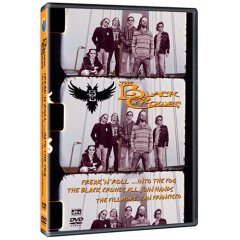
Freak ‘N’ Roll, filmed in late 2005 at San Francisco’s historic Fillmore auditorium, finds the band, Mark Ford and Rich Robinson (guitars), brother Chris Robinson (vocals), Steve Gorman (drums), Eddie Hawrysch (keyboards) and Sven Pipien (bass) in top form. The guitars are awesome and Chris’ vocals have lost nothing since the band first album, Shake Your Money Maker. All but four songs on this DVD are from the band's first four albums, which most fans consider to be their best body of work. The concert moves well from beginning to end and is dotted with footage of the band wandering thought different parts of the city including Chinatown and some backwoods areas; this footage is used mostly while the band jams and works well that way. As a bonus, there is some extra footage of the band in rehearsals and warming up before the show, which includes scenes of Chris’ wife, Kate Hudson, applying make-up to him and a few others and provides a good look at the playful side of The Crowes.

The disk kicks off rocking with “(Only) Halfway To Everywhere” and moves through soulful performances of “No Speak No Slave” and “Welcome To The Good Times”. For the stomping “Jealous Again” the horn section exits, bringing the band to its rock ‘n’ roll core. After “My Morning Song”, the rest of the band takes a break, leaving the stage to the two guitarists and the wonderful bluegrass number “Sunday Night Buttermilk Waltz”. From there we’re set up for the acoustic versions of “Cursed Diamond” and fan favorite “She Talks To Angels”, after which the core of the band returns for a few more mellow rockers.

The return of the horn section brings The Crowes back to solid rocking, by way of their first hit, the Otis Redding classic “Hard To Handle”. The band keeps the mood jumping and hopping with blues master Willie Dixon’s “Mellow Down Easy” and their own romp “Remedy”. To close out the show, a very entertaining two hours and fifteen minutes later, the Crowes simmer down a little for Robbie Robertson’s “The Night They Drove ol’ Dixie Down” and do a great job at it.

Throughout the entire show Chris’ enthusiastic dancing and interaction with the crowd give off a wonderful hippie/Mick Jagger vibe. The whole band displays a hippie/southern rocker attitude a la Canned Heat, making them the perfect band for the Fillmore stage, which by the way, is wonderfully illuminated by electric candles. The band, including horn section and back-up singers are definitely having a rocking good time playing their brand of straight forward rock ‘n’ roll and it shows in the jams they indulge in, which I ‘m sure my pal Fumo would appreciate. Freak ‘N’ Roll is certainly not “hard to handle” as it captures one of the better bands of the day at their best; this DVD is surely one I’ll enjoy time and time again. So boogie on out, grab this disk and let the “bon ton roulet” into the fog.

Tuesday, April 25, 2006

Chris Berry & Panjea: Dancermakers


Written by Fumo Verde

“Chris Berry's story sounds like a Hollywood script...because it is hard to believe that a white boy from California moved to Africa, became a ‘spirit caller’ and went on to sell over a million records in Southern Africa”- Steve Leggett, All Music Guide.

I can believe that because Berry has a native African sound to it. From “Love on the Mountain” to “Dancermakers”, the title track, his spirit calling comes in pretty handy. He has a lot to say, and it's pretty politically charged. His message is of justice and peace, but then whose isn't? His music is sincere, and New York Press is correct about him having a “reedy” voice like Sting, but something just seems to be missing.

I listened to this album three times, yet I really couldn't find a song that grabbed me. I like what he has to say on some songs such as “...a captive on her ship...on a one-way trip, bound for the sea of ecstasy” from “Every Day”. Others I can understand, like “Why Do We”, a song questioning the death penalty and the whole “eye for an eye” story. I don't agree with him, but I see where he is coming from. “Axe Forgets” is actually the one song I did like more than the rest, but it had to do with the lyrics not so much the melody. “ Axe forgets what fallen tree cannot”. So true. Those words right there tell a lot. “Dancemakers” has to do with those who run our world: the governments and those who are in power. The last track, “911”, comes off on the face as a call for help, “bring my country back to me”, but its undertones are of that fateful day back in 2001.

For some reason I just could not get into this CD. Berry’s lyrics are cool, but other artists have spoken them before. There are no new thoughts here. It seems like he wrote what he felt, but these feelings have already been expressed better by other artists. Nothing on this CD, with the exception of “Axe Forgets” (but only cause I like that saying) comes across as something that touches your spirit. If he's calling my spirit, he better start using a different connection.

The beats are a little limp too. Nothing to hard-hitting, I guess you don't want to anger the spirits, but maybe the spirits should get angry with the way the world is today. Anger is a gift and we should use it wisely, but if you are softly asking the powers around the world to change there ways, the word “please” isn't gonna fucking help.

I think we will hear more of this guy in the future; I just hope he puts a little power behind what he has to say. Lay down some raw African beats. I'm talking tribal Zulu-like beats; ones that make British soldiers shake in their boots. This CD is a start, at least out here in the States, but with the country split down the middle and with both of the “far-ends” at each others’ throats, Berry is going to need to open himself up a little more if he wants to be heard, because if he can't, well “axe forgets what fallen tree can't.”

Wednesday, April 19, 2006

Bob Marley and the Wailers - One Love At Studio One: 1964-1966


Written by Fumo Verde


If you want more of Bob Marley and the Wailers and are ready to get to the root of "roots" music, then the One Love CD is just what you are looking for. This is BM&W before they ripped open the world to the sweet, hard-driven beat of reggae music. This double CD gives us a chance to hear what Bob and the boys sounded like back when they were fresh and still a little raw. By the early sixties, the group was well rehearsed and trained by Joe Higgs, a major Jamaican music star. Bob himself was pretty well known in the Jamaican music industry, writing four tracks for Leslie Kong's Beverley's label, another major Jamaican star power player. In the summer of '64, BM&W was ready to record, and this CD has 41 tracks ready for you to hear.

First off, this isn't a "best-of" or a mixes disc, or any of that shit. During these recordings, the band had taken to the Rastafarian religion and culture, evident in the first song on disc one, "This Train", which was previously unreleased. First recorded in 1927 by the Biddleville Quintet, "This Train" is steeped in the praises of Jesus, of which Rastafarian beliefs are embodied. The second track is "Simmer Down". Here you find the beat and root of reggae, rocksteady, which is a blend of Ska and R&B. It was BM&W's first release and their first big hit. Rocksteady had a huge influence on BM&W, as this CD testifies to that.

The next few songs are total rocksteady beats, with the horns mixing with vocals, you get the feeling of being in those dank dance halls in Kingston or maybe its just the haze I'm sitting through while listening. You will also notice that Bob doesn't sing all the songs. Peter Tosh, Bunny Wailer, and Junior Braithwaite all contribute. Peter takes a page from Rasta with "Amen" and Junior hits it with "Habits". The Rocksteady beat adds to the Rasta gospel songs, giving them an energy and pace different than others of the time.

This double-disc set is filled with little treasures and the liner notes are great. They give a story behind almost all the songs, which is pretty cool. Kind of gives you an insight into what was happening at the time of the recordings. Let it be known that there are ten previously unreleased tracks, six on the first disc and four on the second; seven of which are alternate takes.

Not all the songs are Wailers originals; there are a few covers. The discs themselves lay out the songs chronologically according to the liner notes, but "This Train” is first and was done in '65 while "Simmer Down" was laid down to vinyl in '64. Hmm, maybe it’s just the haze they are sitting through. Who cares? This collection is awesome for someone like myself, who is dedicated to the reggae beat, and all its roots. Yet, not all the songs are dancehall songs either. Bob busted out the love ballads early and you can feel them through songs like "I’m Still Waiting" and "Lonesome Feelings", which is more of a weeping request for help from the Almighty. Bob pours out his heart here, and he’s only in his twenties.

The elements of Rasta gospel and rocksteady were a staple for BM&W and after adding the rhythmic Island sounds, reggae seemed to be a natural hit, and not just in Jamaica. Nowadays when we think of Bob Marley and the Wailers, the first thing that comes to mind is--besides that, we think of that driving reggae beat, and now with this collection you can really get a feel where that initial drive came from. One Love has more roots than an oak tree. Even the title track, "One Love", is a lot different then what you will hear on the radio or on "Legend". It may not be reggae, but it does rocksteady.

Jah love, Babies..........the Fumo

PS...El Bicho and I are off to Jimmy Buffet this weekend; I won't be reviewing the show, just the parking lot party.

Tuesday, April 18, 2006

Drive-By Truckers: A Blessing And A Curse


Written by Fantasma el Rey

I’ve heard Drive-By Truckers mentioned a few times before and have wondered about their sound, so when El Bicho passed this one off to me I thought it might be an alright recording. Not so much, I think as I write this, not that it’s a bad album or that they’re a bad band it’s just that they don’t move me. They do have their highlights but they are too few and far between for me to fully enjoy this album.

Track one “Feb 14”, opens with a good beat and heavy guitar twang, sounds like it could lead to something; then we hear the lead vocalist and from there the song starts to lose me. The title has potential but this one falls short for me and is now another reason not to dig said date. The third track “Easy On Yourself” is the first number that caught my attention. The guitar work is solid and the drums are rocking, the lyrics and vocals come together well here, and the vocalists on this track I like a whole lot better than the guy on “Feb 14”.

Tracks four and five are two more highlights from the eleven on this disk, so along with track nine that brings my grand total to four. Kind of says something right there. “Aftermath USA” is an Eagles-inspired number complete with harmony background vocals. The lyrics and vocals are okay but just don’t get me going, even with lines about “crystal meth in the bathtub”. “Goodbye” is a slow, country number with a steady beat to keep it moving and the guitar soars once again here. The use of curses such as “God damn it/I swear to you I tried” again just don’t work for me and sound forced. Oh and trust me I’m not against cussing and cursing in songs of any sort. But for most bands I dig, these phrases and words are used to highlight a point and usually come across well, yet here I just don’t dig the vocal delivery of it.

Jumping to track nine and what to me is the best track on this album “Space City”, a solid country tune with good, strong lyrics, acoustic guitars and a solid drum thump. “It is a slow tune that’s hits hard, carried well by its vocals and simple yet heartfelt lyrics, which is why this number is the band's shining moment for me. Maybe it’s because I’m reminded of Cowboy Nation on this track, with its honest, straightforward country, back-to-basics sound.

From nine we move to ten, the title track “A Blessing And A Curse” and what starts out to be a damn good song (see there it is, told you I’d use it too. I used it to highlight the fact that this track could have saved the entire album for me). The drums kick this one off and are quickly followed by good guitar playing and a solid bass drive. They kick it up a few notches and we expect to them fly. For a solid minute and fifteen seconds I was into this tune, heavily thinking that this CD was going to kick ass in its final three songs, but it was not to be so. As soon as the lead singer put his mouth to the mic I was done. The band continues to rock behind him but the vocal mixture of Glenn Frey meets Perry Farrell just doesn’t jive with me; no offense to Glenn or Perry both whom I like. Even my girlfriend (who’s a big Eagles fan) winced and this kitten's only just recently been exposed to the country/rock sound.

The final track, “A World Of Hurt”, is a talking country blues tune about the disadvantage of suicide and how it’s not always the best option. Yet again, it just doesn’t stand out for me. Nice try though; if they can stop one of their fans from going down that road, then good for them.

The Drive-By Truckers are not a bad band and as I’ve mentioned before, they do have their moments; yet as a whole there is not too much that stands out about them or which would lead me to want to rush out and get this disk. They sound too much like what’s already out there and some of the vocals are far too close to the whole whiny vocals that are taking over modern rock. They fall just short of what seems to be their goal of outlaws of country music or “saviors of rock ‘n’ roll” as I have heard said about this band.

As for outlaw country, I’ll turn to my personal favorite and a true country musician who deserves a lot more attention than he gets, Mr. Dale Watson and for country/rock ‘n’ roll I recommend Jesse Dayton and his Road Kings. Hit their web sites to find their music. ‘nuff said.