Thursday, November 30, 2006

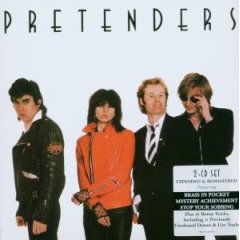
The Pretenders: Pretenders


Written by Fantsama el Rey

Sounding better than ever, The Pretenders’ first album, simply titled Pretenders, has been remastered and re-released. Augmented with a second disk of B-sides, demos, and live tracks, it is still all killer, no filler. This American-fronted, British band’s first recording ranks as one of their best and puts them side by side with other classic rock debuts as The Doors and Led Zeppelin.

Everyone knows at least one Pretenders' tune; check out the singles collection to see what I mean. A few popular songs off of this album are self-penned dandies, “Kid” and “Brass In Pocket,” alongside Ray Davies’ “Stop Your Sobbing.” Then we have cult favorites that include the likes of “Precious” and “Tattooed Love Boys,” two in-your-face rockers with hard, raw attitude.

The album is divided into a rocking punkish part and a dreamy part, where guitar/vocalist Chrissie Hynde’s displays her softer side. The songs in this mode are the more popular or at least the more well known of the band, which is really too bad because the original line-up of Pete Farndon bass, James Honeyman-Scott guitars/keyboards, and Martin Chambers drums can rock with the best of them. Oh, don’t get me wrong; the singles do jump but the others tracks are fierce and have more drive to them. By the time of these recordings, guitarist Honeyman-Scott was heavily under the influence of rockabilly guitar hero Dave Edmunds, which adds to their sound.

Released in late 1979, Pretenders opens with “Precious,” and we hear how hard the band hits. The drums crash and the bass has a solid, driving pulse while the guitars swirl and soar around them. Hynde’s lyrics are delivered with force by her seething vocal attack, “Trapped in a world/ That they never made/ But not me baby/ I’m too precious/ I had to fuck off”. “The Phone Call” and “Tattooed Love Boys” keep the pace and the latter finds our heroine hangin’ with the shop boys and learning that when you shoot your mouth off with this crowd, they’ll show you “What that hole was for.”

“Stop Your Sobbing” begins the “dreamy side” of the album where Hynde’s vocals become smoother and more polished as she brings out her singing voice. The music still has a solid rock drive and loses none of its force just because it switches gears and downshifts a bit. The singles are pulled from this lot for obvious reasons and it does make the album as a whole more of a surprise upon first listen.

“Kid,” “Brass In Pocket,” and “Lovers” appear to be quaint tales of love. Yet these lyrics take on a new life when you take into consideration Hynde’s quote about the themes of her songs, “The usual stuff. A bit of prostitution, a little scamming, a hustle here and a hustle there…” Now, even if she is joking, you still get a different take on the songs. Armed with this new insight listen to “Brass In Pocket” again and tell me the song doesn’t change a bit. And not to be forgotten, the video game-inspired instrumental “Space Invader,” a catchy number with some nice sound effects from the time.

Disk two is all bonus materials and seems to have no specific order. According to the liner notes, there are two B-sides to “Brass In Pocket”: “Swinging London” and “Nervous But Shy”. Some B-sides are from singles that wouldn’t be released until almost two years later. “Cuban Slide” is the B-side to “Talk Of The Town,” and “Porcelain” was on the back of “Message Of Love.” These tunes wouldn’t emerge until the follow-up album, Pretenders II.

These sides show the influence that rock ‘n’ roll standards had on this band. “Cuban Slide” is dripping with the classic Bo Diddley beat with more Cuban flare. If I have to describe Diddley’s beat, then you should stop reading this and begin your Rock ‘n’ Roll 101 class… seriously. For those that know, you can hear some Arthur Lee and Love-inspired guitar work on “Porcelain;” think the epic “John Lee Hooker” also known as “Revelation.” While listening to “Nervous But Shy,” keep “Your Friend And Mine-Neal’s Song” in mind.

The demos and live tracks provide a good example of the band in their early days. The demos show that the band always had a pop sensibility to their sound. “Brass In Pocket” remains very much the same, except that in this version Hynde sings “Your special, so special” instead of the more powerful “I’m special, so special.” “Kid” rocks harder and is stil rougher around the edges, while “Stop Your Sobbing” has more of a pop/country vibe too it. Keeping the country vibe going is The Eagles-inspired “Tequila,” a slow drinking song, and with a title like that who would have figured?

The closing five tracks illustrate how The Pretenders cut loose with songs played live. They give off an easy going, R & B party atmosphere on “I Need Somebody,” while rockin’ into “Mystery Achievement;” both recorded for the BBC in ’79. On the tracks recorded in front of an audience, they kick down the doors and blow the roof off the joint. “Precious” and “Tattooed Love Boys” are punk fast and rockabilly infused. Here The Pretenders sound very much like a Los Angeles band you may have heard of, X. I find it interesting that both bands have a rockabilly-inspired guitarist, although X’s Billy Zoom is a rockabilly hero all his own now. Stomping disk two to an end is “Sabre Dance” in which we find Hynde doing her calm vocals a la “Sobbing” as Honeyman-Scott goes wild in front of her. Another fascinating live track and one hell of a way to end Pretenders disk two.

Well done and rocking from beginning to end, Pretenders is a must for any fan of the band and rock ‘n’ roll in general. It was and is a great loss that this line-up only got to do two albums before the death of guitarist James Honeyman-Scott and the departure of bass man Pete Farndon. The world is a bit emptier without solid rockers like them, but we have the music that they did record and thank the rock gods that X and Bo Diddley can still be found playing smaller venues.

Wednesday, November 29, 2006

Westerns with a Twist (The Sons of the Great Bear / Chingachgook - The Great Snake / Apaches)


Written by Fumo Verde

Ok, katz and kittenz, here's one of those times when looking through glazed, bloodshot eyes pays off. Coming straight out of what was once known as East Germany are three feature films about the American West. Go ahead; do your double take. Yes, East German films, made smack in the middle of the Cold War, about what life was like in America during the Westward Expansion of the 1800s. I asked to review this just to see what the Communist propaganda machine was pumping out about American history, when life was overshadowed by the fears of living under a red moon, or in this case a red, white, and blue moon.

The DEFA was the East German film industry that produced such...uh, epics as this. Known as “Red Westerns,” they spin tales of the Old West from what they considered the Indians' side of the story. All three films were shot in places like Uzbekistan and Romania and the dialogue is German. Serbian actor, stuntman, and author, Gojko Mitic stars in all three films playing the German James Bond of Native Americans as he fights the never-ending battles of what is called the "great white tide."

The first flick I picked out of the pack was the first one made, which was The Sons of Great Bear done in 1965. The story is about the white man’s lust for gold. It’s found in the Black Hills of the Dakota Territory, and slowly but surely the Natives are being pushed out. Great Bear is a chief who has hidden his tribe’s gold. How or why these Dakota Indians had gold was never told. Maybe the East Germans were prescient about Indian gaming?

One white guy named Red Fox, apparently the East Germans weren’t up on American comedians, happens to be friends with chief Great Bear, so much so that he calls him his brother. Ah, but as Cain downed Abel, Red stabs Great Bear when the Chief refuses to tell where he hid the tribe’s secret stash. The sons of Great Bear wait a few years before going on the warpath and seeking revenge. In the meantime, they suffer being moved to a barren, desolate reservation and being treated poorly by the U.S. Army and any white settler who happens to be in the camera's eye.

Like American Westerns of that same timespan, the hero never runs out of courage, compassion, guts, or ammunition. The scenery is breathtaking with its open valleys and snow-capped mountain ranges. Even the hot and dry lands of the American Southwest seem to have a counterpart in Eastern Europe. Now, I'm not talking like Red Rock or Choco Valley, more like Death Valley or that drive out east on the 10 freeway to Rubidoux.

This type of backdrop was used for Apaches, filmed in 1973, which again was completely over the top in how evil the white settlers were and how easily the Native Americans could turn back the onslaught of white oppression. In Apaches, there is a treaty signed with the Mexican Government, a copper mining company, and the Apaches. The U.S. Government sends out Johnson to exterminate the Apaches to, as Johnson sees it, secure the mine and search for more copper. On the day of celebration of the peace treaty signing, Johnson, who has been given a cannon from the U.S. Army, fires it into a crowd of Apaches receiving flour rations from the mining community. Mitic's character is one of the few survivors. He, along with his old father and a few other braves seek revenge on Johnson and his band of cutthroats.

The final film I found shaking my head to was Chingachgook: The Great Snake made in 1967. Based on a James Fenimore Cooper novel, our red brothers have just recently met with the French and English and are learning the hard way that working with the whites isn't all that they said it would be. Great Snake is a Delaware, and the Huron have swiped his wife-to-be. As always, every white man within earshot is the devil with the exception of Great Snake's only white friend named (are you ready for this?) Deerslayer. Yes, the only good white guy is named after a great symbolic animal of Native culture. Awesome.

The funny thing about these movies and what they had to say is that they do have a point. The Europeans at the time believed themselves better than the native peoples in whatever land they had just "discovered." A good example came in Chingachgook where an older English officer was expressing to one of his junior officers that "...we are here to exploit these natives and make sure that they war with themselves so we may take the land and all that we can profit from." Now, true that's what happened, but I don't think people went around telling it like that. Not every settler wanted to keep an Indian scalp as badge of honor. The bigger picture here is that not every capitalist will kill you for the sake of the bottom line, although a few will.

These movies shouldn't be taken seriously when it comes to historical fact, although one can get the gist of what the East Germans were saying. They exploited the exploits of the early European settlers of this nation, and used that to confirm the so-called glory of Communism. Capitalism expanded this country, but it alone didn’t kill off the Native American Indian. Fear, bigotry, and a non-yielding view that the savages’ beliefs were an act of devil worshipall contributed in the destruction of the native peoples, yet the East Germans didn't seem to catch that. Their whole target was the capitalist pig, and it shows.

As for the acting, it was all right, about as good as the American Westerns of the same era. The music was as expansive as the land the Indians covered. It went from orchestrated symphonies to guitar and harmonica duos, and one time I swear I thought I heard a Beach Blanket Bingo type of rock music, but that could have been the super haze that was dropped into my bowl.

These movies are out there, but they do give some insight to what the people behind the Iron Curtain were viewing. The Red Westerns were the mirror opposite of the American Westerns: the good guy always won in the end, yet when he road off into the sunset, instead of waving his hat, he held up a tomahawk that he waved above his feathered headdress. I suggest that if one were to watch these Westerns, one needs to get twisted.

This is Fumo.... pack one for me.

Saturday, November 25, 2006

WHAT WE WANT, WHAT WE BELIEVE


Written by Fumo Verde

The Black Panther Party was considered one of the most dangerous militant groups in America back in the late 1960s and early 1970s, and I never really understood why. To be honest, I haven't come across much information regarding the BPP, with the exception of a few documentaries about those times where for brief moments the Panthers were mentioned.

Here on a four-DVD set, Roz Payne has graciously given us a chance to look closer into this movement with footage from Newsreel Films, the unofficial documenters of not only the Black Panther Party, but the whole leftist revolution that was breaking through during some of the most violent times in this county's history. What We Want, What We Believe isn't a documentary, but a living history preserved on film to show future generations how citizens united in a common cause can get the attention of the U.S. government.

The first disc contains footage from Newsreel Films, who became the default documenters for the BPP, and has interviews with founding members such as Stokely Carmichael, Bobby Seale, and Huey P. Newton. The first segment is called "Off the Pigs," a rally chant used at BPP demonstrations; it, along with the next two segments, "Mayday" and "Repression," deals with the filmed events that the Panthers put together: demonstrations, speaking appearances, and the Breakfast Program, which gained mainstream media recognition as being one of the improvements that the Panthers had brought about to their communities. Feeding the poor always runs well with the press, as long as they make their money on it. The Panthers did it for the kids, and not for the praise.

The second segment has a great interview with party member, Field Marshall Donald Cox. Payne gives the retired general almost two hours of airtime here, and it is well worth it. He gives a great view from the inside of the party, and runs down certain reasons why the BPP came about. One of my favorite parts happens as Cox is explaining why the Panthers carried guns. He explains that, not only did they have the right as American citizens, but that the cops at that time we targeting black males and that if the cops had gun "...we have guns too, and if you're gonna shoot at us, we gonna shoot back motherfuckers." As the statement finishes, Cox brings a joint to his lips and takes a big drag. This Kat has got my vote...for anything. The final segment of disc one ends with the 35th Reunion of the BPP, which shows interviews with members past and present.

The highlight of disc two is the interview with FBI agent William A Cohendet, known as WAC due to his initials on the reports that were filled and processed by him to send back to Hoover, who was anxiously waiting in back in D.C. WAC's reports became famous not because of the great intelligence that the FBI was gathering on the BPP, but because the way WAC had written them. He created some of the most humorous federal reports ever because he and his team had come to realize that the Panthers were not so dangerous, and like every revolutionist party, the infighting and paranoid attacks on each other would be the un-doing of the Panthers.

Payne brings up the Counter Intelligence Program, or COINTELPRO, which the FBI used to deal with the Panthers. Seizing on the paranoia, the Federal Bureau of Intimidation added fuel to the fire by sending letters to party members that reinforced the paranoia that each member was out to get the other. The rest of disc two along with three and four contains more interviews with other FBI agents and with the filmmakers at Newsreel. Their stories lend truth to the so-called paranoia.

Additional material, like press releases and photos are included, along with a 12-page liner note pamphlet in which Payne explains her own involvement and what this DVD library is about. She also gives credit to those who helped the Panthers, folks such as the Falk family and Gail Dolgin.

For any of us who love history, this is an archive that should be added to the collection. Payne has given us one of the most in-depth looks at an organization whose ideals still can be felt. To be a black American back in the early days of the Civil Rights Movement was to be a target for any reason. The Panthers stood up for themselves as best as they could and they laid out some pretty radical plans for that time period, but what they really did is give empowerment to the black community and to show them they could stand up for themselves if they united together.

The Panthers legacy, as reported by the mainstream, and I hate saying mainstream, because other than murdering everything is mainstream, was one of imploding zealots who were mysteriously taken out of the picture for reasons still fuzzy in my mind. What We Want, What We Believe is a fantastic journey back to a time when equal rights were the name of the game, and the price to pay for them was very high. And if it were not for the efforts of Roz Payne and the brave folks at Newsreel, the true legacy of the Panthers would have probably faded away. If you really want to know what the movement was about, check out this pack and your instruction will begin.

Wednesday, November 15, 2006

BBC Atlas of the Natural World: Western Hemisphere and Antarctica


Written by Fumo Verde

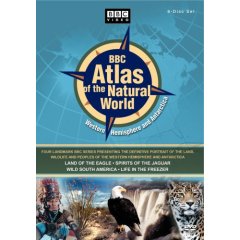
I have always been a fan of the BBC, and here is another reason why: BBC Atlas of the Natural World: Western Hemisphere and Antarctica, a six-disc set that relates the stories of the continents, how they formed, who were the first inhabitants, and how the evolution of creatures and peoples adapted and lived within their environment.

Under the banner are four series, which were created in the previous decade: Land of the Eagle (1990), Spirits of the Jaguar (1996), Wild South America (2000), and Life in the Freezer (1993). The first three series are comprised of four one-hour episodes while the last one is made up of six. With all the history and information contained in this package, trying to view it all at once might make your head explode.

The topic of Land of the Eagle is North America. The episode "Great Encounter" gives a brief history of the native peoples of North America and what it was like before the Europeans landed. It goes on to explain what the new settlers from across the great lake had to face in this new world, such as the weather, the land around them, and all the beasts of the forests that now surrounded them. It goes into the history of the land, how the mountains were formed, and what flora and fauna had evolved.

The series heads south to Central America for Spirits of the Jaguar, which brings the viewer into the realm of the Mayans while Wild South America, whose title needs no explanation, moves on down to the land of the mighty Amazon and the towering Andes. It was the last series to be shot and, thankfully, did so in 1.78 wide screen. Life in the Freezer explores the frozen tundra Antarctica with its penguins, whales, and David Attenborough, the series only host.

If you view the series in Enhanced Content Mode, pop-up windows will periodically appear during the program with added factual content. I know this, not because I know how to view the series in Enhanced Content Mode, but because it says this on the inside cover of the cool box that the set comes in.

With awe-inspiring pictures of the landscape and the animals, bugs, and birds that inhabit these great continents, BBC Video has really out done itself here, almost packing in too much beauty. I think it's their ploy to get us to watch it twice, because that's what I plan on doing tonight. I wonder if a series on Africa and the Eastern Hemisphere will soon end up on DVD. I hope so because this is a fantastic look at our world and its natural beauty.

If I were a seventh- or eighth-grade science teacher, this would be in the lesson plan. The content goes deep enough to give the viewer the facts without getting too technical to cloud the mind. All the images are magnificent, and it is real piece of work from start to finish. For those of us who love natural history, this is one that should be picked up; it is well worth because it is not only interesting and true, but also entertaining and beautiful.

Audio tracks are available in English and Spanish.

Tuesday, November 14, 2006

LIGHTS IN THE DUSK


Written by Carlito de Corea

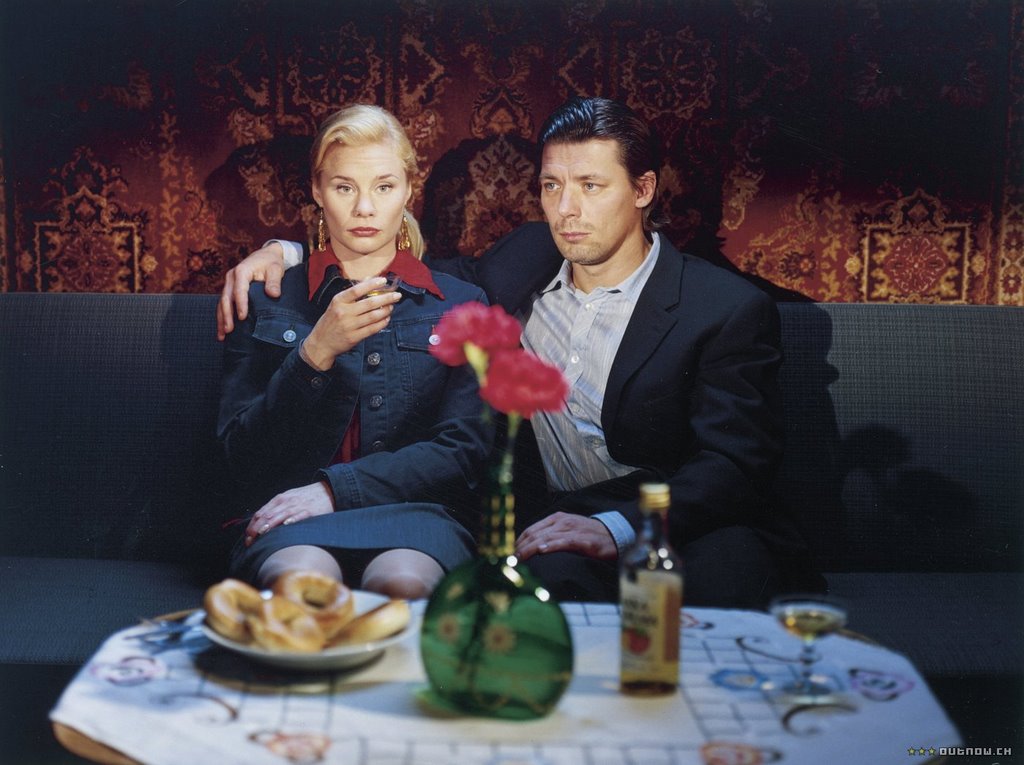
In his new film, Lights in the Dusk, Aki Kaurismaki strikes our sense of irony and compassion from the beginning as we follow the hero of his story, Koistinen, through a series of misadventures. It is the third film in a trilogy, following Drifting Clouds and The Man Without a Past.

Koistinen is apparently subject to unexplained scorn from everyone he encounters, and as there seems to be no reason for the treatment he receives, we are both compelled to laugh and feel sympathy for him. For a while his luck appears to take a turn for the better when the seductive blonde, Mirja, takes an interest in him, but we soon realize that this too will prove to be a problem. His failure is both funny and moving, as even his attempts to reach out to a neglected dog, whom we sense somehow he identifies with, seem to go wrong.

At times I was reminded of Hal Hartley’s Henry Fool, as Koistinen, dressed in his security guard uniform, wanders from one caustic encounter to another. And as with Hartley’s work, while there is a sardonic demonstration of the cynical world surrounding his characters, there is at the heart of it an underlying lack of cynicism, a compassion for the outsider.

At the same time, I was strangely reminded of Ingmar Bergman, as the camera would suddenly focus on some scene in nature, a growth of wild flowers in the woods, for example. The cinematography, the European feel of Kaurismaki’s work, gives it a different feeling, a muted quality that seems to offset the irony, or absurdism, somewhat. But these elements in his film are somehow complimentary, rather than contradictory.

Lights in the Dusk is a poetic, ironic look at the hard edges of life, which Kaurismaki softens with his particular sensibilities and makes enjoyable to watch. The film is understated, and while perhaps at times slow, I found its blend of pathos and deadpan humor effective and entertaining. Kaurismaki juxtaposes the aspirations of his hero with the indifference, and even maliciousness, of a glib, calloused world in a way that is both touching and funny. I also felt that at the heart of it, along with its sense of beauty, was an underlying hopefulness, an affirmation that things can work out, even for the loneliest people.

These qualities, for me, made Lights in the Dusk a film worth watching. I recommend seeing it.

Sunday, November 12, 2006

Dwight Yoakam: Guitars, Cadillacs, Etc., Etc. Deluxe Edition


Written by Fantasma el Rey

Dwight Yaokam’s first album, Guitars, Cadillacs, Etc., Etc., is back and better than ever. With this two-disk set the original offering is given the deluxe treatment, complete with remastered sound, demos from 1981 and a live performance from 1986. One of my favorite albums ever since I first heard my mother play it, I energetically jumped at the chance to give this new edition a spin and see how it sounds.

Dwight Yoakam has a sound that can best be described as revved-up hillbilly music, a paraphrase from one of my favorite bands, The Chop Tops, who described their music as revved up rockabilly. Like The Chop Tops’ rockabilly, Dwight’s hillbilly country is traditional but kicked up to maximum velocity, presented and mixed with his own personal touch and influences. Much the same way as other youths of the past have done in country music, Elvis, Gram Parsons, all three Hanks, etc., etc., Dwight’s sound first made its way to our ears with Guitars, Cadillacs, Etc., Etc. It is now remastered and expanded into two CDs that are presented in chronological order. This works because it gives the sense of something new instead of a simple rehashing.

Dwight’s demos from 1981 open disk one and we get to hear version of songs that would eventually find their way on to Guitars, Cadillacs as well as on his future albums. In comparison to the final versions, you can hear how some of the demos are missing a bit of the magic that is Dwight’s signature sound. Although to start disk one, “This Drinkin’ Will Kill Me” is a perfect example of his revved-up sound, a self-penned tune styled after the “drinking your sorrows away” classics of days past. Fiddles jump, the pedal steel wails, and the electric guitar cooks while a steady driving rhythm section that takes a page from Johnny Cash backs Dwight’s plaintive vocals and acoustic guitar. Mix in lyrics such as “Death can come from this broken heart/ Or it can come from this bottle/ So why prolong the agony/ Hey bartender/ I think I’ll hit the throttle.” This one, along with “I’ll Be Gone,” sum up Dwight’s jump sound pretty well.

Not only can Dwight get a hillbilly tune to hop but he shows how even at this early stage in his career he’s mastered the slow drinkin’ song. “It Won’t Hurt” is a tune that prepared ol’ Fantasma for life’s heartaches, “It won’t hurt/ When I fall down from this barstool,” “It wont hurt ‘cause this whisky eases misery/ But even whisky/ Cannot ease your hurting me.” I think most of us have lived that line at one time or another. The demo for “You’re The One,” which wouldn’t turn up until the early ‘90s is also here, foretelling how Dwight wouldn’t lose sight of his original style. Dwight’s arrangements are pulled tight and drawn in close for these slow slices of pain.

The next ten tracks have us leaping forward five years and into the released version of Guitars, Cadillacs, Etc., Etc., which are the songs that set the country world on fire and made Dwight a true country icon. Dwight went back to his demos for half the album, added two more original tunes and threw in three old favorites. The album is set ablaze quickly by a stomping reworking of Johnny Horton’s classic “Honky Tonk Man;” the song fits the album perfectly, matching the title track punch for punch. The two remaining cover tunes are June Carter’s “Ring Of Fire” and Harland Howard’s “Heartaches By The Number,” both bare Dwight’s revved-up approach.

The two new songs include the title track and the heartbreaking “South Of Cincinnati,” which finds a women writing to a man everyday after he left her fourteen years earlier. She tells that drunken fool that if he ever makes it back to the South, back where Dixieland begins, then she’ll be his again. However, out of her pride, she never sends the letters. The fiddles are slow and weep alongside the pedal steel guitar while Dwight delivers his lyrics through vocals that’ll brings a tear to your eye.

“Guitars, Cadillacs” proves that Dwight is a poet of the common man and anyone who’s been heartbroken, really. “But thank you girl/ For teaching me/ Brand new ways to be cruel.” Lord knows I’ve learned a thing or two from a kitten that had me fooled. Rounding out the album are five of the demos slightly reworked and modified in final versions, “It Won’t Hurt,” “I’ll Be Gone,” “Twenty Years,” “Miner’s Prayer,” and the most notable change being “Bury Me,” now a duet with Maria McKee.

Disk two is where it’s at, a live performance from The Roxy in Hollywood. Recorded in 1986 as the album was starting to heat up, we get a portrait of Dwight and his band in full effect. By this time the band had been together for over two years and the music captured that night was flowing fast, furious, and nearly flawless. They kick start the show with a jumping version of Bill Monroe’s “Can’t You Hear Me Calling,” moving smoothly right into their then-current radio hit “Honky Tonk Man.” The mood is kept alive when Dwight introduces his tribute to the Bakersfield sound of Buck Owens and Merle Haggard, the now-classic “Guitars, Cadillacs.” From there, he goes right back to Monroe for “Rocky Road Blues,” which was actually suggested by Monroe himself. Of the twelve songs played that night seven were off of the Guitars, Cadillacs album and have that sped-up, live spin to them, making disk two the real jewel of this set.

Two live gems are the revamped covers of Hank Williams Sr.’s “My Buckets Got A Hole In It” and a blues song, turned rockabilly staple by a young Elvis Presley, Junior Parker’s “Mystery Train.” I find it interesting that the songs Dwight covers are considered to be rockabilly standards and historically speaking, rockabilly is hepped-up country to begin with. So with that said, it’s no surprise that in his early paying gigs, Dwight was support for roots rock legends such as The Blasters and Los Lobos. Both bands are known for taking their musical heritage and turning it into something fresh and new, while keeping it oddly traditional.

Dwight’s playful banter with the crowd is further proof that he is connected to the people he performs and writes for, adding to the wonder that is Guitars, Cadillacs, Etc., Etc. Dwight put it best when in response to the crowd’s roar he confesses, “It’s just old hillbilly stuff.” I only disagree because I do believe that he makes it fresh and keeps the flame alive with each album he puts out and in every show that he does.

Thursday, November 09, 2006

Conversations with God


Written by Hombre Divertido

Though a bit heavy handed and reminiscent of a ‘70s made-for-television movie in performance, storytelling, and music, Conversations with God, which was adapted from the books by Neale Donald Walsch, does an effective job of telling the tale of a man’s journey not only from homelessness to affluence, but from being alone to having a relationship and conversations with God.

As is the case in many films, the flashback method of storytelling can often get in the way of effectively getting the message across, and does so to some extent here, but once we get past the clutter and are able to connect with Neale (Slightly overacted by Henry Czerny), this film does create moments that do pull us in.

If you can get past where the story is lacking, it is the immense vulnerability of Neale as he grasps on to any rung of his previous level of existence while slowly slipping further and further down society’s ladder that allows us to relate to his circumstances.

In one of the most poignant scenes in the film, we see Neale searching through a dumpster for cans to recycle into cash. Eyeing a half-eaten sandwich, Neale struggles with the decision to cross a line that he has set as the difference between himself and those in his new surroundings.

Neale Donald Walsch obviously went on a rollercoaster ride that is a fear for many of us, and though we may not all agree on where he found his salvation, and to whom he attributes his rebirth and level of success, watching how he deals with the situations that we all fear is a solid base on which to build a story for all to see.

There are moments in this movie that indicate God’s clear intervention, which may cause the secular world to dismiss this film as nothing more than preaching, but those willing to look beyond their own views, or those of the storyteller’s, will find an intriguing tale here.

A bigger budget might have allowed for the elimination of certain distractions such as make-up (Neal’s hair and beard never quite look right), and more elaboration relating to certain aspect of the story, such as the accident and subsequent legal matters that began Neale on his journey would have allowed the audience to relate and understand more at the start of the film.

It is certainly good to leave the audience wanting more, but that is different than leaving the audience wondering: “Why didn’t you show us that?” For example, one might wonder why, after becoming an on-air personality at a radio station, we never see or hear Neale doing the job. Actually, more than one might wonder that.

Recommendation: As with most films dealing with the topic of finding God, they tend to appeal more to the choir, as they are not edgy enough for those who most need to hear the song.

Out in very limited release; this may be a tough film to find until it comes out on DVD. Worth seeing in any format when you find it.

Wednesday, November 08, 2006

The Black Crowes: Who Killed That Bird Out On Your Window Sill


Written by Fantasma el Rey

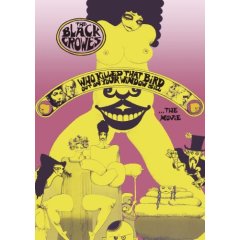
The Black Crowes hit as hard as ever here on their first music movie, now finally making its appearance on DVD. Who Killed That Bird Out On Your Window Sill was filmed way back in 1992, as a young Fantasma was entering high school and being turned on to these Kats via my brother in-law Rob. Released sometime after their second album, The Southern Harmony And Musical Companion, the movie lets us into the world of the wild young Crowes, as they do some touring and radio interviews.

The title for the movie is lifted out of the lyrics of the hit song “Remedy”, found on Southern Harmony. The sound for the music tracks is outstanding even at a low volume this thing screams, which is perfectly all right, the louder the better when it comes to The Black Crowes. The DVD consists of videos the band made for their first two albums, live performances from concerts and in the studio. Laced throughout the film are montages and excerpts from radio interviews, most of which are very humorous.

The core of The Black Crowes and focal point of the film are the Robinson brothers, Chris, vocals, and Rich, guitar. The interviews seem to be, for the most part, all Chris; his answers contain a hint of truth but are mostly made up tales that provide laughs and keep the mood light while preserving the mystery of who the Crowes really are. Some of the questions that are repeatedly asked, such as “Why do brothers in music fight so much?”, “Do you guys fight?”, and “How did the band start?” are shown together and we are given a few of Chris’ best responses. As to how the band started, according to Chris, his parents kept a chart and as they grew they were allowed to consume more alcohol and handed instruments to play. The best snippet is from a Japanese show, where Chris, Rich, and guitarist Mark Ford look so lost and confused its hilarious. They do their best to stay with it, giving shy little smiles and trying to keep focused. You can pick out key words, such as the title of the new album, number one and big success.

The meat and potatoes of this disk are the videos and live footage, captured at various spots, the farthest off being Moscow. There are seven videos here, including “Jealous Again,” the jumping “Hard To Handle,” “She Talks To Angels,” and “Remedy”. Most of these are taken from concerts or are really no more than the band wandering around and playing on a sound stage while Chris dances. “She Talks To Angels” is the one that stands apart; filmed in sepia tone and set in such a way that shadows abound and light seems to shine on the band up-ward from the floor. A great way to express one of the bands more serious songs in film form.

The live portions are highlighted by the footage taken from The Crowes European tour; of particular interest is the concert in Moscow. For reasons unknown, some of the Russian police as well as fans are bloodied. There was a clash between the two, no doubt. “Why?” is the question that goes unanswered. Yet as the scene rolls on we find people walking though and around the police line, so alls well that begins bloody, I guess? All this as the boys belt out the rollicking, guitar-driven “Stare It Cold” as Chris sings “we just want you to have a good time”. As they continue we get more average outdoor concert shots of the crowd and everyone having a blast as The Crowes perform; you can even see that some of the younger police officers are enjoying themselves. The montages are mostly more footage from the radio shows or films of the photo sessions that were done for publicity stills and or The Southern Harmony cover.

The movie provides a great opportunity to see The Black Crowes at their young, wild best and at what is the beginning of the fame that would take them to smoke-filled, hazy heights. A very entertaining 83 minutes of them having fun and doing things the way that they see fit. Watching Chris spin his “Fumo Verde” inspired tales to the questions that he has heard way too many times, is a hoot and will make you laugh. Note the closing scene and how a very tired and high Chris mixes up his words and slowly catches himself with the help of his brother Rich and bass player Johnny Colt. It is very interesting to see him now that he has mellowed nearly fifteen years later. Seeing the band jive together and play around is a fun trip as well.

To view The Black Crowes in a full live, rip-roarin’ performance, check out Freak ‘N’ Roll Into The Fog, the DVD taped live in 2005 at the legendary Fillmore auditorium in San Francisco. It captures the sound and feel of the band perfectly. To paraphrase Chris “the music knows…when theatrics become more important” and so do The Black Crowes. That is what they’ve managed to avoid all these years and why they still rock hard live.

Tuesday, November 07, 2006

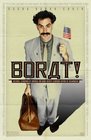
BORAT


Written by Hombre Divertido

Destined to be a college campus classic, Borat takes the standard fish-out-of-water concept and brings the comedic vehicle to some of the rankest levels seen in years.

Borat, 20th Century Fox's big-screen incarnation of Sacha Baron Cohen's Kazakh journalist from Da Ali G Show, travels to America to learn of our country. A premise ripe with comedic opportunities that stirred the emotions of the actual citizens of Kazakhstan, as reported in the news weeks before the release of the film, and rightfully so as this story depicts them as being far more backwards than anything we’ve encountered cinematically since Deliverance.

After briefly introducing us to Borat’s home and family, our story really begins in New York, as the actual trip to America is skipped all together which was an interesting directorial choice as it would have seemed to have been fraught with comedic opportunities. Nonetheless, we pick up our hero in the big city, as the camera follows him through many adventures, interviews, etc. Though most of the jokes we hear while meeting Borat’s family have been heard before, there are some gems delivered in the introduction of other town folk, and the interviews and footage of his experiences in the first few days in the big city are quite humorous. Unfortunately, the story then breaks down as does the film itself.

It is disappointing that the writer and director could not have stuck to their proverbial instinctive guns and delivered a mockumentary revolving around a foreign reporter traveling to our country full of subtle humor equal to the bear head in the refrigerator, rather than have so much potential get lost on a weak story filled with cheap jokes as Borat becomes obsessed with getting to California to find Pamela Anderson.

The final cut of this film plays like a cross between a mockumentary and a situation comedy, with the situation comedy scenes looking staged and sorely out of place. The cast takes tremendous risks in some of the improvised scenes and many of them pay off. Unfortunately some of the staged material comes off as simply offensive, though loved by many.

Recommendation: This film has some classic comedic moments in it as well as some that are classically offensive and absurd. It is sure to be a box-office bonanza, but cannot compete with classic mockumentaries of the past such as This is Spinal Tap where subtle humor reigned.

For better constructed fish-out-of-water tales regarding foreigners coming to the United States you might want to check out Moscow on the Hudson or even Crocodile Dundee, though it is apparent that today’s movie going audience prefers Borat bringing his fecal matter to the dinner table in a bag rather than Crocodile Dundee attempting to understand the purpose of a bidet.

Monday, November 06, 2006

THE BOSS OF IT ALL


FROM THE PUSAN FILM FESTIVAL
A report from Carlito de Corea

In his latest film, Lars von Trier uses a metafictional approach to deliver a satirical narrative. That is to say, he tells us that he’s telling us a story, and how. Sort of. The Boss of it All begins with the narrator, perhaps von Trier himself, letting us in on the joke, as he tells us his film is not to be taken seriously, nor is any serious meaning to be taken from it. Just another typical story with the usual parts and players, he continues, having fun as he once again blows apart the apparatus of conventional storytelling.

The boss of an IT corporation hires an actor to pretend that he is the boss of the company during an important negotiation to sell the company off. Circumstances become complicated as the real “boss of it all” and the actor pretending to be “the boss of it all” begin to butt heads about how things should be handled. Romance and sexual exploits also crop up as office workers in the company mistake the actor for someone else, and tensions between the owner of the Icelandic corporation intending to buy the IT corp. and “the boss of it all” escalate.

Von Trier lets us in on the game in this film as it periodically describes its own constructs. But this apparent self-consciousness is misleading. While the film gives the impression of letting the cat out of the bag, so to speak, the comedic tension is never lost and the narrative continues to move forward. The simultaneous accomplishment of poking fun at the process of drawing in an audience with all the typical and corny constructs of storytelling and then drawing the audience into a corny, constructed story, is quite a statement.

Another interesting effect in this film is the fine line between what the actors are going through and what the characters are going through. It is almost as if the actors are waiting for the director to fill them in on what the story is or where it is heading next, rather than the employees at the company being confused about who their boss is. This is a wonderful illusion, or perhaps not, that helps to create the feeling that no one knows what is going to happen next, neither the audience nor the actors, as the story whimsically and absurdly changes direction at various moments.

I thought the film was successful in managing these different elements, blending a seemingly loose and spontaneous style with a deceptively well-controlled narrative, and tight, well-acted scenes, all of which climax in a humorous and touching ending, albeit a self-conscious one. Well written and directed, this movie is just fun to watch, and at times laugh out loud funny. It was a big hit at the Pusan Film Festival this year and I recommend seeing it.