Tuesday, February 07, 2006

NORTH COUNTRY


by Carlito de Corea

Misogyny is the theme in North Country. Based on a true story, the film tells the story of Josey Aimes, who takes on the Pearson Mining Company over allegations of sexual abuse. The story begins in the courtroom, where Josey, played by Charlize Theron, is answering a series of degrading questions. The film flashes back to where it all began, intermittently returning to the courtroom until the story is under way.

The story proper begins with Josey leaving home, with her kids in tow, to stay with her parents because of domestic abuse. The husband in this case is generic. We never see him, except obscurely when Josey is fighting with him on the lawn of her parents’ home almost immediately after leaving him. This scene is a strong indicator of how things will go, both for Josey, and for we the viewers, as her father watches without helping and makes cynical remarks about her being a troublemaker. The tone is heavy from the start and never lets up, until the end, when it swings wildly in the other direction, to a sentimental catharsis in court that ultimately ruins some small ground the film was beginning to regain.

Back in the courtroom, the company’s attorney asks Josey when she first started working at the mine. We flash back to a local bar where she first meets her friend Grace, played by Frances McDormand, a union rep and employee of the Pearson Mining Company. Over a beer and a game of darts they become friends and shortly thereafter Josey is also working at the mine. From here the film describes excruciatingly the degrading conditions the women at the mine have to endure: endless litanies of derogatory, sexually explicit remarks and unwanted advances by their male co-workers.

A recent court decision has forced the Pearson Mining Company to allow women to work at the mine, and, as a result, new female recruits experience open hostility and resentment. They are also subject to the constant threat of rape. “Cunt,” one man says under his breath, passing Josey in a hallway as she is being led to her first assignment. “Who’s gonna be my bitch?” another man says just after this, as their foreman turns them over to another employee for work detail.

Things get so bad that Josey is forced to quit her job at the mine. She decides to take legal action and enlists the help of Bill White, played by Woody Harrelson, a lawyer and friend, and one of the only two males realistically portrayed in this film. Josey encounters resistance from everyone, including her own family—namely her father who himself has worked at the mine for most of his life—and from the women who still have to work there and don’t want to make waves. She tries to get her fellow employees to stand with her, to stand up for what’s right and make it safe for women to work at the mine. She only needs three more women to join her and her case can be filed as a “Class Action” suit, setting a legal precedent and giving them a better chance of winning.

While the story and theme in North Country are interesting, and the film is at times moving, its portrayal of misogyny is unfortunately too cynical and exaggerated. From the start we are subjected to a constant barrage of unrealistic male characters. With one or two exceptions, the men in North Country are all menacing sociopaths, one-dimensional characters with no moral fiber whatsoever, their behavior more closely resembling that of prison inmates. So much focus is put on describing men as leering, salacious pigs—it seems like there is one waiting around every dark corner—that the portrayals become cliché, over the top, and we are no longer interested in them, except as comic book villains whose only purpose it is to draw us cheaply and reflexively into condemning bad people and cheering for the hero of the story.

The pitch of negativity reaches its climax at a company meeting devoted entirely to deriding Josey and further ensuring that everyone remains against her so that she doesn’t win the lawsuit and everyone can keep their jobs. Bobby Sharp, played by Jeremy Renner, Josey’s primary nemesis, and part of a subplot which I won’t reveal, delivers a speech full of derogatory expletives directed at Josey that has the entire town hall hooting and hollering over her demise. Josey enters the meeting with her lawyer and friend, Bill White, summoning the courage to speak out and demanding her right to speak at the microphone, whereupon she is booed and jeered and told to get lost. Determined not to give up, Josey carries on, making her way to the podium amidst the deafening clamor of crude remarks. She tries to appeal to the hardened crowd, delivering an emotional speech that for a moment seems to be having an effect. Surprisingly, the miners stop booing and we wonder for a moment if she might not turn the crowd in her favor. But once again the jeering starts.

“Hey Josie, show us your tits,” one man shouts, triggering another deluge of lewd remarks.

Having had enough, Josie’s father, Hank, played by Richard Jenkins, walks to the podium and instructs his daughter to hand over the mic. Crushed and no longer able to defend herself against what could prove to be the ultimate final insult, she stares at her father helplessly, pleadingly. Is he really going to silence her, we wonder. Or might he possibly, finally defend his daughter against this lunacy. We are overcome by a long needed release of tension when Hank takes the microphone from his daughter and rather than walking away takes a place beside her at the podium. Both Theron and Jenkins deliver powerful performances in this scene, and like Pavlov’s dog I responded to it. But I did so begrudgingly, aware all the while that this basic and obvious component of compassion was artificially withheld from me in order to achieve this effect.

This scene also had the unfortunate effect of reminding me why much of what I had seen so far was now even more implausible: HER FATHER WORKS AT THE MINE AND HAS FRIENDS THERE!!! Most men do not badger and sexually harass their friends’ daughters, or their colleagues’ daughters, and most likely would not put up with it from other people as well. I personally don’t know any men who wouldn’t at least say, “Hey watch your mouth,” when someone was calling his friend’s daughter a bitch and a whore. The scene also ends with another unlikely occurrence. Everyone starts clapping after Hank delivers his speech, in which he told them how ashamed he was of them all and that he had no more respect for them. Why would you cheer your own denunciation?

At this point, however, complaints of inconsistencies at the town hall meeting aside, I felt that the film was becoming more reasonable and might become more interesting. That is to say that some of the key characters were becoming human, finally, and the film, subsequently, more realistic. There is a nice moment when Josey is back at home with her father and mother, played by Sissy Spacek, and the family finally seems to be coming together. Her father gets up from the table at one point to embrace her when she breaks down and says she doesn’t know if she can take any more. As well, there is a tender moment between herself and her oldest son, Sammy, who finally seems to relent after feeling resentment and hostility toward his mother for the pressure that her infamy has put him under. Unfortunately, however, the film then swings too heavily toward the sentimental, delivering a soppy courtroom ending that borders on the absurd, and shows as much insight into courtroom proceedings as it does into male psychology.

A good cast makes much of the exaggerated treatment of this subject bearable, and I admit to being drawn into the story at times, but, unfortunately, I found myself too often wanting to be drawn in more than I was being drawn in. Too many exaggerations and a constant sense that the chips were unrealistically stacked against Josey kept me from warming up to North Country. The depiction of men in this movie was also disappointing. The type of aggression toward women described in the film should perhaps have been characterized as the exception rather than the rule, if for no other reason than to create a greater degree of tension in the film, a greater degree of balance, even if the events described really happened and the majority of the men at the mine were evil and cowardly in real life.

Sunday, February 05, 2006

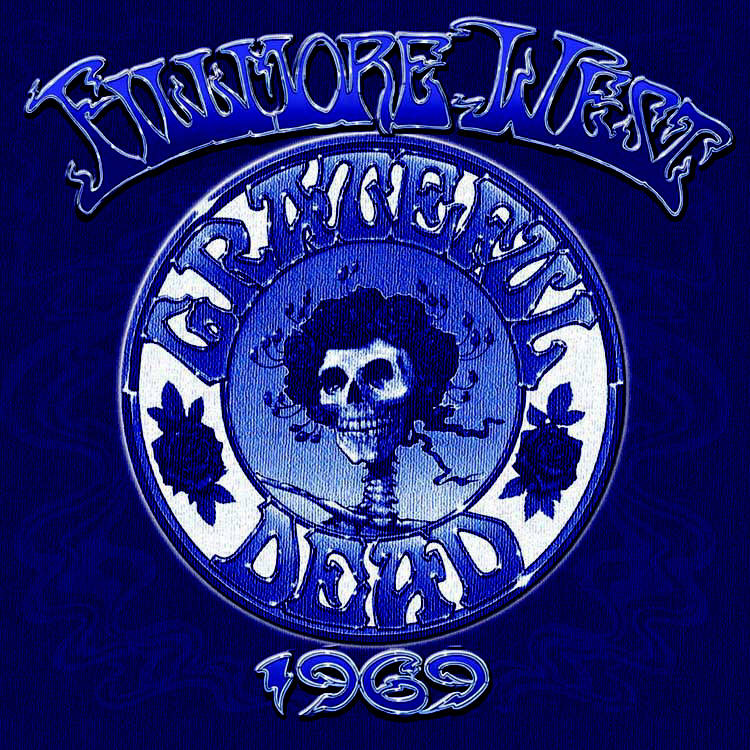
Grateful Dead: Fillmore West 1969


by Fumo Verde

This one's for the Deadheads in the house, but first a little history lesson. Live/Dead, considered one of the band's best albums, was released in late '69 and was recorded over a four-night period from February 27 to March 2, 1969 at the Fillmore West. It was the first-ever, 16-track stereo, live album ever made. At the time of this recording, most albums were recorded in two-track. The Beatles' Sgt. Pepper's Lonely Hearts Club Band was recorded in three-track. Folks such as Tom Dowd at Atlantic Records were dabbling in eight-track, so for the Dead doing this in 16-track, it was a major breakthrough, technology-wise. The Dead pretty much wrote their own ticket after that and the rest is Dead history.

This new release from Rhino Records revisits their legendary run at the Fillmore and expands on it, even featuring different versions of tracks that appear on Live/Dead that are as clear as they can be for a live show recorded some 30 years ago. This whole album captures a time that was not only a turning point for the Grateful Dead, but it marked a turning point in music history.

The doors to the past are opened for us with songs like "Cosmic Charlie", "Turn on Your Love Light" and that blues staple "I'm A King Bee" along with some feedback and crowd noise. Light up some of that Trainwreck that's making the rounds and I'm there, babies. With the 23-minute "That's It For The Other One" and the 25-minute "Jam" section, this album unchains the band from what most other artists at the time were trying to break free of. These tracks give the Dead a chance to let their hair..ah...down, or flow as the case maybe, and it shows how good they could really be. Any Deadhead who has a few shows under their belt will tell you, "when they are ON, they are really ON, but when they aren't, man, it really shows." The shows at the Fillmore West were some of the best.

This was also a time when Robert Hunter started his treasure trove of a relationship with the Dead, by helping to write the words to "Dark Star", a pivotal song for the Dead, that when played live would open up many different musical avenues for the band to travel down. It was a signature piece of Dead performances for the next half of the century. Here, they create 20 minutes of musical magic before delving into the majestic "St. Stephen."

The three discs are incased in a hardbound booklet, with the decorative artwork in a black and white setting that gives it that "historical look back" style. Inside treasure awaits. The 60-page book explains how the Dead managed to pull off such a feat as this album, and that the release of Live/Dead saved the Dead from financial disaster. It's also filled with about 30-odd pages of just pictures of the band in all sorts of aspects and views. The boys at the time were still boys from the Haight Ashbury scene, Phil, Jerry, Bob and Pigpen. There is also a picture of the original set lists with red pen marks that indicate the songs and sets that were put on this album.

Fillmore West 1969 is a perfect collector's item for any Deadhead this holiday, or any time. The music is strictly Dead, and the booklet itself is worth the money. As the band gets older more things that we may or may not have heard before will probably rain down upon the record stores or in the form of digital downloads so that we may buy them, but its going to be hard to beat this set. Hearing the Dead live, and looking at the photos from way back when brings one's mind back to a time when rock 'n' roll meant something and the only hassle at a show was just trying to scalp a ticket to get in.

The Dead were a band of innovators, a band who pushed itself to the limit, sometimes too far, but they always brought it back for the fans. With this three-CD set you not only get to hear the Dead live, but you get a backstage pass to read what was really going on behind the scenes at those shows live at the Fillmore West back in 1969.

hohoho.....from Fumo.

Saturday, February 04, 2006

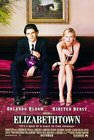
ELIZABETHTOWN


by Carlito de Corea

If you like to watch films that reflect the difficulties of ordinary life, the pain of true loss, and then some hard fought redemption, or perhaps resulting ruin, something that you can relate to, see your own suffering in, then Cameron Crowe's new movie, Elizabethtown, will not be for you. If, on the other hand, you simply like to escape daily life and enjoy a good movie with a good story, then…no, maybe Elizabethtown still won't work for you.

The film begins with Drew Baylor, played by Orlando Bloom, making his way toward an expensive looking corporate office, the headquarters for Mercury, the shoe manufacturing giant for whom he works, perhaps a parody of Nike. We realize something is not right for him as he enters the building and makes his way through the palatial concourse toward one of the building's boardrooms, where we sense some terrible fate awaits him. “I'm ok,” he says repeatedly to some of the people he passes. This peculiar behavior sparks an urge to laugh out loud, as it clearly implies the opposite, that he is not okay, and that he is walking toward some monumental disaster. I have to admit that this movie did hold my attention for a few minutes, and that I did laugh out loud. I wondered what in the world was going to happen to him. I was ready to sympathize, to empathize, as yes, we too feel the weight, daily, of the corporate bullies crowding us out, shrinking our burgers and raising the prices on everything we come near. And we don't even dare to think of actually working for them. Yes, this could be good. Drew is our whipping boy. Go get 'em, brother.

After sort of being informed by his boss, played by Alec Baldwin, that he would be taking the fall for a particular line of shoe that has lost the company nine hundred and something million dollars, and to which he was closely linked, if not entirely responsible for, Drew returns to an expensive home, as progressive looking as his office, and begins to rig his stationary exercise bike with a huge kitchen knife that will stab him through the chest when he turns the machine on. The tension is humorously released when his cell phone begins vibrating on the kitchen table. Annoyed and not even able to commit suicide properly, he succumbs and answers this one last call, only to find out that his father has died and that his family is now relying on him to go to Elizabethtown, Kentucky, to take care of funeral arrangements, and straighten things out with his father's side of the family. Unfortunately, the initial feeling that any number of incredible and unexpected things could happen to this character soon gives way to a litany of trite, uneventful circumstances. The pathos in this early sequence is never returned to again, and soon after it the film begins to lose its integrity.

His suicide postponed, Drew is now forced back into the arena of life, and so embarks on what is the main narrative of the story, heading into the past while trying to work out the present, and meeting Claire, played by Kirsten Dunst, and falling in love with her. He arrives in Kentucky to a heartfelt, near-parade of a welcome, accompanied by nostalgic music and some cool images of small town America as he cruises through Elizabethtown in his rented car. But instead of settling down into a heartfelt journey of self realization, or personal hardships and conflict, Elizabethtown digresses into an assortment of styles and loosely arranged scenes that barely cohere. We see problems early on when Drew arrives at his father's wake and the film tries to achieve a deadpan quirk, a la The Coen Brothers, laying it on thick with dumb lines and heavy pauses between them to accentuate the stupidity of the characters, of small town folk as it happens, a cliché that small-town folk, maybe even from Elizabethtown, won't much appreciate, I'm guessing. Many scenes in the film seem to be all about the attempt at this type of humor, becoming the focus of purposeless moments, like the drunken newlywed man Drew encounters while stealing beer from one of the rooms at his hotel, a scene that is not only self-conscious and contrived, and patently unfunny, but poorly acted as well. The film slips in and out of this type of irony and realism, returning to Crowe's more usual sentimental tones when the film returns to its focus on Drew and Claire.

Getting the most out of his actors, or even concern over the acting in this film at all, doesn't seem to weigh heavily on Cameron Crowe's mind. The casting of Orlando Bloom, for example, is questionable, although a whole lot better than his purported first choice, Ashton Kutcher. At times Bloom seems uncertain whether to add to the effect of irony Crowe is often trying to achieve with his own expressions, or to hold back and play it straight. But worse than this, Bloom seems throughout to possess an irrepressible confidence, even smugness, that undermines the desperation Drew is supposed to be feeling. He is simply too glib, and as I watched the film I wondered whether he might not be more comfortable with a quiver of arrows on his back or a sword and some swashbuckling pirate's outfit, winking at the camera with that confident gleam in his eye. He lacked the inner turmoil we have seen from actors like Cruise in previous Crowe films, or John Cusack in many of his performances. Bloom is a decent actor, but is perhaps miscast, or at least misdirected, in this film. He just exudes too much confidence for a man on the brink.

Before arriving in Kentucky, Drew has encountered the already-loyal, undyingly enthusiastic Claire, the only stewardess on a flight where he is also the only passenger. This encounter, which most of us can of course relate to, signals perhaps the biggest problem with this film. There is utterly no conflict. In Elizabethtown everything works out, and nothing acquired comes with any difficulty. Drew simply breezes through one scene after another with everything falling into place as he goes. There is no loss, no pain, no catharsis. Where's the recoil from the loss of a billion dollars? And Claire, despite being an airline hostess whose job it is to travel all over the country, always manages to be there beside him at his hotel in Kentucky, where he is either in the process of preparing for the memorial for his father or arguing with his father's side of the family over whether to cremate his father's body or have him buried in the traditional way. And she understands him…fully. Throughout the film we simply watch them come to like each other more and more. The closest their relationship ever comes to danger is when Drew appears for perhaps fifteen seconds to be distancing himself from her because of his inner turmoil over losing Mercury a billion dollars. She responds, as with all things she discusses, by basically saying she understands everything. Problem solved.

The film crescendos with a banquet, where the tension of a vague subplot relating to some long held feud between Drew's mother, played by Susan Sarandon, and father's side of the family, is finally released. But this moment only highlights, once again, that Crowe has little control over his material, or has poor material he is trying to give meaning to. The latter seems closer to the truth. The film at this point is supposed to have some cathartic significance, with Sarandon's character delivering a speech in the form of a comedy routine, because…she's been taking standup comedy classes…because…well, she's been working stuff out. Somewhat on their own among the Kentucky side of the family, Drew's immediate family experiences a collective catharsis, as Drew and his sister sit at a table at the front of the hall surrounded by the slightly hostile relatives and nervously watch their mother deliver a eulogy that comes dangerously close to being inappropriate and threatens to pull them even further out of the family's ambivalent graces. Fortunately, however, their mother wins everyone over with her routine and once again everything works out. The only problem is that Sarandon's comedy routine is inappropriate and completely unfunny, so idiotically inappropriate and unfunny that the only way any group of people under any circumstances would have laughed at it is if they had been under the influence of LSD.

As with many “nice” moments in the film, they often seem to have been conceived separately, and based rather on a preference for particular songs than on concern for the overall coherence of the work. Crowe almost seems to direct around his desire to highlight some of his favorite music. Claire and Drew's musically accompanied skip through the graveyard, for example, seemed particularly irrelevant to the film. The music itself too often seems to be the film's lead character, and one gets the impression that ideas for his movies come to him while he's listening to a particular song, and that he can't resist putting those scenes into his films, along with the songs that inspired them. Admittedly, some of the images are beautiful and combined with his taste in music, which is also good, create moments that lift us up and make us want to rock out with the picture, with his sentimentality. Unfortunately, there is nothing to fall back on. We realize, after time, that the picture is just that-a lot of rock and roll imagery without much substance.

Of course, through all of this non-turmoil Claire is waiting in the wings, but, for god knows what reason-there having been no real indication in the film so far that he would choose not to be with Claire-we are now made to understand that Drew is just not sure of what the future holds, and needs to go off on his own. Do some soul searching. Claire, ever-faithful, bids him good luck and sends him on a rock and roll Easter egg hunt across the country. She has left him with a selection of music and directions for great rock and roll landmarks to visit, accompanied with her ragamuffin scrapbook full of sentiments and philosophies, as well as a trail of clues toward the end of his journey that will lead him back to her, back “home.” The final clue, a note left in a running shoe-yes the very one he is infamous for-in some shopping mall or market, has him turn around to see Claire standing there in the crowd, waiting for him as always.

This final, irrelevant touch is simply too much, and hits us with the force of a Vogon poetry reading. Elizabethtown is unbearable. Even for people with a sweet tooth, I don't think this film will work. By the end, the sugars from my snacks were coagulating in my blood and I was looking for the exits. Elizabethtown is so insipid, such a maudlin tour de force, that when the end came I was shaking my head in disbelief, desperate to get out of the theatre, to go and do something about the sickly sweet feeling coursing through my veins-take some medication, walk it off somewhere, discuss it with an anger management group, or maybe even talk to a police officer to see if there was any legal recourse, some way to retrieve that ten dollars. “Hey, man, those guys just ripped me off.

Friday, February 03, 2006

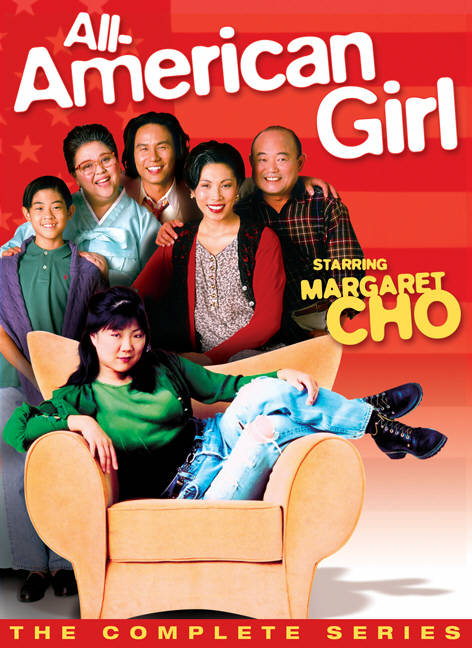
ALL-AMERICAN GIRL: The Complete Series


by Caballero Oscuro

Margaret Cho completists now have an opportunity to pick up her short-lived sitcom from the mid-90s, All-American Girl. The DVD set has a few notable extras including commentary for a handful of episodes by Cho and co-star Amy Hill, as well as a brief retrospective also featuring Cho and Hill where they discuss the impact of the show and their perspectives on its run.

All-American Girl was loosely based on Cho’s experiences growing American in a traditional Asian family. While certainly noteworthy as the first US network show to feature an Asian cast, the comedy itself was dreadfully shopworn and commonplace. Cho has since gone on to great acclaim as a sharp, insightful standup comedian, so it’s a bit of a letdown to find her talents so woefully hidden in this production. However, she and her supporting cast are game and pleasant enough, especially Amy Hill as her TV-addicted, comically accented grandma.

The series is a classic "fish out of water" story, with Cho’s American attitudes continually clashing with her family’s traditional views on topics such as dating, employment and education. Her mother is her primary antagonist, while her father is the calm mediator. A couple of brothers and Cho’s girl friends are also along for the ride, but rarely contribute much more than throwaway one-liners each episode. The grandma gets the best material, usually via her comments during her time channel surfing through every possible bad show on the air. In one of her funniest episodes, she becomes a Nielsen rating participant, ultimately allowing her to offer the observation that ratings shouldn’t be the only deciding factor to keeping shows on the air, quality should count for something as well. Unfortunately, the show was just starting to show hints of quality at that point, so there was no apparent redeeming value to keeping it on the air. The series was struggling for survival at the time and was cancelled around a month after this episode aired.

The show seems extremely dated now and actually seems like it must have been dated even then, with laughable fashion for Cho and her friends and a horrendous soundtrack that sounds like it was lifted from an 80’s comedy club backup band. ABC had many similar sitcoms airing at the time (I’m looking at you, entire “TGIF” lineup), but for whatever reason Urkel and the Olsen Twins were allowed to prosper while All-American Girl folded. By far the most surprising aspect of this show is that in spite of its many shortcomings, it’s still watchable. It’s certainly not essential viewing by any stretch of the imagination, but it is a bland yet enjoyable serving of comfort food for your TV.

Wednesday, February 01, 2006

THE DICK CAVETT SHOW: ROCK ICONS


by Fumo Verde

Dick who, Fumo?

Dick Cavett, babies, he was “the” hep cat everyone wanted to be seen talking to back in the 1970s even though Johnny Carson ruled late night television. For example, Joni Mitchell didn't attend Woodstock because her manager was worried she might miss her appearance due to the bad traffic, and in a bonus feature we see The Rolling Stones perform at nine in the morning at Madison Square Garden because Cavett was the only interviewer Mick Jagger would let come and record the group.

Cavett was a comedian and a one-time writer for Jack Paar, Carson's predecessor on The Tonight Show. He went on to host a show for ABC, which eventually became, surprisingly enough, The Dick Cavett Show. He won an Emmy for the show, which was canceled, but then brought back to life more than once. He also won praise from his colleagues, not because of the people he had on his show, but because of the questions he asked and the way he listened. That is a rare concept....listening. Cavett did it and did it well making his guests feel much more comfortable.

That's sounds cool, Fumo, but Rock Icons, what's up?

Ok, this is kind of like a documentary, but it's not. It's a collection of Cavett's talk shows that aired during the years between 1968 and '74. He had all types of people on from rock stars to pro athletes to congressmen, and since the backdrop of the times were drugs, music and Vietnam, everybody from presidential possibilities to timeless actors had a voice on Cavett's show. The rock stars didn't just perform; they were interviewed and got to ask questions of other guests like everyone else did.

On disc one, when Sly and the Family Stone perform, the funk is out in force, and so is more noticeably the cocaine. If you look closely you can see it slide out of Sly's nose. This segment contains one of the oddest talk show interviews ever. It has got to be seen to be believed. I can't ever start to explain the madness that ensues during the interview.

Another moment I found to be funny is when Jefferson Airplane along with Steven Stills and David Crosby are jamming, Cavett turns to the camera and shouts for the young crowd surrounding him, who are watching the musicians intensely, "We'll be right...ah, we...oh you know." The show comes back with the band still jamming. Once again, Cavett looks at the camera, this time waving goodnight as the credits roll while the music keeps on coming.

Of historical significance is Jefferson Airplane's performance of "We Can Be Together". Obviously, the censor was an old man who had the job for a while and knew nothing about the long-haired freaks who sang rock 'n' roll because this DVD contains the first, and possibly the only time, the word MOTHERFUCKER was ever said on network television with the lyric “Up against the wall, motherfucker.” Hell, I would buy it just for that.

Disc Two is dedicated to Janis Joplin, who loved being on the show and liked Cavett a lot. On all three shows Janis sings her heart out. She makes one wonder where her spirit in music could have brought her if she hadn't passed on so young. In one episode there is an appearance by the comedic group the Committee, who Janis and Cavett both get to participate with in "Committee Chorus of Emotions"-- this was crazy, it almost topped the Sly Stone adventure as participants sang in different emotions.

Disc Three is an all-time classic. It starts out with Stevie Wonder, who at the time was about to turn 21 and didn't dig being called "little Stevie Wonder" any more. Of course, Cavett asks why. Stevie plays "Signed, Sealed, Delivered, I'm Yours", which was coming off his next album. The liner notes explain that it was the name of the album, but the song itself never made it to that vinyl cut. It eventually became a B-side.

Next up is George Harrison, the first Beatle to hit number one on the record charts as a solo artist, promoting his new album and soon-to-be-released film Concert for Bangladesh. He brings a film clip that shows a performance of "Bangla Desh" and in it you get to see Eric Clapton and Ringo Starr amongst others. Also in Cavett's enclave is sitar genius Ravi Shankar and guitarist/vocalist Gary Wright who was from the English band Spooky Tooth. Both of these men played with Harrison during this legendary concert, the very first rock charity concert, and since Harrison wasn't the spotlight hog as others can be, when he was done promoting his film, he let Shankar and Wright do their thing.

Paul Simon appears next playing songs such as "American Tune", "Love Me Like A Rock" and "Bridge Over Troubled Waters". During the interview, Simon gives a little sample of what he is working on next, and for those of you who like Paul Simon, try to guess what song it later becomes.

This DVD set has some great performances, but first and foremost, this set is a collection of The Dick Cavett Show episodes. After the band or artists play their two or three songs, there is still 45 minutes of show to sit through, and if you are not a history nut, such as I, then you will definitely be happy that your DVD player can access just the music scenes.

It is a very interesting look back on American culture, and what was happening at the time, but the name Rock Icons is a little misleading. Instead of entire episodes, they could have cut a bunch of rock star segments together and really made a Rock Icons classic, but they didn't and that's too bad.

Don't get me wrong; the musicians are great. Each performance is moment in time itself, and even though the show itself has other great and enduring guests, it just takes so long to get through. Dick Cavett appears and sets up each segment; what happened, when it aired all that, but the show itself can get slow and choppy because they burned it right for the original tapings, chopping out the commercials. If you don't mind looking back into talk show history, then take a seat, cause this will be a long ride.

This is Fumo, saying...safe holidaze, babies.

Wednesday, January 25, 2006

John Fogerty: The Long Road Home


by Fumo Verde

In June, John Fogerty was inducted into the Songwriter's Hall of Fame. It's an honor bestowed upon such greats as Hank Williams, George Gershwin and Duke Ellington; Fogerty is just as deserving. Between 1968 and 1972, Creedence Clearwater Revival (CCR), led by John Fogerty, not only had 20 singles on the Hot 100 for over a year, but also had nine Top 10 hits in a row. CCR was, and still is, the most successful American rock quartet, earning 21 gold and platinum records and The Long Road Home will make it clear why.

Fogerty and the band are known for songs like "Proud Mary", which, when tallied, has been played over 7.5 million times on the radio and TV airwaves. "Down on the Corner" and "Up Around the Bend" have simple cord riffs and drum beats that are uplifting and fun. Others, such as "Fortunate Son" and "Who'll Stop the Rain", are political and were shaped by Fogerty's discharge from the army in '68. He hasn't touched them since originally writing them, yet those songs resonate just as strongly today as the country finds itself locked in similar circumstances of fighting an increasingly unpopular war. That shows you the staying power of a true musical artist.

This CD is filled with 25 tracks, four of which were recorded live on his 2005 tour, including a blistering version of "Fortunate Son". Most of these tracks were first recorded between '68 and '72, yet some such as "Centerfield" and "Hot Rod Heart" were recorded after the nasty divorce from his band and his record label, Fantasy Records. Also included is the infamous song "Run Through the Jungle" which brought Fogerty through the doors of our gracious court system when Fantasy sued him. They claimed the chorus for "The Old Man Down The Road" was too much like the aforementioned song. Fogerty won the case; he illustrated how the songs were different with his guitar on the witness stand. I bet nobody tried to get out of jury duty then. Both songs are present for you to judge them for yourself.

For almost a decade, Fogerty refused to sing any of his CCR stuff because of legal entanglements, but the lead voice of Swamp Rock could not be quelled for long. Soon after an emotional visit to the grave of original blues master Robert Johnson and with new owners at Fantasy Records, Fogerty decided to bring that special, southern-twanged bayou beat back to his fans. Even his recent recordings have his distinctive sound, whether it is his twanging guitar, or his gut-wrenching voice or the lyrics that are true to life. One still envisions the days of protest, free love and long hair, and hitch hiking across the USA.

If music is the soundtrack of our lives, than Mr. Fogerty is one of our best authors. He has written music that has lasted more than its normal duration, not just designated to the "oldies" channel on the FM dial. The reason for this is because Fogerty, now more than ever, is happy about being a rock artist and his songs show it, like "Travelin' Band", which he opens each concert with.

John Fogerty is a class act, a bandleader, guitarist, and vocalist; one whose songs have been covered by people like Ike and Tina Turner to punk rockers like Stiv Bators and has been used in endless Vietnam-War movies. If this CD is the best of John's past, I can't wait to hear his future. For now, I'll just have to pack a greenie, sit back and let this CD take me on the journey down that Long Road Home.

Fumo Verde--- Peace, babies.

Tuesday, January 24, 2006

Ray Charles: Genius & Friends


by Fumo Verde

Associate producer James Austin explains the project in the liner notes. "Back in December 2003, I received a call from Ray Charles. He was weak from the liver disease that eventually took him from us in June 2004. It would be the last time I would speak with him. He had a specific request: He wanted me to find the duets record that he recorded back in 1997 and '98. As some will know, Ray's masters were like his children. Since these tracks were never mastered or released, to Ray they seemed more like orphans. By the time I found them in the vaults, Ray was very ill and would not be able to discuss what would become of this album."

Austin along with album producer Phil Ramone, executive producers Amet Ertegun, Peter L. Funsten and Quincy Jones didn't put together a tribute album; no, not at all. The title says it all, Genius & Friends. Genius is what Ray Charles was, and this CD proves it. Ray was like a fine wine, getting better with age. His voice wasn't just soothing or soulful with deep roots set in the old blues fashion. It was also the voice of this country. Ray Charles was and still is an American icon, and since his start with Atlantic Records back in 1953, he has given the world 50 years of unbelievable memories via music that has become part of the soundtrack of our lives.

On this 14-track CD, Ray invited artists whose lives had been touched by him and his music, singers and songwriters alike, such as Gladys Knight, Mary J. Blige, Diana Ross, George Michael, and yes, Willie Nelson. Although Ray only wrote two of the songs on this disc (tracks 4 & 12), the words and the sound definitely have his touch and feel.

The first track of this CD is a tune written by Narada Michael Walden and Darin "Zone" McKinney called "All I Want To Do". Ray and R&B singer Angie Stone blend this song together like a smooth brandy and a fine Cuban cigar with its soulful groove and harmony. "You Are My Sunshine" (Jimmie Davis/Charles Mitchell) finds Chris Isaak joining Ray. Here is where Ray's big-band side comes blasting through, combined with Chris' "New Orleans" jazz this cut shows how much energy Ray still had a few years ago.

Mary J. Blige reminisces with Ray on "It All Goes By So Fast" (Ken Hirsch/Jay Levy), a soft, mellow duet that reminds us to slow down and enjoy life while we can. This whole CD has that mellow feel to it. Even "Shout" (Narada Michael Walden/Sunny Hilden), performed with Patti LaBelle and the Andrae Crouch Singers, has a mellow groove to it although its gospel roots are drawn up to that mellow groove Ray emulated through out his career.

Fumo's two favorite tracks close out the album. Willie Nelson (who also has a new CD out....I'll let ya' know about that one soon) jumps aboard with a live track from the TV special Ray Charles:50 Years in Music. An old blues song by Harlan Howard called "Busted", and babies, let me tell you that these two boys got the blues real bad, I mean REAL BAD. Like somebody kicked my dog, bad. A great song that, for all of its suffering, will give you a smile on the inside. The last song on this CD is one of the most beautiful songs in the world, especially when Ray Charles is singing it or Alicia Keys---who just happens to sing it with Ray. What more can you ask for? This song is significant because its the one Ray Charles championed to become our nation's national anthem, "America the Beautiful". If this doesn't bring a tear to your eye, then you are cold-blooded.

This CD is put together well, with a few exceptions. One thing that bummed me out was that the liner notes aren't very revealing on when these songs were written or who sung them first. Did Ray choose them or was it a collaboration we will never know? I'm not looking for a history lesson, but I am curious about how these songs came to this disc. Ray is gone, but his soul lives on in the music he has left us.

This is Fumo Verde saying....thank you, Ray, for everything.

Sunday, January 08, 2006

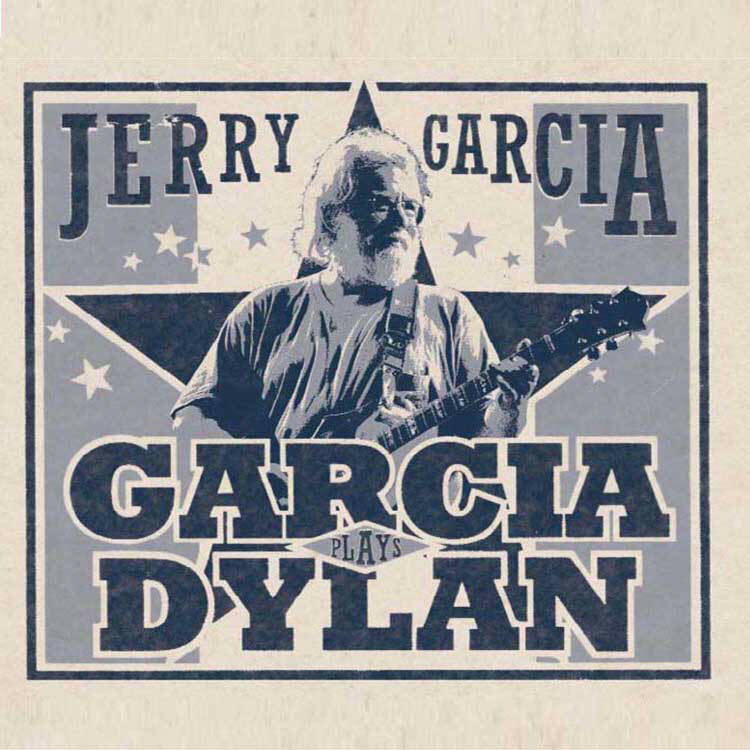
Jerry Garcia: Garcia Plays Dylan


by Fumo Verde

As most of you can tell, I, Fumo Verde, am a Jerry freak, but what you might not know is that Bob Dylan is one of the many people, along with El Diablo, to whom I have pledged my soul, so when I got word that Garcia Plays Dylan was coming out, I immediately told El Bicho that I had to do the review. El Bicho is a good man. This is a two-CD set that has Jerry winding his voice through the tales of the legendary Dylan with accompaniments by The Jerry Garcia Band, Legion of Mary, and of course, the Grateful Dead.

Dylan's words not only transcend generations but music genres and artists alike and Jerry was no exception. This set is comprised of songs sung by Jerry and played by the bands he roamed with over between the years of 1973 to 1995, which included Legion of Mary, The Jerry Garcia Band, who appear on most of the album's selections, and obviously The Grateful Dead.

Disc One features The Garcia Band playing on five of the seven tracks. "Positively 4th Street", that anti-establishment rant of the '60s is given a new form, a hard R&B touch that brings out the pain of loss and the hope of a new start. On "Simple Twist of Fate" and “Knockin' On Heaven's Door", Jerry delivers a gut-wrenching outpouring of his soul as his voice takes you through the tales of love and impending death that Dylan first told us so many decades ago. "I Shall Be Released" and "It Takes a Lot to Laugh, It Takes a Train to Cry", a Garcia/Merl Saunders duet, are two tracks on Disc One that have more of a gospel air to them with the former offering more of a glimpse of hope to its story.

Disc One is dedicated to the darker side of Dylan, proven by the emotions of the stories told. On Fumo Verde's scale of "Blue-ness", this disc is deep, deep blue, and it's not just the JGB droppin' the blues on you. The Legion of Mary puts a haunting twist to "The Wicked Messenger", allowing Jerry's guitar to go off on trip of pain and sorrow.

Disc Two is split down the middle with the Garcia Band and the Dead each having four tracks, with the Dead tracks being more upbeat. While "When I Paint My Masterpiece" isn't as dark as "Knockin' on Heaven's Door", you can find yourself wandering down a dark path while your soul absorbs the blues that cry out from such a song as this, or, even a more haunting tale with "Senor (Tales of Yankee Power)" on which Dylan had brought to light the darker deeds of humanity. Both these songs have a sharp edge to them, whereas the songs played by the Dead have a lighter feel to them. "Visions of Johanna" has Jerry's kind of highway blues, not trying to match Bob's, just bringing it around in a different way, a more Deadish way as was done on "It's All Over Now, Baby Blue", which closes out Disc Two. That song recreates that way we all felt when leaving Dead shows, always wanting the jams to last forever. Jerry and the Dead weave Dylan's message in that Grateful-jam fashion, and leaving the audience wailing for more.

These songs were all recorded at live shows and are previously unreleased. The cheers and enjoyment from the audience can be felt across time and space. How I wish I could have been there, at any of these shows, but alas, this set will have to do, and it certainly does. It's a great set for a night of having friends over and just kicking back, making a few cocktails, rollin' some of your own and enjoying Garcia Plays Dylan, a classic in its own right.

And if you don't believe me that the words of Dylan are in the competent hands of Jerry, listen to what the man who inspired this collection has to say: "There's no way to measure his greatness or magnitude as a person or as a player... He really had no equal..." Bob Dylan, after Jerry Garcia's death in 1995

This is Fumo Verde........Peace.

Saturday, January 07, 2006

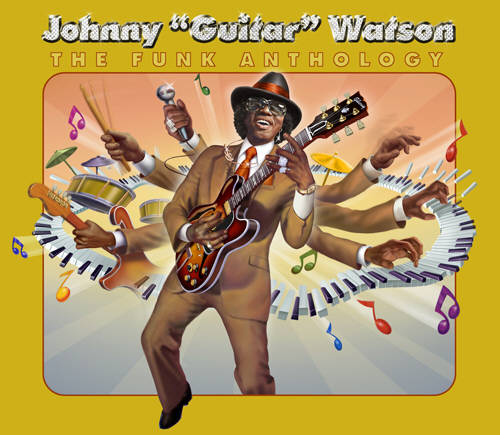
Johnny "Guitar" Watson: The Funk Anthology


by Fumo Verde

Are you ready for the funk? I said, “Are you ready for the funk?” How about some Soul? Mix that together with the Blues, and the groove you get is one by the master himself, Johnny "Guitar" Watson. The Funk Anthology follows Johnny through his disco decade, 1974 to 1984 where his grooves were being spun at all the discos around the world, yet Johnny wasn't some disco flash-in-your-pants, one-hit wonder. He was more than that, to a point where big label rappers are using his riffs and jams.

Young John Watson (as he was known) was born in Houston, TX, on Feb. 3rd, 1935 and by the age of nine he was on his way to mastering the piano. Johnny fell in love with jazz, but by the age of 19, he was one of the deepest of the blues players around. His influences were T-Bone Walker and Clarence "Gatormouth" Brown. He played with such greats like Johnny Copeland and Albert Collins, but the guitar didn't become his main instrument until he saw "Guitar" Slim in 1954, from that time the guitar became the tool of choice. His career spanned from 1953 until his death in 1996. And get this; the man was a consummate performer until the end, dying while on stage during a tour of Japan.

His amazing talent had an influence on others, such as Jimi Hendrix, Sly Stone, George Clinton, Etta James, and Frank Zappa. Jimmy Vaughn was quoted as saying, "When my brother Stevie and I were growing up in Dallas, we idolized very few guitarists. We were highly selective and highly critical. Johnny 'Guitar' Watson was at the top of the list, along with Freddie, Albert and B.B. King. He made magic.” “Johnny was my main idol, he taught me how to sing the blues,” said Etta James, a legend in her own right. As for his live shows, young artists watched in awe and brought his moves and antics into their own acts, people like Jimi Hendrix and Prince.

Although none of his songs made number one on any of the charts, he did have songs that stayed within the top five. Songs such as "Those Lonely Lonely Nights" and "Three Hours Past Midnight” are still favorites on blues stations across the U.S. In 1961, Johnny went to the King Label where he recorded "The Gangster of Love," "Cuttin' In," and "Mercy, Mercy, Mercy", which also made the top 10 for a period of time. In 1970, Johnny veered away from the traditional blues and decided to head out on adventure into the realm of funk and disco, and that's what this two-CD collection is about.

From 1974 to 1984, Johnny made albums, vinyl records for those of you under the age 23, such as A Real Mother For Ya, Johnny "Guitar" Watson and the Family Clone, and Funk Beyond the Call of Duty, and if those don't sound funky enough for ya, how about Ain't That a Bitch, which is also the name of the start-off song on the first disc. These songs actually have meaning to them, unlike some of the disco trash that was being tossed around on the dance floors in the mid '70s.

Johnny was a musical genius who could pick up an instrument and have it figured out by the end of the day. On most of the songs that are on this album, he plays all the instruments: drums, keyboards, and especially guitar. His lyrics were a key along with his talent for catchy riffs; what he had to say opened up the doors to the world that he was living in. "Funk is looking at the world and saying, 'It ain't what is seems. It ain't what it should be. It ain't what I expected. It's funky.' Listen to the song What The Hell Is This and you'll catch my drift." That's the way he saw it, and that's the way he played it.

Soulful love ballads with a blues-groove background such as "Love That Will Not Die" and "I Want To Ta-Ta You Baby" have beautiful lyrics that play around in a sexy way. Others, such as "Funk Above The Call of Duty" and "Tarzan", are classic comedies wrapped up in funky-blue kind of groove. "ET" doesn't talk about aliens but describes how his baby looks and dresses; what Johnny is basically saying is that his woman is out of this world. The blues also show through on tracks like "Stung Out" and "Cop And Blow". "I gave indulgence new meaning," Johnny said once and these two songs give you a window into what his world was like at that moment in time. "Feel The Spirit Of My Guitar" is a track that also gives insight to the life of this unbelievable musician and man. Some guitarists make it moan or sing; Johnny could do that, but he preferred to let it talk, and, oohh the stories it told.

This two-CD set is definitely worth the money for any music enthusiast; it is stacked and packed with 31 funkadelic tracks taken from the life and mind of one of music's all-time greats. Like many knowledgeable musicians, it's about time we pay homage to Mr Watson by getting up off our asses and enlisting for some funk beyond the call of duty.

This is Fumo Verde...keepin' da funk alive.

Thursday, January 05, 2006

LORD OF WAR

by Carlito de Corea

Nicolas Cage’s new film, Lord of War, of which he is also one of the producers, does not quite hit its target. The film opens with Cage’s character, Yuri Orlov, a Ukrainian arms dealer, talking to the camera, giving statistics about the ratio of gun owners, one in twelve, to the entire number of people in the world, concluding with a cheeky remark about his only problem being to figure out how to get guns to the remaining eleven. The film goes on to show Yuri’s progression from working in his family’s restaurant to becoming the world’s most successful and ubiquitous “gun runner.”

While the film is dynamic and stylish in its imagery and direction, the story telling is somehow not quite complete. The story progresses prematurely through each stage of Yuri’s rise to the top of the gun running trade. We go from his witnessing a gangland hit in Little Odessa, which rather than shocking him somehow motivates him to become a gun dealer, to his first gun sale in some hotel room, then to his already having connections in the middle east, and, finally, to facilely procuring the object of his arbitrary romantic obsession, a world famous model, of Ukrainian descent, all in far too few scene changes. The effect is that the story feels like it is being pushed along too quickly without proper development, and that the situations the characters find themselves in are being artificially arrived at.

As a result the film seems less substantial, and at times unrealistic. We feel this early on in the film when we see Yuri simply walk into a warehouse full of abandoned U.S. military weapons without any explanation as to how he was able to do this; and then later again when he conveniently has a relative who is a general in the Ukrainian military during the collapse of the Soviet Union, and is therefore able to obtain prodigious amounts of AK-47s and a host of other weapons and military machinery, by which he finally becomes top dog in the arms trade business, so to speak.

In the beginning, from the voice-over, I wondered whether this movie was made from the memoirs of an actual gun dealer, in the same way that Goodfellas was based on the Henry Hill memoir of his days in the mafia. I hoped that this might be the case, as I pondered the conspicuous absence of any exposition. That is to say, I hoped the lack of detail, the sudden appearance of Cage’s character in a variety of high stakes circumstances, was coming from a confidence in the facts of some memoir, rather than the absence of any logistical knowledge of the gun trade. In the end, however, it is the sense that the film’s creators only possess a vague, possibly researched, knowledge of the gun trade that predominates. Details are glossed over in too many places to create a realistic sense of danger or circumstantial tension. The bold, expedient pace, in the end, seems to serve the purpose of covering up narrative deficiencies, rather than taking stylistic liberties on the foundation of authentic knowledge.

This loss in the film’s realism is further compounded by the casting of Jared Leto as Yuri’s brother, Vitaly. Leto is too clean cut and good looking to be playing a gun dealing cocaine addict from Little Odessa, and he simply does not look like an Eastern European. Perhaps as an Orange County brat snorting cocaine he might carry some appeal, some credibility (as he did in Requiem for a Dream), but in Lord of War he stands out like…well, an Orange County brat…in the middle of West African and South American guerilla warfare…snorting cocaine. His character was distracting to watch. Ethan Hawke is passable as the Interpol agent on Yuri’s heels, although perhaps a little young for the part, or perhaps too boyish. We get the feeling that in this part any big name would have done the trick. Cage is engaging and for the most part enjoyable enough to watch as Yuri, although his voice-over seems to contradict his purported heritage, sounding more like a valley dude from LA than a street smart kid from Little Odessa. And the lethargy in this voice-over somehow seems out of sync with the pace of the film. A little too “laid back” for the frenetic circumstances that dominate the character’s life.

While the political point of view seems clear—people in the arms business are without conscience and are as responsible for the death that comes from the weapons they sell as the people who pull the triggers—in the end we are not sure whether to admire Cage’s character or condemn him. Is he the ultimate survivor in a corrupt and violent world, a realist, to be admired, or is he a rationalizing monster, to be condemned? Lord of War seems to straddle the fence on this question. While we can see that the answer is not simply that he is one or the other, but both, the film makes the mistake of trying to answer both moral positions, making the film sophomorically didactic at times. Perhaps a grittier and less apologetic view of the arms trade, and a little more confidence in the audience’s ability to discern the moral of the subject matter, would have strengthened the film.

Despite some of its shortcomings, however, Lord of War is not unenjoyable. The strength of its imagery and the sensual scenery of the South African location, and other various locations, carry the film a long way. As well, much of the action and special effects are quite dynamic and make the movie enjoyable enough to watch. Such moments as the landing of the cargo plane on a dirt highway in West Africa, as Yuri and his crew are being shot at by Interpol jets, for example, create visually powerful moments in the film that help make up for some of its other deficiencies. While this movie does not quite hit the mark as the heavy hitting political film that it perhaps intended to be, it does manage to be entertaining.