Sunday, April 16, 2006

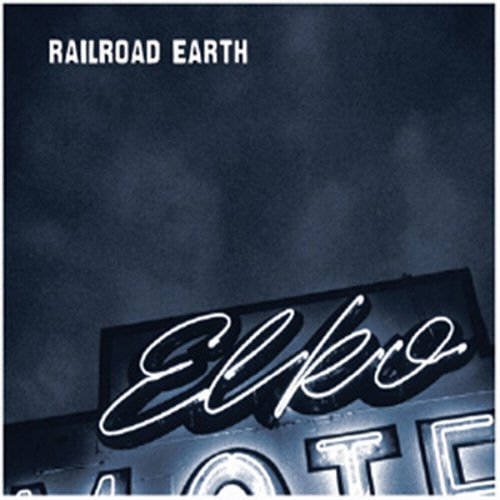
Railroad Earth: Elko


Written by Fumo Verde

Fumo likes the bluegrass, along with the green. Through newer bands such as the Yonder Mountain String Band and Nickel Creek, I have heard the distinction between traditional and progressive bluegrass where percussion and extended jamming have become a part of the latter form. RRE blurs the line and bridges the gap.

Elko is a double-CD live set of songs and jams from their last three albums. If you would like to try something new in the way of bluegrass music, RRE could be your band. For those of you who may have heard of these cats already, you know what they can do.

Being a virgin to this new sound, “Long Way to Go (The Good Life)” was the cherry-popper for me, and oh, what a song. The roar of the crowd and the picking and tickling of the strings as they tune up makes way for a melody that sets you free as you listen to the story of a long way to go. This tune is a six minute and twenty-one second song that is the second shortest on these CDs, so these guys qualify as a “jam band”, believe me.

“Colorado (The Black Bear Sessions)” gives you more of a traveling feeling with its rolling banjo and sweet violin, but my favorite song off the first disc is “Bird in a House”, the title track off their second album. This song has a very “Dead” feel to it with as the drums keep the beat bumping along while the violin strolls along with the lyrics. “I want to sing my own song that's all/cried the bird and flew into the wall” sounds goofy, but the words reflect a feeling that most of us at times can relate to: a desire to do your own thing even if the outcome will lead to failure. The mandolin and violin blend well together during the jam, but when the electric guitar kicks in, it produces a soothing Jerry Garcia feel as the riffs wander and express themselves.
The second disc starts off with the title track Elko with its beat clicking along and all the strings coming out to play, this song's lyrics toss out images of the tired motel stuck in the middle of nowhere on some lonesome road.

“Like A Buddha” is a sixteen-minute jam that strings together elements of all aspects of this bands talents. The plucking that starts it out, along with the cymbals tinkling away give a great lead-in to the flute that causally draws you in, “Jethro Tull” like. Once again, there is the hint of Jerry when the electric guitar joins in. Off the second disc, this song is my favorite. The one political song on the second disc is “Warhead Boogie”, which also becomes a wandering jam that wanders for a little too long.

RRE shows their grand talents here on this CD, before a live audience and what makes them differ from other bluegrass bands can be described in one word: fullness. With a sound like bluegrass, usually the more simple it is, the more traditional it becomes, but with RRE, it's the fullness of the instruments that gives way to the simplicity of what bluegrass is all about. RRE's rhythm, along with its harmonies, holds the spirit of bluegrass while the dobro, the flute and electric guitar open up for the free ride that lets RRE take bluegrass and the listener to a whole new realm of what bluegrass can be.

So step right up and buy your ticket, cause Railroad Earth is leaving the station, and this train you don't want to miss.

This is Fumo, saying “All Aboard.”

Wednesday, April 12, 2006

SLITHER


Written by Tío Esqueleto

Some months ago, when Slither was first brought to my attention, it was via a quick blurb synopsis, accompanied by a small, special effects headshot of what has become known as the Rookerslug. If you don't know what I'm talking about, it looks remarkably like a cross between Belial from Basketcase, anything From Beyond, and a struggling William Hurt at the end of Altered States. Heaven, to some of us. My initial thought was straight to video, but kudos to the "concrete", or "practical", special effects. No CGI. I later found out it was, in fact, soon to be a theatrical release.

Instantly, as with any film that sparks an interest, the very first (and most important) question is "Who's directing?" A trip to the IMDb, and a few VERY disappointing clicks later, I had my answer: James Gunn, a virtual no-name who, to his discredit, had penned three of what I would consider to be, personally, the most frustrating and insulting adaptations in the last 10 years: The Scooby-Doo films, and the Dawn of the Dead remake.

OUCH!! Scooby Doo is something I still hold very close to my heart, and couldn't believe that when it finally had it's chance (potential! - potential! - potential!), was hugely mishandled. Dawn of the Dead - REMAKE? Just plain blasphemy. Fanboy lament...cry cry cry...blah blah
blah..yeah, I know.

So, just when I was about to toss Slither over to "maybe someday through Netflix" status, I scrolled down a bit more, expecting to further my disgust for Gunn, when I came across this little nugget. James Gunn had directed Tromeo and Juliette, along with soiling his hands on a number of various Troma productions. He is Troma family, so to speak. Now I'm not the world's biggest Troma fan. In fact, with the exception of The Toxic Avenger, I find most of it pretty unwatchable. Respectable, but unwatchable. One thing you cannot take away from Troma, is that Troma has heart. So, it was a combination of that Troma "heart", the photo of the Rookerslug (and its obvious nods within its respected genre), and the fact that he tends to pretty much stay within the horror archetype, that I decided to give Mr. Gunn the benefit of the doubt.

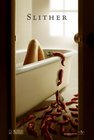
I figured if this guy, with a true love, and a background in the most offensive of horror titles, is given a budget and an 'R' rating on a killer slugs from outer space movie, we could be in for horror gold, or at least one hell of a good time. Given the recent state of the horror film, a few gems aside, what's to lose? And, from there, it all fell into place. No big stars, an 'R' rating but with the Universal Pictures imprint, and the eventual arrival of what has got to be in the running for the best one-sheet of the year, the Slither bathtub poster. It was finally time to see what Mr. Gunn and, ultimately, Slither was all about...

Slither is your classic drive-in monster movie about a parasite from outer space, bent on taking over whatever planet it lands on next. In this case, a jelly-like, slithering, space vagina, born from a meteor that has recently crash landed in the woods of a small farming town, Anywhere, USA, where the recent start of deer-hunting season, appears to be all that is on anybody's mind.

The creature eventually finds a human host in an unsuspecting Michael Rooker, a loving husband who stumbles across it while taking a nighttime stroll to clear his head after a tift with the wife. It then proceeds, via its new Rooker shell, to mate with a local and begins its world domination, one parasitic slug at a time.

Slither is gross, suspenseful, and at times genuinely scary. It hails back to a time in horror movies that we haven't seen in quite some time. A time where a lot of directors are now claiming to go, but usually fall short. Drive-in, grindhouse, splatter, 42nd street, whatever you want to call it, Slither beckons back to the good old days when nothing was taboo. When kids (yes kids) were just as prone to an on-screen demise, as their grown-up counterparts (usually a
telltale sign that the studio system was in no way involved).

All of these things ring true with Slither but, more than anything, Slither is fun. FUN! - FUN! - FUN! The comedy in it is superb. It is equally as funny as it is gross, scary, or "wrong", if not more. Everybody in it does such a phenomenal job. One-liners and bad dialogue are quite possibly the biggest downfall for most genre movies. I learned long ago to excuse this shortcoming, as it just seemed to come with the territory. One-liners, especially.

Even Hellboy, while I know it is his shtick, and I was more than happy to oblige them, was tiring at times, especially to somebody who didn't know the character. With Slither you actually hang on for the next great line. The dialogue overall is one of the greatest assets to this movie. I found it a lot like Stephen King when he writes Podunk's and idgets. He does it quite well. Very realistic, yet very colorful. Slither's dialogue falls somewhere between this colorful King-speak, and the finer filth of the great John Waters.

The mayor in this film, played by Gregg Henry, being the prime example of this Midwestern, yet overtly Southern fried local flavor. Gunn doesn't skip on the references, either. If you know what you're looking for, this picture has more references than if Kevin Smith, Quentin Tarantino, and Kevin Williamson, engaged in a threeway behind the video store, while Eli Roth watched. Jam packed! The aforementioned Mayor character, Jack Macready, is a nod to Kurt Russel's character in The Thing. One of many references that include The Blob, The Brood, and Videodrome, just to name a few. There is a serious Cronenberg undertone running throughout. Pregnancy woes, slime, one's body rebelling against oneself. I wasn't surprised to find that Gunn is a rampant Cronenberg fan. It certainly shows here.

My only very minor Slither complaint would be the CGI slugs, but there are more than enough wonderful concrete/practical SFX, that what little CGI there is is more than bearable. In fact, most of the CGI is really quite good.

They just do not make them like this anymore, my friends. This is what they mean by a 'B' movie. Most people confuse 'B' movies with really shitty attempts at 'A' movies. Not this one. It was a 'B' movie from its inception. No stars, nobody big backing it, no budget but surprisingly well made, and Rated R, it is a CAPITAL B+++ (A), a fucking riot!

Does it excuse Mr. Gunn from his past travesties? No, but it is a great start down the road to redemption.

Sunday, April 09, 2006

Abou-Khalil, Kuhn & Cagwin: Journey to the Centre of An Egg


Written by Fumo Verde

For a real freaky evening, pack a freshy-fresh, pop this CD into the player, pull out a bottle of red (and not that Charles Shaw shit, either) and prepare for a different kind of East meets West. Lebanese-born oud master Rabih Abou-Khalil lays down some of the most interesting tracks you'll ever hear. Not being one to be pigeonholed to a certain genre of sound, Abou-Khalil explores waves not yet ridden. Journey to the Centre of an Egg has nothing to do with omelets but everything to do with breaking the shells and pushing boundaries.

At first, I thought these guys were just tuning up when I started playing the disc. Once I turned it up, I started to catch on. Now, I think I know what an oud is, but I'm not too sure. I do know to become a master at anything, you have to be practicing for a long frackin' time. For 25 years, Abou-Khalil has been charming the world with his oud and the way he plays it.

In Journey... he blends jazz, the sweet-controlled sound of chaos, with his Middle Eastern sound. Subscribing to the Miles Davis theory that "what you don't play is just as important as what you do play", Rabih takes his oud to a new realm along with long-time percussionist and collaborator Jarrod Cagwin, whose artistry is subtle, yet dynamic. He seems to be at home on this disc as he sometimes slips in and out of the chaos until Rabih takes control.

Joachim Kuhn, one of Germany’s greatest pianist/composers, adds in with his renowned skills. He is one of Europe's most accomplished and respected jazz musicians. Like Felix the Cat's magic bag of tricks, Kuhn's experience brings a cornucopia of ideas that lend themselves to Rabih's adventures. This is the first time Rabih has ever added a piano. Drummer Wolfgang Reisinger joins in on two tracks.

The Journey… starts out with the oud and piano in a comparable rhythm with the drums softly beating in the back on "Shrewd Woman", sounding like you are about to set out down the old Silk Road. Somewhere down that road some unstructured jazz breaks in as the piano and oud now offset each other with different little riffs and chords that bounce around. Cagwin is lured into the chaotic form, but then his beats seem to charge off into the distance. He is the first to come back, bringing in Jochim and Rabih, as the first track settles down. That is followed by "Little Camels". The oud and drum start this out with a traditional Arabic sound, but then Rabih stretches the oud deeper as Kuhn brings in the keys of the piano.

The first three tracks are a build-up to the middle two, " I'm Better Off Without You" and "Natwasheh and Kadwasheh", both of which are the antithesis of the CD. In the former, the movement of the rhythm starts out strong and quick, similar to "Little Camels", yet in the middle of the piece the oud takes a slow, dark turn. Here is where the Davis Theory is applied. Rabih holds well to it, and so do Kuhn and Cagwin. Wolfgang too knows his formats as he taunts the oud and piano with his taps and rolls. "Natwasheh and Kadwasheh" comes right after and the distinction between the two becomes blurred. Like a 25-minute jam, the tone picks up in "Natwasheh and Kadwasheh" after a few moments.

"Mango" and "No Plastic Cups, Please" follow. They break from Middle Eastern tradition and blow full on, especially on "No Plastic Cups, Please", as the oud chases the keys around the pattering of the drums. "Sweet and Sour Milk" finishes off the "Journey..." at just over four minutes with a retracing of Middle Eastern sounds as the piano blends in to the storytelling of the oud. Chaos is over and all have made it safely home, least it seems so for now.

Journey... is the equivalent of an abstract painting where the artist’s idea is for the viewer, or this time the listener, to make up their own definitions about what they had just experienced. I believe in Davis’ theory, but at times I found myself getting up just to make sure my player was still on and the disc wasn't over yet. I understand that what is not played, like what is not said, can be made out to be very powerful or very delicate depending on the enterprise that is being presented. The essences of which, is captured here.

Abou-Khalil and his crew have brought us the ancient sound of the Middle East and crafted it into the abstract format of Western, specifically American Jazz. Rabih has proved that sounds from anywhere in the world can be brought together, and when this occurs, new ideas in music can arise, although you may have to crack a few eggs in doing it.

This is Fumo saying.....I’m gonna make an omelet...I got the munchies. Later.

Thursday, March 30, 2006

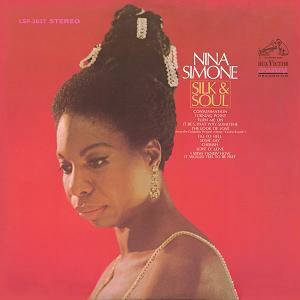
Nina Simone: Silk and Soul & The Soul of Nina Simone

Written by Ladron de Tebeos

Welcome back to my lair, my fellow carbon-based life forms, sorry I’ve been gone so long, I’ve been trying to raise funding for my new film, Brokeback Catholic Church. (Send all comments regarding my hell-bound soul to the owner of this website) Today we’ll be playing a little game called “Chasing the Dragon” and we’ll be spinning a CD or two from the High Priestess of Soul, Nina Simone. Let’s roll.

The album starts with a pounding drum and shrieking guitar that overwhelms your senses and…hmmm, I’m sorry, my CD changer started playing Led Zeppelin I by mistake…actually, this is pretty cool, I think I’ll review this instead…whoop, hang on a sec, the phone’s ringing…Okay, apparently the owner of this site, Mr. El Grande Bastardo, a.k.a. El Bicho, has told me that the Nina Simone review needs to be reviewed tonight, and if I do this review while high, he’s going to revoke my papers and send me back to El Salvador, stupid puto.

Silk and Soul is the follow up to Nina’s first album Nina Simone Sings the Blues. Here again, she has taken songs and molded them around her sensual silken voice to create an album that would best be experienced ‘making sweet sweet love’ as Chef would say. Nina wrote the song “Consummation”, a beautiful love song that reveals the tender side of her soul. “The Look of Love” is a Burt Bacharach written song (not a cover of that classic ABC song) from the motion picture Casino Royale. She also does a cover of that old Association song “Cherish” you remember that one; ‘Cherish is the word I used to describe, all the feelings that I have’, blah, blah, blah, it’s gay, but she makes it work. There’s a sense of longing on songs like “I wish I knew how it would feel to be free”, and “Why must your love well be so dry”. In truth, almost all of the songs on this album are well done, and fine examples of the way Nina can take a tune and make it her own, capturing the spiritual and melodic message of the writer.

Next up, The Soul of Nina Simone is a CD/DVD collection of greatest hits and live songs put together on one CD/DVD. (Does that make sense? oh well, who cares) The songs are more soulful and less pop-sounding than Silk and Soul, and this is a good thing as it gives her more of a chance to use her expressive vocals to capture all sorts of subtleties and nuances in this collection of songs. “Just Like Tom Thumb Blues” is a cover of an old Dylan song that tells of a man let down by everyone, society, government, and friends. “I think it’s going to rain today” is a heartbreaking song written by Randy Newman that looks achingly into a grey future. “To Love Somebody” is a cover of the old Bee Gees tune, turned from some bubble gum pop crap into an anger cry of betrayal. “Feeling Good” is just a great song that received some airplay on HBO promo’s for Six Feet Under, you know how it goes, ‘birds in the sky, you know how it feels, etc.’ I would say, if you could only get one of these two CD’s, definitely grab this one.

The DVD portion of this disc consists of several live performances from the ‘60s, including her performance on The Ed Sullivan Show and several songs from the Harlem Festival in ‘69. It’s all very good stuff, although I would have liked to have seen her in a more intimate setting, a small smoke-filled jazz club, maybe. But in spite of the settings, her voice shines through and connects with the audience to the point where the surroundings don’t matter, it’s just that voice and that presence and that’s all you need.

Wednesday, March 29, 2006

Oscar Castro-Neves: All One


Written by Fumo Verde

Who is this and why are you listing to it, Fumo?

Oscar Castro-Neves is a cat from Rio, Brazil. He was born into a musical family and by the time he was a teenager, he was writing, arranging, and composing all of his own material when people in the mid-1950s started to notice. He, along with Antonio Carlos Jobim and João Gilberto, was a vanguard of the Bossa Nova sound, which was a Latin beat that was coming out of South America and the Caribbean during some heavy times when the cold war was in full swing. It was music that gave the American people the haze of a tropical paradise south of the equator. After becoming a member of Sergio Mendes' group in the early ‘70s, his fame spread, and since he has performed with such greats as Yo-Yo Ma, Joe Henderson, Stan Getz, Eliane Elias, Edu Lobo, and countless other Brazilian jazz, classical and pop music stars. His big hit in the U.S. was “The Girl from Ipanema”.

Oscar has an impressive resume and he can play beautifully. “Double Rainbow” is a cool instrumental that uses guitars and violins along with a basic Brazilian rhythm that is the thread that ties this whole CD together. For anyone looking for something light and airy, like a scone, this song is it. He revs it up a bit in the title track, "All One", which reminds me of a cheesy ‘70s movie I saw late one night after a New Jersey Devils victory. With a binger by my side, I came across an old Sony and Cher movie, where they were young and Cher still had her original face. They ran through the flowers as the wind blew. The third track is called "Kurski Funk" and I’m still trying to figure out why. With a chorus chanting and clapping, this could be one of those World Music fusions, like a Brazilian and African mix, which it seemed Oscar was shooting for that but came up short. It smoothes out into something about to erupt but unfortunately, it never comes to pass.

Luciana Souza, a famous Latin singer lends her voice to “Morre De Amor”, and though my Spanish sucks (my English ain't to better either), I do believe this is a love song. Luciana's voice is beautiful, and the piano and violin add to the richness of Souza's sound, as it does on “Nao Me Diga Adeus” where Oscar starts out funky, before merging into late night jazz bar grooves, adding Luciana in between the piano and saxophone mini-jams. "One Bad Habit" ends the disc. Oscar explains his one bad habit, which of course, "it's you...I'm always bouncing in the buff with you". Whoa, Oscar. Kids read this shit; watch your mouth.

I'm not dissing Oscar for anything; his musical portfolio and talent go unopposed, and personally, I liked this album though it’s more background than forefront. Even if you don't want to hear this, you may someday, if you are in a hotel, in a midwestern mall, or going into see your broker. This album is for those you who enjoy the Muzak sound that drifted on the fringes of ‘70s disco balls and the soft music that plays in your doctor’s office while your waiting for your colonoscopy. The arrangements work out fine, but each song sounds too much like an elevator ride. I was left feeling cheated, waiting for heavy Brazilian guitar-playing and conga beats to kick in. “All One” started out sounding great, but then just got melded into jazz fusion that is right now being pumped through your phone, as you sit there on hold waiting for your bank.

This is Fumo, saying, “Adios, babies.

Tuesday, March 28, 2006

HORRORPOPS - House of Blues, Sunset Strip - 3/24/06


Written by Fantasma el Rey


“H-O-R-R-O-R-P-O-P-S!!!” is the cheer and Bring It On is the latest album by Horrorpops who rocked the House of Blues to its foundation as they proved Neil Young’s line that “rock ‘n’ roll will never die.” But I’ll get back to them in a minute. There were two bands in support of Horrorpops this night: Left Alone and The Aggrolites.

Left Alone went on first, but because I was a tad bit late, I missed half of their set and didn’t get a chance to listen too well. As soon as we got into the club, my girlfriend and I had to figure out how to get in touch with some friends that we were holding tickets for. Added to the mix was the fact that we had to part a sea of people to find a desperately needed restroom due to the extra large energy drink we shared on the ride up to keep us bopping. My girlfriend also wanted to check out the jam-packed Horrorpops merchandise booth. All of this equaled no time to listen well. From what I did catch I thought that they were an “all right” band. I heard some punk rock and what sounded like a country tune, a nice compliment to their “classic punk” look, complete with colored Mohawk on the lead singer. My girlfriend’s youngest brother, David, who was attending his first concert, thought that they were a pretty solid band and liked them a little more than the band that followed.

The Aggrolites took the stage next and at first I thought they were an okay band with a solid rhythm and beat. Yet as I listened, I began to feel the vibe of this reggae band a bit more. The lead singer had a strong voice and an even stronger passion for what he was singing. This cat tried his hardest to get the crowd jumping and singing along but to no avail, yet he kept at it and went into the crowd to move them. Their versions of classics songs such as The Temptations “Ain’t To Proud To Beg” and The Beatles “Don’t Let Me Down” were carried well by the lead singer’s fire. His passion came to a peek on the jam “Reggae From The Ghetto”. This was the song I liked most from their set; here the singer tried his best to get the crowd to repeat the four-word chorus, but still not much of a response. I hope this band keeps going; I would like a chance to see then again.

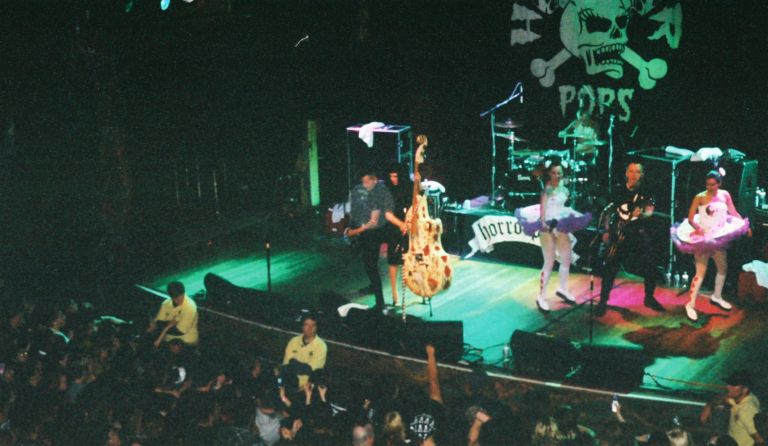
“Bring it on!” As Horrorpops, (Patricia Day lead vocals/upright bass, Kim Nekroman guitar, Geoff Kresge guitar, and Niedermeier on drums) hit the stage, the House of Blues erupted. The crowd pushed and rushed forward to get in as close as possible to see the band they had been waiting all night to hear. Opening the set with “Freaks In Uniform” and moving into “Hit And Run,” the first two tracks on Bring It On, set the tone for the evening. The lively crowd moved in one big sway from side to side. As the music became harder, the traditional mosh pit came alive and inspired a good amount of fans to start crowd surfing. They saved it all for Horrorpops because they weren’t moving so much for anyone else that night. They were way more alive than the people at the first Horrorpops show I saw earlier on this tour back in November of ’05 at the same venue.

Horrorpops kept everything moving with fan favorites such as “Dotted With Hearts,” “Baby Lou Tattoo” and “S.O.B.”. On “Dotted With Hearts” Nekroman (who fronts his own band The Nekromantics) and Geoff do some doo-wop vocals, which always gets a big cheer from the crowd. We also get to watch NoNo and Kamilla Vanilla, the two go-go dancers, shine; they dance with giant stuffed hearts and throw them into the mob for extra love and cheers.

A big hit with us creepy sorts is the dark love song “Walk Like A Zombie”. I dig this song live because Nekroman and Patricia sing together, playing side by side and back to back, which is always a plus. It has cool lyrics about holding hands in the cemetery and naming kids “Morticia” and “Fester.” It has everything the late night, “B” horror movie set love to hear about. “S.O.B.” is a country/rockabilly tune that’s found a place in my heart, not only for its driving drums and steady bass thump, but also for its twisted look at the traditional country “done wrong” song lyrics.

With its references to “wreaking in the pit,” “Cool Flat Top” always sends the crowd into a frenzy. This is where the pit usually gets its heaviest. The one song that always sends them whirling is “Julia”, the killer opening track from their first album and one of my favorites as well; Both times I‘ve seen Horrorpops this number is used as an encore for obvious reasons, as it guitars are masterful and the beat and bass are infectious.

Horrorpops definitely bring it on in concert with their hard-driving, house-rocking brand of “physco-billy”. Here I should probably give the “ten peso” version of “psycho-billy”: it’s basically the meeting of punk rock and rockabilly with more attitude and a flare for things that go bump in the night, and Horrorpops do it well. Patricia’s vocal growl, delivered with a snarl, is even stronger live and reminds me of a more hardcore Wanda Jackson. Her howls and oohs are awesome, as she uses them to full effect to whip the crowd up before the start of certain songs; Patricia will sing a little of the chorus and ask if the audience can follow. They respond well when Necroman has anything at all to say; his command of the mob is powerful. While Geoff’s efforts to work them up go over just as well, his time spent with Tiger Army as bassmen serves him well here.

Their fans truly adore them, from the hardcore of punks and rebel greasers to the girls who see Patricia as a kick ass role model. Even David, who’s not as familiar with the band or the whole “psycho” scene, enjoyed his first show and thought that Horrorpops rocked. The only draw back for me was that my favorite tune of theirs wasn’t played, the ever-popular “Psychobitches Outta Hell”. But with all the other killer material I’m not at all disappointed and will go see this band for as long as I can score tickets before the venue sells out and most of the time they do just that.

Tuesday, March 21, 2006

Irakere: Bacalao Con Pan


Written by Fantasma el Rey

Everyone likes a challenge, right? Well I know I do, sometimes. So when El Bicho asked if I wanted to do the review for this Cuban jazz disk, I said, "What the hey? Why not?" Trying my hand at something a little different is just what I needed to expand my listening pleasure and knowledge. Right from the start, the title of this disk had been sitting on my mind like a bullfrog, "Bacalao Con Pan." What it means I have no idea except that it's something "with bread," but there it sat and mutated into my new favorite word. I know it's more of a phrase, but I began using it like I used to do with "Wang Chung," something similar to the way the Smurfs use the word "smurf" in many tones and for just about any situation. I was only cured of this after my highly annoyed girlfriend smacked it out of me, god bless her.

After playing the CD in the car and at home, I began to feel like I should be shouting things such as "Mira. Que conllo" or listening to more Miami Sound Macheen and calling for Castro to step down, 'cause he's been in power way too lung, man. Killing Che and making himself dictator. Todos las personas all they want is to live free and drink Coca and buy new Che-vys, conllo. IS THAT SO WRONG, SENOR CASTRO...LARGARSE CABRON!!! Sorry I digress; it's been a long day, and I've had too much cough syrup, on with the review.

Irakere is a group of Cuban jazz veterans who formed to develop musical ideas with total freedom. The band is known for getting folks up and dancing and that's the way they like it. According to the liner notes, "The word Irakere means both vegetation and whip in the African Yoruba language." That's not much of an explanation for me as to why the band chose the name but I guess it sounds cooler on the island. Who knows, maybe it has to do with the "taming" of unkept vegetation? Any way you take it the sound of this band is infectious. One can see why people can't help but dance. I should pass this disk on to Ladron de Tebeos; he might get a kick out of it.

The opening track "Valle De Picadura" is a mellow mid-tempo number that sounds very 1970s, the guitar playing is kind of funky yet reserved and the sax opens like something from a cop show from that era, somewhat heavy yet smooth, then moves into a "Harlem Nocturne" knock-off. Halfway through the song, we get the lyric chant common to Cuban jazz. This vocal approach appears regularly on this disk in almost all the up-tempo tunes. Not bad but it can get a little tiring; then again I'm sure at the time these dudes were pioneering this sound.

On track three "Aguanile Bonko" is where we get a better feel for this band. The sound is "tuff," the vocals gruff, and the horns are blaring in solid swing fashion. We even get a cracked sax solo that honks like masters such as Joe Houston or Big Jay McNeely. The guitar gets funky here as well, cutting in and out nicely, this is definitely Fantasma's kind of jump.

We get this same kind of jump effort on most of the other up-tempo tracks for the remainder of this disk. "Siete Tazas De Café" and "Rucu Rucu A Santa Clara" are where one can see clearly the influence these Cuban jazz masters had on the aforementioned Miami Sound Machine. The background in "Siete Tazas De Café", the percussion and horn section are a good example of this. While "Rucu Rucu A Santa Clara" sounds very much like a M.S.M. song except for the fact that there is no female lead vocalist.

There are only two slow songs on this disk and they are nice breaks in the action; the first is "Romance (Juegos Prohibidos)," a traditional and pretty tune that reflects the (Forbidden Games) of the title very well. I do very much dig acoustic guitars in that Spanish style. The second is the piano-led "Este Camino Largo." This song too reflects its title well with its smooth, Dexter Gordon sax solo, bringing to mind images of long roads traversed. These powerful slow tracks stand up strong next to the more prominent up-tempo numbers.

A solid stand out track is certainly the Santanaesque "Bacalao Con Pan." More heavy guitar funk, drums, rhythmic percussion, soaring horns and that awesome chorus of (here it comes, y'all) "Bacalao Con Pan." This tune is truly the most infectious on this CD. I totally dig the piano break right before the chanting starts and the horns lead the way for more funky drums and guitar work. You can't help but nod your head and thump your foot. Like its title before it, this jam has gotten under my skin and is a new favorite.

Irakere Bacalao Con Pan is a good look at these pioneers of modern Cuban jazz, a solid band that has its high points and a CD that I wouldn't mind playing a few more times in the future. The challenge is will I be able to play it all the way through, which is Fantasma's mark of an exceptionally excellent record. More than likely not, I know I'll skip to my favorite cuts, but I'll have a good time listening to the ones I choose to hear over and over again. That itself I'm sure says something for the infectious grooves of this band, BACALAO CON PAN FOR EVERYONE!!!

Friday, March 17, 2006

The Essential Chieftains


Written by Fumo Verde

Long before Lord of the Dance or Riverdance, long before bars sold green beer and Guinness was sold in a can, Paddy Moloney mastered the pipes and the tin whistle, and in doing so, started a career that would last over forty years. Before World Music was in vogue, the Chieftains had already been there and back

In December of 1963, Moloney gathered together the most talented traditional instrumentalists in his native home of Ireland, and from there they started out on a journey that would take the green hills of Ireland to the great halls of Europe and China to the recording studios of Nashville where, with Chet Akins and Willie Nelson, they would record Another Country, one of their six Grammy-winning albums. If you have never been touched by the sounds of the harp, flute, pipes and fiddle, then lend your ears to something that will surely change your mind and open your world.

I first discovered the Chieftains, or should I say, they found me, in 1984, on what was then a little-known cable channel called A&E. I was up at around two in the morning, because back then to see a hockey game in Southern California, your only recourse was A&E, which would show a replay of the third period of the last game broadcasted that night from wherever. I waited half asleep in a comfy chair with the channel selected in case I dozed off. I had hoped my New Jersey Devils would appear, but a different conjuring took place. Strange music I had never heard before affected me like some strange siren call. I can see myself now hopping around my small den, at 2:30 in the morning as Moloney and the boys played a slip jig. I still have no idea what that is, even though I have been a fan since that fateful night. (My vivid memory is accentuated because I kicked a chair accidentally and busted my big toe).

The Essential Chieftains collects the work from over forty years of not only traditional Irish folk music, but also traditional folk music from all around the world. Playing since the early ‘60s with oddly only an American cult following for the first few years, they began to break out in 1975. That year they provided the Oscar-winning soundtrack for Stanley Kubrick's Barry Lyndon, which spawned some radio airplay for "The Women of Ireland," the film’s love theme.
Even when breaking away from traditional Irish folk, Moloney and the band showed their gifts as instrumental composers and arrangers. A career highlight happened at Dublin's Phoenix Park where the band opened for Pope John Paul II, who along with 1,350,000 others where entertained by sounds of the Chieftains. "We were just the opening act" Moloney said. "The Pope was the Headliner".

The first disc is the Chieftains at their best because it features their roots. It is a summary of what they have done from instrumental pieces like "Lots of Drops of Brandy", "O'Sullivan’s March" and " An Poc Ar Buile/The Dingle Set" sung in the Gaelic tongue to "The Green Fields of America" an a cappella ballad describing the flight of immigrants from the Irish shores to their new homeland across the ocean.

That song is followed by "Santiago De Cuba," a Latin rhythm set that would make Pancho Sanchez proud. Others such as the "French March" and "Chasing The Fox (from The Ballad of The Irish Horse)" show how well the Chieftains have blended the sounds and instruments of other cultures into their own sound. These are some of the reasons the Chieftains have lasted for so long and have been heard by so many.

The second CD is a treasure in itself entitled "The Chieftains and Friends." The names alone give me goose bumps: Sting, Alison Krauss, Ricky Skaggs, Jackson Browne, Emmylou Harris, Los Lobos and of course, some of Ireland’s own treasures. The first song to start off sees them joined by with The Corrs. Andrea's voice lifts you off with this Spanish-Irish love song. "Shenandoah" with the legend Van Morrison follows it; its soft gospel sound plays against the rolling fiddle and flute letting the river run through you mind.

"The Long Journey Home" with Elvis Costello and the choir Anuna stray not far from the Irish tradition, but use a full of the Irish Film Orchestra (conducted by Fiachra Trench) gives one a feeling of patriotism whether you are Irish, Italian, or a red-blooded American. To finish off the set is the song "Jimmy Mo Mhile Stor" done with The Rankins, the first part sung in Gaelic followed by English. Its simple cords are played by the harp and fiddles and with the flutes and tin whistle filling in, the voices of Cookie, Heather and Raylene Rankin bring the Chieftains back home once again.

For anyone who loves world, or Irish folk music, The Essential Chieftains has it all, because Moloney and the Chieftains have it all. For a band who had found their small niche in the music world, little did they know back then what doors they would be opening today, and I for one, look forward to what they will have to offer tomorrow. If it is as half as good as what they have given us now, then the Chieftains will do just fine.

You know I will be enjoying the green this St Patty’s Day. Fumo O'Verde out.

Sunday, March 12, 2006

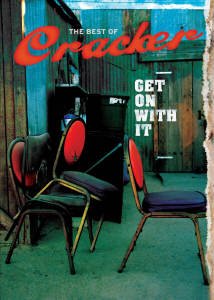
Cracker - Get On With It: The Best Of...


Written by Fantasma el Rey

In one of their songs, the band sings the line, “This is Cracker soul.” Huh? What exactly is Cracker soul? Is it alt-rock or cow-punk? Camper van Beethoven stripped down? Could it be as simple as just a closing number to a live set? Or could it be a Southern Caucasian in search of himself? Maybe it’s all of these things twisted together, and perhaps the new DVD will give us another clue, so join us now as we explore Get On With It: The Best Of Cracker.

Let’s start with “Who is Cracker?” Shortly after the breakup of Camper van Beethoven, front man David Lowery formed the band Cracker along with guitarist John Hickman. With their combined skills they managed to come up with a sound mixture of country cow-punk and straightforward rock and roll. With Hickman’s playing and Lowery’s lyrics, you get a sound that reflects the very name of the band. Give this band a spin at their best and you’ll understand perfectly.

As for Cracker soul, the DVD helps in the understanding of that question. The disk, which is divided into two parts, opens with four videos and a live performance on MTV’s 120 Minutes. The first video is the wild “Teen Angst (What the World Needs Now)” revered for the sentiment, “what the world needs now/is another folk singer/like I need a hole in the head.” The video opens in an acoustic setting with the band in a circle singing the infamous lyrics. After a direct shot of the sun, the video becomes a bit more polished, yet still maintains its low budget feel. We see the band playing in a farm field and then running amuck after a plane comes swooping down on them in North By Northwest fashion. Throughout we see scenes of David riding a motorcycle and being followed by a dog, an odd yet interesting first look at Cracker.

The next video is the first of two filmed in black and white. “Low”, is one of the band’s biggest hits and the one that put them on the map. This video features Sandra Bernhard driving around angrily on her way to a boxing match with Lowery, who sings in a boxing ring throughout the video. Maybe the boxing is a ploy to throw people off of the drug reference in the lyrics, who knows? Whatever the reason, it makes for an entertaining little piece of film. Also interesting to note is the fact that I couldn’t help thinking that Lowery looks a whole lot like Huntz Hall of Bowery Boys fame. Especially with the whole boxing thing, I keep expecting Leo Gorcey to run over and slap him a few times and call him, “you mug.”

“Get Off This” comes from another live segment from MTV’s 120 minutes. It’s a good song with a steady-driving beat and funky guitar, again there are classic Lowery lyrics, such as “If you want to change the world shut your mouth and start this minute.” The video is your standard live clip moving in and out from various cameras on each member of the band.

From here, we move to a true Cracker classic, the lyrically stylish “Euro Trash Girl.” It’s the second black and white video and is the song I like best of the videos. It sounds like a traditional country rocker, but the Lowery lyrics make it seem almost a country spoof. I say, “almost,” because of the lyrical content, yet as I said I am very fond of this number and the video. Here we have Lowery looking like a “good guy” cowboy in his ten-gallon white hat. There are girls in a police line-up, shots of Lowery in front of the Luxor in Vegas and in front of Easter Island heads. Hickman is on his search as well in parks and all over the city, all in an effort to find that “Euro Trash Girl.”

The last of the videos is for “I Hate My Generation”. This song and video are way too much of a Nirvana imitation for me. We’re never really sure with Cracker if they’re serious or spoofing something, then again they could be saying something right there in the fact that they are trying to be too Nirvanaish. The song is angry and delivered in a yell; the video even has the same feel as “Smells Like Teen Spirit”. I think it’s too much and too far from this band’s originality and base to be taken seriously, it just doesn’t work for them. Their image here is even more of the stereotypical grunge look, complete with shoulder length hair, a la Kurt Cobain. Although I do think the song has potential if it was done in more of the Cracker style.

The second part of the DVD is the meat and potatoes for this band. Here in this 40 minutes of live footage taken from December 4, 1993 is where we find the answer to our question, “What is Cracker soul? I’ve seen Cracker live once before with a friend of mine who knew more about the band than I did. I had heard of the band and CVB as well but had never really heard any of the music, so I went and had a good time.

Watching the live part of the disk brought back a flood of memories from the show, the feel of the music and the energy of the crowd. Live the band does all their fan favorites and puts on a good show, nothing flashy, no jumping around or guitar spins, just straight-ahead rock and roll with a country feel. These guys totally come alive on stage at full force with Hickman playing like a madman and doing back-up vocals for Lowery. The bass is more prominent live as well, giving off a Love (the Arthur Lee band from the ‘60s) sort of sound. These guys are definitely house rockers.

Evident from this ‘93 footage is the fact that the crowd responds well to songs they love. I can clearly recall the anticipation to the chorus of “Euro Trash Girl”. These cats rock so hard that my father even digs their sound and this man only digs one kind of blues, Chicago. So that’s just one more testament to the power Cracker live. And as a bonus we get to hear John Hickman sing lead on “Lonesome Johnny Blues.” He does a fine job and has a very good voice for this solid country rocker done in a Johnny Cash fashion. With that boom-chicka-boom sort of sound, certainly a highlight to the live set. The live set ends with “This Is Cracker Soul,” a kind of band goodnight to the crowd; it’s a fun number and a good way to end the show.

Get On With It: The Best Of Cracker does indeed provide us with a look at this unique band in their prime and answers the question of “What is Cracker soul?” It’s a twisted form of roots country presented in a solid rock drive that you can’t help but groove to and dig. For not being a really big fan, I dug this disk very much and now have a greater desire to hear more from them and to see them live once again now that I have more of greater knowledge of the songs. For true hardcore Cracker fans, this DVD will be that much more special and fun to watch.

Saturday, March 11, 2006

The Little Willies


Written by Fantasma el Rey

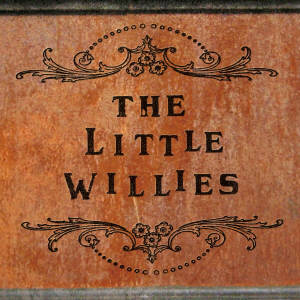
With the energy, passion and fun put into their self-titled debut album The Little Willies could have easily chosen to call themselves The Big Willies. Names aside, this jamming five-piece band blends barrel house rhythm and blues with honky tonk country, reminding us of a time thought long past. The band, Lee Alexander (bass) Jim Campilongo (electric guitar) Norah Jones (piano, vocals) Richard Julian (guitar, vocals) Dan Rieser (drums), and their name conjure up images of backwoods shacks and hole-in-the-wall juke joints packed with all kinds of cats having a good time late into the night. And that's just what this band of musician friends from New York does: have a good time.

The band kicks off the disk with a classic of western swing “Roly Poly.” The band shows its ability to jump quickly. From the opening bass/drum thump and guitar picking you can feel where these guys are going and where they're coming from. Twenty-five seconds into the song and you're jumping when Miss Jones flies to the front, tickling the ivories like Pete Johnson's granddaughter instead of Ravi Shankar's. Campilongo gives us just a taste of his picking prowess right before Jones and Julian come crashing in with hopping-mad vocals. Reenter Campilongo and more cooking guitar work, again followed by Jones who is simply on fire on this non-stop jump number, but not to be forgotten, the rhythm section comes back up front to close this solid sender. Check out Alexander's bass run at the end, dueling with the piano before he thunders the track to a close.

The Little Willies keep their momentum going into the rolling “I'll Never Get Out.” With Julian's fine vocals and Jones' backing you almost forget that this brother's world is in a spin. Campilongo and Rieser really show us what they've got here; Campilongo is a gifted guitar slinger who can handle blues guitar like he was born and raised on Chicago's south side.

After letting us know how hard they can jump and swing, The Willies let us rest a little but still leave us breathless with a wonderful reworking of the Lieber and Stoller classic “Love Me,” made popular by Elvis Presley. Yet here with Norah doing lead vocals and Richard supporting, we're reminded, whether intentional or not, of the original R&B version by Willie and Ruth. I dig this track because The Little Willies blend both versions of this song perfectly, combining the melodic backing vocals from Presley's version combined with strong R&B guitar work.

“It's Not You It's Me” is a Julian original that's steeped heavily in the honky tonk, hardwood floor tradition. He displays his talents as a songwriter, a talent we'll see from other Willies a little further along on this disk. This slow yet lively number is set ablaze by the excellent musicianship of this band working together. And again Norah Jones' vocals just knock me out.

With the next track we jump once again, this time with the cool wit of a Kris Kristofferson tune “Best Of All Possible Worlds.” This time our guitar hero picks us into a frenzied otherworld. Campilongo's super-charged solos bring to mind the work of rockabilly guitar legend Paul Burleson, rocking and jumping, yet controlled and not over the top. Alexander's bass work is outstanding here as well as is Reiser's drumming. The backbone of this band shows that they have mastered that steady-as-a-driving-train rhythm.

Julian lets us hear his passionate baritone vocals on Townes Van Zandt's “No Place To Fall.” Another excellent showcase of this band's talents, and I can't stress the fact enough that these cats are good. In “Roll On” we get another original tune, this one from bass man Alexander. Let me say this here, until this album I've never paid much attention to Norah Jones, but with this track especially, Miss Jones officially has a new fan. Her passion-filled, heartfelt delivery makes this track one of the album's strongest songs.

The Willies do two very good Willie Nelson covers, perhaps a clue to the origins of the band's name. With “Gotta Get Drunk” Jones lets us see a playful side of her vocals, and you can't help smiling at her delivery and banter, not to mention that wonderful howl. “There's more old drunks than there are good doctors/So Jim take another round,” which he does happily, making another powerful guitar run. The second Nelson number, “Nightlife,” is a solid country blues once more led by Jones' vocals and skill with the 88's.

“Streets of Baltimore” is another song that belongs on this album. Its pure country sound and sorrowful lyrics are another perfect fit for Julian's vocals. He makes you feel for this fellow who tries to make his lady happy even though he's not so enthused and winds up losing her to those darn streets of Baltimore. “Tennessee Stud” is a fun western story song, reminiscent of classics by Marty Robbins, that the band romps through with ease, highlighting their ability to move smoothly from track to track. This tune stands out for its rolling piano and out-of-sight guitar work; its infectious thump and shuffle beat make it a solid country rocker.

The Little Willies debut rounds up with a couple of originals: the slow ballad “Easy As The Rain” and the humorous “Lou Reed,” which should be noted is the band's longest number, soaring high at a whopping 4:14. That says a little something right there. “Easy As The Rain,” penned by Julian and Campilongo, is a beautiful love song that spotlights the chemistry of Jones and Julian's vocals. This sweet ballad is easy on the ears and tugs on heartstrings without being overly sentimental or sappy. The closing track is the odd “Lou Reed,” a very playful little ditty that has Julian giving his best impression of the fellow New Yorker and rock pioneer; what a wonderful way to end their first album. On their final number, we get a chance to hear the entire band join in on vocals and have a blast together, solidifying their “live” sound.

The Little Willies debut album is a joyous expression of five talented musicians coming together to have a good time making music the way music should be made. Simple and passionate without being overdone or pretentious this band is tight and yet maintains a loose, live sound that keeps this album moving right along. The entire band is solid from the backbone of Lee Alexander and the bottom of Dan Rieser to the piano/vocal skills of Norah Jones and Richard Julian's singing/ songwriting weaved all together by Campilongo. This New York City unit is purely masterful at what they do. They deliver on that big sound and keep us longing to hear more from them in the future. One can only hope that it's the near future and a venue close to home because with every spin this disk just keeps getting better and better.

Here's to the Little Willies and their big sound so let's all “take another round.” And for those interested in originality and a strong country sound I recommend looking for Jesse Dayton's Tall Texas Tales; Jesse has more of a country feel but that same passion for what he does.