Wednesday, October 04, 2006

Joshua Radin: We Were Here


Written by Cara De Pescado

Joshua Radin is one of the artists that should be glad he’s a friend of Zach Braff. Zach Braff likes music, as can be seen by putting together the soundtrack for films like Garden State and The Last Kiss as well as his TV show Scrubs. I’m not sure if Scrubs or Zach Braff’s blog is what tipped me off on Joshua Radin first, but I am glad it did. Even then, Joshua Radin would have been able to find his way to the limelight without a leg up.

We Were Here was initially available exclusively on iTunes where it easily because the Number 1 bestselling folk album and was in the Top 30 overall. Not bad considering it is Joshua Radin’s first full-length CD; 2004’s EP First Between 3rd & 4th contained only six songs.

Radin wrote ten of the eleven songs on We Were Here, with Vince Clarke’s “Only You” being the only cover. Yaz or Enrique Iglesias fans will recognize “Only You,” no it isn’t the song John Lennon and Elvis sing of the same name. I’d never heard it sung without a thick accent and it really is a gem when Radin sings it.

Which is really the point of the whole CD, Radin is truly a diamond in the rough. His voice is unique, almost a whisper, making it seem more intimate. The breathiness to his voice is the perfect match to the airy songs he writes. Centering on love, both new and lost, his voice contains a sort of romanticism that seduces you to join his journey.

Not only is his voice exquisite, but Radin really does have a talent for songwriting. The Singer-Songwriter genre is full of people who can’t sing, can’t write, or both. But he is the light in the distance, the beacon for which the others must strive. With a few words he can entice you, inciting emotions so strong you would think they were your own instead of his. Add moving cello arrangements on top of the beautiful words and you have the recipe for a great CD.

The opening track, “Sundrenched World,” beautifully explains insecurities in love. Yet his vulnerability lacks the in-your face heart-on-your-sleeve feeling of the likes of James Blunt. Although hailed as the new Elliot Smith, Joshua Radin maintains his individuality.

“Star Mile” has a more ditty-like feel to it with more obvious rhyming but it isn’t so sing-songy as to beat you over the head with it. The song also beautifully showcases how well Priscilla Hartranft and Radin harmonize. “These Photographs” is more upbeat and demonstrates the intelligence behind his songs. I mean, how many artists mention Sylvia Plath, Simone de Beauvoir, Nina Simone, and Mary Cassat in one song? And what fitting people to connect to the images he keeps in his mind of his loved one.

While “Only You” is great for being recognizable, “Winter” is my favorite song on the album. With lyrics like “your voice is the splinter inside me,” how can you not feel the pain and longing Joshua Radin is singing about?

The airiness to his voice makes ballads a great match for Joshua Radin. Personally, I love the ballads. However, I can understand where some would find it repetitive and wish for some variety. Either way, Joshua Radin’s music speaks to that place in your heart where you know you are home and everything is at peace.

And if you can’t tell, I really like Joshua Radin's CD.

Tuesday, October 03, 2006

All That Remains: The Fall Of Ideals


Written by Fumo Verde

The first thing I thought when I heard this was, “Great. Another ‘I can scream louder than you’ metal CD.” The kind of music that I have no idea what the fuck is being said. Initially, I had a headache when I started my listening session with The Fall Of Ideals, so after the second song, I turned the thing off. A few days later, and a fresh new bag sitting on my lap, I once again attempted to listen to this crazy style of metal that I never seemed to get a grasp on.

I sat through all eleven tracks, starting with “This Calling”. The scream starts off the ditty, like the sound of a German Stukka dive-bomber charging to the deck below. As it levels out, that lead-in howl of a voice, the rocket burst of the drums force of the guitars and bass to join together into a pulsating chorus. When the guitars do have solo time, their sounds twist and echo with a scream sweeter than the grunting, chanting, hard gravel voice that barks out the lyrics like a drill instructor on Parris Island. At this moment I grabbed the liner notes. Thank the Gods, these katz put in the lyrics. Major A+ on the Fumo-rating chart.

Now I was armed with the power to hear what was being grunted. It’s amazing how accessible the song becomes when you can understand what is being said. For example, on “We Stand”, the lyrics read, "Walk a darkened road and we will be our own light/ Our foundation our core is strong/ Stand for what's right”. These guys are giving you parts of themselves, who they are. What I thought was violence, is actually passion with fury. It still sounded like angry music to me, but now I understood why.

“We Stand” and “It Dwells In Me” had some of the most charging guitar riffs I had heard in a long time. I was not thinking of these guys as just a bunch of head bangers who only know so many chords that they strike them real fast. This band is a group of very talented musicians. The structure and the rhythm aren’t extremely complex, but the timing and the power are totally detailed. This group knows what it's doing.

“Six” which is track seven, reminded me of my all-time favorite heavy metal band, Iron Maiden. The guitars start off with what sounded like the beginning of “Aces High”, and then in came the banshee cry. Te jam lit up and exploded into a chase between the drums, the guitars, and the voice of the singer/shouter, whatever you're more comfortable with. The song takes you on a hell of a ride, and then halfway in, like being on the inside of a deep tube, silence. Guitars, gently drift in, until the green room is about to close, and boom! The chainsaw guitar work, along with the jackhammer drilling of the drums tossed you up on shore for the final end of the song.

As The Fall of Ideals came to a close, my mind had changed about this band, and the sound it was pumping out. On “Empty Inside", the lyrics are, “Don't want to lose everything/ Just want to feel again...." You can feel the pain of wanting someone back, and by now, you can see why one might be shouting it until one’s throat was soar. At first, like I said, I’m not much into bands that have a sound that reminds me of the dog barking out jingle bells on the radio, but All That Remains have more than just a bark to them, and if you listen closely, it has a bite to it as well. Will I go see these guys in concert? It depends on if I feel I have the energy to keep up with them or not.

Remember when Metallica had that raw edge to them? I think these guys have that. Watch out for them.

Friday, September 29, 2006

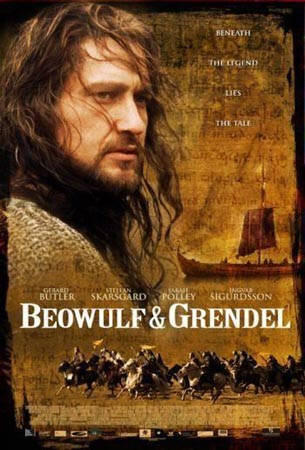
BEOWULF & GRENDEL


Written by Fantasma el Rey

Director Sturla Gunnarsson brings to life Beowulf & Grendel, one of the earliest Anglo-Saxon epic poems. Rather than a literal adaptation, he presents us a story that could have inspired the myth. The film traces the poem as it progresses and many familiar scenes are brought to life with an added air of truth and reality. Some scenes add more depth to the story, as do certain characters; the best being the somewhat-mad, Christian priest, who gains converts throughout the film, including Danish King Hrothgar, who Beowulf and his fellow Geats have come to help. By the end, a few of Beowulf’s men have converted and we see how the Christian faith came to be a part of this heroic tale. On the other hand, we have Selma the witch, who can be seen as a link to Grendel as well as to the old gods of the land.

Beowulf & Grendel opens with a prologue as to why Grendel hates the Danes; his father was killed as a very young Grendel looked on. Throughout the film Beowulf has to put this story together for himself, with the aid of Selma. Along the way he draws his own conclusions and can see that Grendel’s fight is not with him and that is why Grendel will not fight Beowulf or his men. As Beowulf learns more, he seems less enthused about fighting Grendel, although while trying to accomplish their task to rid Daneland of this evil they bring Grendel’s wrath down upon themselves.

Yet, even the death of Grendel seems less at the hands of Beowulf and more Grendel’s own doing. Grendel’s death is a good example of clearing away the myth; we get a more realistic take on how this encounter between these two warriors might have ended. The poem has Beowulf’s grip so powerful that he just rips off Grendel’s arm but here we have Beowulf tying his arm in an effort to capture him. As Grendel makes his leaping escape from the top of the mead hall, he becomes trapped and like a caught animal hacks his own arm off rather than be taken alive.

Now the death of Grendel’s sea hag mother is truly at the hands of our hero, and even with this myth-buster approach to the story, it seems unrealistic. It’s one of the only aspects of the film that doesn’t jive so well, along with Sarah Polley as Selma the witch. She’s not bad, but her voice is out of place with this cast of European-born, heavy-accented actors. I find the sea hag monster unbelievable where the forgotten Neanderthal view of Grendel the troll makes more sense. With no computer graphics, the special effects costumes, at times, look a bit hokey.

We see events through Beowulf’s reasonable eyes and learn how some things a hero must do aren’t always justified. His struggle is what makes for a fascinating watch. Gerard Butler as Beowulf does a fine job making a very believable hero in a time of change. The film also gives us a good look at Beowulf and his Geat pals’ camaraderie, as we see them laugh and enjoy themselves like boys on an adventure. At times, Beowulf & Grendel is intentionally comical, with scenes very reminiscent of Monty Python and the Holy Grail, making the film much more entertaining. In some of the deleted scenes we can see more of that comic, playful side to these men.

In the audio commentary and the “Wrath Of Gods” short featurette from the documentary on the making of Beowulf & Grendel, we learn of the harsh weather conditions in this beautiful land and the effect it had on the shooting of this film. Many times production was almost stopped due to extremely high winds and hard falling rain. No one was seriously hurt, but some equipment and a few vehicles where damaged. Thankfully the film was finished and we get to see another attempt to put Beowulf on film in a somewhat factual manner, much the way Michael Crichton tired to do with his book Eaters of The Dead, which was made into The 13th Warrior staring Antonio Banderas.

Tuesday, September 26, 2006

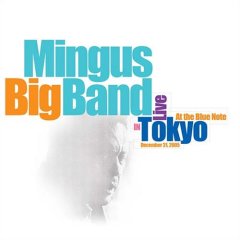
Mingus Big Band: Live in Tokyo 2005


Written by Fumo Verde

All right, if you read the review I did on Charles Mingus, Live at UCLA, then you are familiar with the style that Mr. Mingus is all about. The style of non-conformity, improv and the like, sounds that feel jumbled, but what if those sounds put down could be practiced and rehearsed again and again? Well, this is where the Mingus Big Band (MBB) comes alive, and here at the Blue Note in Tokyo they laid down some of those tracks. Produced by Sue Mingus and recorded by engineer Kichi Goto, they have brought to us the incredible sounds of Charles Mingus.

To catch the magic that Mingus tried to capture and the feeling of what his music is all about, the MBB increased the size and sound of the usual octet. The musicians includes three trumpets, two alto saxophones, two tenor saxophones, a baritone saxophone, two trombones, a bass trombone, a tuba, a piano, a flute, a stand-up bass, and drums. Put all this together and you get the start of what Mr. Mingus was trying to get at.

As said once before, music composed by Mingus is hard for the musician to play as well hard for some listeners to clutch and ear for. This CD grabs a live show that lets everyone take in the pieces put together by Mingus. Not just the obscure and existential notes that sometimes lunge out at you or whiz by you like a passing car. Here the MBB delicately tames the wild beasts that are so often the sounds of Mingus.

"Wham Bam" leads off the set, and it's something about a brass section that gets you moving. The full force of all that brass knocks you back into your seat as the drums, bass and piano zing you for loops and dips. The horns rage up and down the scales at break-neck speeds, while the piano scurries about, chasing the drums and bass as they control the tempo, keeping that pace until the tune is done. "Opus Four" follows and has a slower drive to it, at least when it starts out. With drums banging away and cymbals crashing, the horns fill in the segments that at first sound like something out of "West Side Story". As the jam hums along, it takes time to slow down for certain horns to make their solo shots, each one trying to top the other. You can tell the band in having fun with this, and although there is a chance for improv, the architecture that holds up the music can be followed by even the average listener who maybe brand new to Charles Mingus. As with "Wham Bam", "Opus Four" gives the audience a ride of their lives.

"Celia" has a mellower tone to it. Although this piece has a softer beat, the brass section retains the power and passion to knock your socks off. Passion is what drove Charles Mingus, and it is what drives the MBB to charge the music with a no-fear attitude. "Bird Calls" starts out with the band members making bird sounds, cheeping and cawing. They keep this up as the horns reflect the noises that the band is making. Then the chase is on. Whether this is dedicated to Charlie Parker, it didn't say in the liner notes, but it has Bird's style to it, of which Mingus would extract out from time to time, being a big fan of the Bird himself.

Mingus loved to mix sounds and styles just to see what would come out of it. This design of playing isn't lost on the MBB, for they have the talent and the ability to push such techniques to the limit, just as he would have. There are a total of eight jams on this disk, and each one sounds better than the last. This isn't a tribute album or even a tribute to Mingus. These are musicians who love his compositions and are addicted to playing what he has created, and they play it well. For anyone with a taste for jazz, and epically a taste for Mingus, the MBB “Live in Tokyo” is a great addition for the collection. It gives one a chance to hear the easier pieces that Mingus has come up with.... and nothing he ever did was easy.

This CD though, gives everyone a chance to hear and feel the power and energy and the genius that Mingus was, and even since his passing in 1979, the Mingus experience can be felt through his music. One of the best ways to feel that power is right here from the MBB. A great appreciation for those who attempt to charge after the musical dream that Mingus had, and the MBB makes it sound easy. I wonder what he would say? I think he would be happy because this CD brings his art to life, and for Mingus that was what making music was all about.

Monday, September 25, 2006

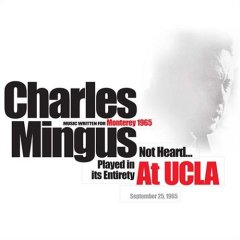
Charles Mingus: Live at UCLA


Written by Fumo Verde

One of the greatest jazz composers and players of all time, Charles Mingus prepared a year in advance to perform his new compositions at the Monterey Jazz Festival. For reasons still unclear, Mingus only got to perform three pieces, less than 30 minutes of music for what was supposed to be a 90-minute set. It wasn't until two weeks later at UCLA's Royce Hall that he got to play his complete set, which this two-disk set contains. With the exception of the audience that night, the college engineering staff that recorded it, and those lucky enough to obtain the limited edition LPs, this concert has never been heard before, until now. The performance that Mingus and his band gave was a record of the struggles that he usually went through when he tried to get his music heard. His belief in the art of nonconformity and his skill of improvisation are still unmatched today, and by listening to this CD you can understand why.

As the show opens, Mr. Mingus speaks to the audience, and does so throughout the show. He explains, or at least tries to explain, what happened at Monterey weeks earlier, and with that introduction "Meditation On Inner Peace" opens up the show. The sound of the lone tuba playing a slow thumping heartbeat rhythm leads the way as the horns weep and moan. To try to explain this piece in words is almost impossible. The best way to describe "Meditation...." is it has an almost haunting affect. The track plays for almost eighteen minutes and the tuba is the only consistent sound that keeps what beat there is. The music speeds up near the end, mellows back to the tempo the tuba was keeping, then concludes with final drum crashes and Mingus kicking out key notes from the piano. It ends abruptly because as he explains, "we forgot how to end that one."

This is Charles Mingus, and this is how he likes to do things. In between this track and the next, he not only explains to the audience what is going on, he schools his band members, too. Unfortunately, when he speaks to the band, he doesn't speak directly into the microphone, so you will have to turn up the volume if you want to hear what he is saying to them. This happens a lot on the first part of the show (CD 1) and is most evident on the next track "Once Upon A Time, There Was A Holding Corporation Called Old America"...yeah that's the full name of the track. Could you see any DJ on the radio now sitting long enough to even announce that?

The track starts off but ends after eight seconds because the band doesn't remember how to play it. So Mingus lets them know this. They try to start off again, and within two minutes he stops the show. It sounds as if he takes the players, who can't seem to get their parts right, off the stage to go over it with them, leaving the other band members to play a tune called "Ode to Bird and Dizzy". As the title says, this arrangement was made in homage to Charlie Parker and Dizzy Gillespie. It’s a structured jumble of rhythm with the drums keeping the beat as the bass booms away and the horns tell the story, one playing like Dizzy, one playing like Bird. The jam goes on until Mingus calls back the full octet to play out "They Trespass The Land of The Sacred Sioux" which concludes disk one.

The second part of the show (CD 2) has fewer interruptions and more of the art that Mingus created. It starts out with "The Arts Of Tatum And Freddy Webster" which is another 10-minute jam featuring the styles of Art Tatum and Freddie Webster. Again, the non-conformist style of freeform jazz comes as the horns top each other while the rest of the band trots along at a simple pace.

It is followed by a complete, after three starts, version, "Once Upon A Time There Was A Holding Company Called Old America". The drums and the horns build up a tempo that slowly rises one note on top of another, then is leveled out to be more of a big band slow dance, then a jumble of jazzy licks, or so it felt, that's where the magic of Mingus enters. Halfway through the tune, the uncontrolled chaos drops in, and then disappears as the slow dance tries to return. By now the tempo is turned up and the slow dance has become a quickstep, then back to slow. All the time, Mingus is calling out words and making grunts and whoops. This song is a total roller coaster ride, with him screaming out as if he is in the front seat (cause he is).

"Muskrat Ramble" is Mingus' dedication to New Orleans Dixieland Rag and gives you the feel of walking down Bourbon Street. Hobart Dobson comes back to help play "Don't Be Afraid, The Clowns Are Afraid Too" which has a mild tone to it compared to tracks that were played before. The foundation of this jam is set again in the drums and bass line, while the horns get the chance to let loose every so often. The harmony is incredible when the brass is together following the path that the drums and bass are laying down. When Dobson's trumpet solos, that's another amazing sound that grabs you by the ear and holds on with its soothing calls. Mingus plays his piano halfway through, which gives the tune that smoky jazz bar feel.

"Don't Let It Happen Here" closes out the show. A soft piano leads off with a single trumpet weeping in the back. Mingus speaks and on this, and we all need to listen. He only says something like five sentences, but they are powerful. Just as the jam that follows it. All the energy and passion the band has had inside erupts into a feeding frenzy of screaming horns, dancing drums, and cries of love from the bandleader. Again you are on a ride that takes off for the stars then slows down to smell the roses, all within 11 minutes. At the end, Mingus speaks again, and with his finishing thoughts, the crowd roars with admiration.

What I think is so special about this CD, is with all its false starts and missteps this is what Charles Mingus strived for. Not for perfection, but for innovation, improvisation, and most of all emotion. This is how Mingus played and it is who he was. Mingus was a man ahead of his time, and this CD can testify to that.

Sunday, September 24, 2006

Metheny/Mehldau


Written by Fumo Verde

Ever since the mid ‘70s, Pat Metheny has awed the music world with his jazz guitar and the many ways he has improvised with it. Although most jazz bands focus on elements such as piano, brass or reed instruments, Metheny makes the guitar the focal point and does so with brilliance. Brad Mehldau is a legend being made right now. Ever since coming to the forefront in 1996 with his trio, Mehldau has been one of the most ingenious, piano improvisers. Here on Metheny/Mehldau two innovative musicians come together to create an album with zeal, soul, and spirit that will mellow you out as well as get you moving.

As I sit here and write, I'm listing to "Ring of Life", the fourth track off this new release. Jeff Ballard plays the drums on this and immediately sets the rhythm. Mehldau jumps in with some soft keyboard work, underlining the quick tempo the bass and drums are jamming at. Metheny trips in with his chord work and the track starts to jump. It builds, and then another quick drum solo with shots of Metheny’s chords shooting off like bottle rockets. All the while, Larry Grenadier's bass is thumpin' and bumpin', keeping the tempo. Mehldau jets back in with keys flying, and although he is a premier improvisational piano player, he knows structure like the back of his hand, so nothing sounds out of place. Then, Metheny jumps in with the guitar synth, and babies, you feel like you just blasted off into the outer reaches of the universe.

Other tracks, such as the opener, "Unrequited", have a delicate touch. Starting out with Metheny gently strumming and plucking the strings, Mehldau tickles the piano with the slightest of touch. As the tune rolls along, the tenderness gradually builds as they play off each other, and then ends with the same smoothness it started with. This track, like the rest of the disk, shows how capably these artists play together, rather how they can play off each other as pleasingly.

"Ahmid-6" is another duet that finds them winding their way as they battle it out. Yet, there is no fight here, rather a very structured improvisation as if the two sounds are at odds, but they're not. The blend of the notes between both instruments brings about a rhythm that strolls along and catches the listener by surprise with its traditional jazz jumble. The sound is sweet and melodic, like on "Summer Day" where they combine the traditional feel of unorganized chaos into a mellow mix where Metheny plucks and strums as Mehldau walks his fingers up and down the ivory road.

Metheny/Mehldau is a beautiful break from the normal jazz that is out there. Like a great play in football or a sick tube ride at Pipe, this disk by these two stellar performers contains passion and excitement. If you have never heard of either of these guys, then this CD would be a great start. Mehldau composed tracks one, five, and nine, while Metheny composed the other seven. All ten tracks here have soft sounds that build and plummet, vault and dance around as it pushes the envelope of what modern jazz is today. When the CD is over, it leaves you wanting more. There isn't a track that I didn't like, and as we all know, that's hard to find these days. I sure hope that they do it again real soon.

This Fumo saying, thanks again…oh, and will people please leave Willie Nelson alone!!!!

Tuesday, September 19, 2006

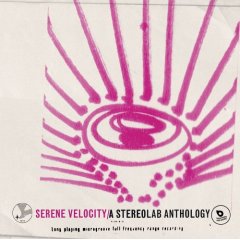
Serene Velocity: A Stereolab Anthology


Written by Fumo Verde

If there is one band that can combine ordinary music sounds with electronic ambience and blend it together to give it a retro feel, then you have the group Stereolab. Serene Velocity is an anthology that brings together the sounds that they have been creating for well over a decade. Stereolab first appeared in 1991 with group members Tim Gane on guitar, keyboards and vocals, Laetitia Sadier on keyboards and vocals, Mary Hansen on keyboards and vocals and Andy Ramsay on drums. Ever since they first came on the scene, Stereolab has gathered a big cult following and can be heard on late night college radio and the cooler stations on the lower end of the FM dial.

The disc opens with "Jenny Ondioline (Part 1)" from Transient Random-Noise Bursts with Announcements. The guitar and keyboards have an upbeat jam while the drums keep a steady beat. The voices of the group give a different aspect to the tune, reminding me of those old ‘60s and ‘70s movies where the camera scans across the country side of small-town America.

"Crest" also from Transient... has the sound of anticipation, with the keyboards and drums going over the same melody with a slight increase in the tempo. The vocals challenge the music. Although the lyrics are simple, "if there's been a way to build it/ There'll be a way to destroy it/ Things are not all that out of control", they are repeated throughout the entire track and give the feeling like the song is building to some massive crescendo.

"Ping Pong" off of Mars Audiac Quintet brings in a horn section, adding to the upbeat drive of the drums and giving a genteel offset to the keyboards. Against the electronic keyboards, the horns relay the feel of old sounds that were played in the love vans of the ‘70's, an almost Marlo Thomas' That Girl sound that keeps the spirit rolling on its way.

All of Stereolab's tunes on this CD are upbeat, yet each has a very distinct sound. With its short, chopping guitar strums and mesmerizing bass line, "Percolator" adds that out-of-this-universe feel with the keyboards doo-wopping their way around the melody, as if they were jumping moons through out the galaxy.

The liner notes say "Space Moth", which came off Sound Dust, is the most structurally complex tune off that album. It begin with a hypnotic keyboard riff that plays like something out of Hitchcock’s Psycho. Then after a short fade out, the sound comes back with a ‘70s funk jam, but blends itself to a melodic trance groove. The vocals keep it on track, or so the group would like you to think, as the track itself seems to fly like a moth, sporadically with what may seem to have no purpose, but in reality does. As the track comes to a close, more horns play through, and the tune sounds like the end theme to a ‘70s movie where everything works out all right.

The whole CD plays like this. You think you are going in one direction, but guess again. Stereolab loves to keep it fresh, and no one song will sound like another on a Stereolab CD. "...Sudden Stars" ends the album and this was a great track to finish with. Combining all of the group’s talents, this track brings closure to the album and once the disc stops, you feel like, “Wow, what a trip I was on.” Stereolab is like that. They have the uncanny ability to fuse modern sounds with the quirky jams of what would be considered soft hits of the ‘70s back when bell-bottom pants were still hip. The only exception is that Stereolab makes the sounds hipper.

Though the band has been through some hard times with the death of Mary Hansen in December of 2002, the group carries on, and since their first release in the early ‘90s, the band has yet to disappoint their fans. Serene Velocity is a decade’s worth of work by this group, showing why they have a following and why they are one of the few bands that always have something new to bring to you. For those of you who know them, this is a great compilation. If it's your first time listing, enjoy and prepare to become entranced by the melodic ambient sound of Stereolab.

All of Stereolab's sounds create a sense of deja vu. Yet even though the retro sound pumps through, the group keeps a futuristic quality. This is the only group that can make the future seem like it already happened. Their secret is making not only good music to listen to, but keeping it fresh by mixing and adding from all over the music spectrum.

Monday, September 18, 2006

GREASE: Rockin’ Rydell Edition


Written by Fantasma el Rey

Grease is the word! So bop with me cats, back to a fictional 1950s filled with “tuff” chicks and cool guys.

The film is an adaptation of the stage play and makes the transition very well. Some songs were cut and others added for the film version but it all comes together. We follow the misadventures of a group of high school friends, the Pink Ladies and the greaser gang the “T” Birds, as they sing and dance their way through their senior year.

The story I’m sure is known to just about the entire world, but here is the “ten peso” version, just for those who might not recall so well. New girl in town Sandy (Olivia Newton-John) is reunited at her new high school with the boy she met over the summer at the beach, Danny (John Travolta). At school, Danny is the co-leader of the comically tuff “T” Birds, and has his rep to maintain, so it takes him awhile to admit his feelings for Sandy. Meanwhile the year goes on and there is a nationally broadcast dance contest, death-defying, Ben Hur-style car race and the year-end carnival to attend. Throughout we get to see these kids interact with each other and grow closer, highlighted by singing, dancing and having a good time.

What sets this DVD version apart from the previous release are the special features that include many short featurettes, deleted scenes, audio commentary by director Randal Kleiser and choreographer Patricia Birch, and a sing-along option. And the fact that this disk comes wrapped in a leather jacket complete with “T” Bird logo on the back.

Some of the featurettes are informative while others are quick interviews with a few cast members, mainly pulled from either the movie’s twenty-year anniversary re-release or the first DVD-release party and gala evening. One entertaining segment is from the DVD release where we get to see the entire cast reunite on stage to perform the song “Summer Nights”. It is very entertaining and fun to see the now-older cast having as much fun as they had back in 1977 when they were filming.

The deleted scenes are straight from the cutting room floor, as they only exist in black and white. Again most of what was cut is insignificant to the outcome of the film and does not provide much more character development, yet they are still fun to see, especially in black and white, which gives it that classic 1950’s delinquent-film vibe.

The audio commentary from director Kleiser and choreographer Birch is at times informative and provides a better understanding of how the film was able to blend the worlds of stage and screen. Birch was involved with the play from the beginning as well as some of the others cast members, such as Jeff Conaway who played Kenickie in the film and Danny on stage. With their aid, you can see how the musical numbers are nearly perfect and how some numbers make the transition from reality to fantasy more smoothly. As you get caught up in the singing and dancing, some of these smooth cuts may be overlooked, then again the trained film eye will catch this sort of thing anyway, but some of us can’t help but getting swept away in the moment.

For the Rydell sing-along there are two options, you can either skip to your favorite song such as “Greased Lighting”, “Hopelessly Devoted To You”, or “You’re The One That I Want” or you can watch the film with this option on to enjoy them all even more. It’s your classic sing-along track set-up with lyrics highlighted in blue for the guys, pink for the gals and yellow for both. This option is cool for the fact that it contains the complete lyrics, including some of he more risqué ones you may have missed or not fully understood.

Grease: Rockin’ Rydell Edition is a very fun watch and the extras are informative and entertaining. The remastered picture is awesome; you can really see where they went back in to touch up a few scenes, not that the flaws were too noticeable back in 1978 when the film was originally released. I myself can’t help but smile and have a good time watching Grease and recalling the time I saw it on the big screen for its twenty-year celebration, with a good friend of mine. Overall that’s what this whole thing is about, friends and the relationships we build with them as they stand by us through the good times and the bad, sadness and smiles for miles, it’s about our friends.

So Grease fans, this is a must, a must or a great gift for a big fan of the film, either way a good time for all. Keep on rockin’, cats and kittens

Sunday, September 17, 2006

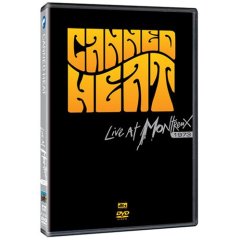
Canned Heat: Live At Montreux 1973


Written by Fantasma el Rey

This DVD presents hard-hitting blues band Canned Heat in a rare live performance from the renowned Montreux Jazz Festival in 1973. Out of the dozens of white blues rockers to emerge from the 1960s, Canned Heat was by far the best in the fact that they never strayed too far from their roots or the intention of the band, where others ventured into the heavier sounds of 1960s rock ‘n’ roll.

Led by front man and co-founder Bob “The Bear” Hite, the band rolls and stomps though ten cuts, dripping with funk and their core boogie. By this time in their career they had already lost Alan “Blind Owl” Wilson, who died at twenty-seven, just before the band’s third European tour. The Blind Owl’s high-pitched vocals were the perfect contrast to the Bear’s heavy vocal growl. Also missing from the original line-up is Larry Taylor on bass; he would eventually rejoin the band years later. The Bear’s little brother Richard Hite, who does a fine job, as we shall hear about later, picks up bass duty.

Kicking things off with their huge hit “On The Road Again”, the Heat set the pace for the show. Solid drumming by the Mexican-born Fito De La Parra and stellar guitar playing by Henry “The Sunflower” Vestine are what keep this tune as jumping as ever. The Bear’s harmonica playing and vocals drive this thing over the top. The original version had Blind Owl on vocals but the Bear does a fine job and makes it more of a solid blues tune.

The next four tracks feature Texas blues legend Clarence “Gatemouth” Brown, who leads the band well and with somewhat of an iron fist for their first time playing together. On “Please Mr. Nixon”, “About My Oo Poo Pa Doo”, and the generically title “Funk” he waves the band to a complete stop so he can take center stage and perform his solos. On “Nixon” he digs into his bag of tricks to fetch out an electric violin. While on “Funk”, which is a traditional blues that has lost its true title, “Gatemouth” makes his guitar “talk” by holding the strings down and doing some various scratching techniques, which make a sound very much like that of the adults in the “Charlie Brown” cartoons. The revival “hymn” as “Gatemouth” calls it, “Oo Poo Pa Doo” is the classic New Orleans-styled call-and-response song done with flair and gets the crowd going.

With “Night Time Is The Right Time” we get to hear second guitarist James Shane do one of his two vocals. The song is perfect for his voice because he sounds like Ray Charles. On his second song “Looking For My Rainbow” he plays slide guitar on his “shiny dobro get fiddle” and shows his importance to the band, by being able to perform in this classic blues style. For this track the band sits back a little and lets Shane lead, coming in halfway through the song to pick it back up. Fito’s drumming is perfect, a subdued yet solid jazzy tap, which along with Hite’s steady bass makes this seldom heard track a real bonus.

The Heat’s version of the Wilbert Harrison-penned “Let’s Work Together” is awesome and has the band back stomping and getting “Snorty” according to the Bear. “Rock And Roll Music” is the band’s tribute to the Rock ‘n’ Roll of the 1950s that they grew up with. Here I should note that what brought this band of blues brothers together was their love and passion for record collecting, especially blues and R&B from the ‘50s. The Bear, the Blind Owl and Vestine were reported to have had extensive collections.

To close the show the Heat go into one of their well known, ten-minute-plus jams, calling this one “Shake ‘N’ Boogie”. The Bear himself even picks up a guitar for this one. The band jumps on this tune from start to finish with each key member getting a chance to shine in a solo. Bass man Hite thumps his way along with some classic, no-frills, funky work. Vestine goes into some heavy shredding and shows that he can throw down a solid rock sound with the best of ‘em; this brother is a bad ass. Next up and finishing out the solo runs is Fito who’s simply drumming mad, from jazzy cymbal taps to heavy march rolls to all-out insanity. He’s all over the place with his drumsticks of fury. I have to stop typing just to stomp along with him. Halfway through you expect Fito to start tearing up his kit and jump into the crowd chasing women ala Animal from “The Muppets”, especially with his woolly beard. The band picks back up, winding themselves into frenzy. Right before they blow their top, they end the show, simply walking off the stage.

This DVD performance is a must for fans of Canned Heat; it’s a chance to see this straightforward, blues boogie band at their hard driving best. You can easily see why legends like Clarence “Gatemouth” Brown and John Lee Hooker enjoyed working with them so much. “Gatemouth” and the boys supposedly had a studio collaboration started, but all that came to an end when Brown and Vestine decided to settle a dispute with their fists. Canned Heat still plays gigs today with Fito at the helm as “survivor in charge”, seeing as the world lost the Bear in 1981 just before a gig in Hollywood. So there you have it, hard-hitting blues from a hard-hitting, hard-living band.

Check it out and…Don’t forget to boogie.

Saturday, September 16, 2006

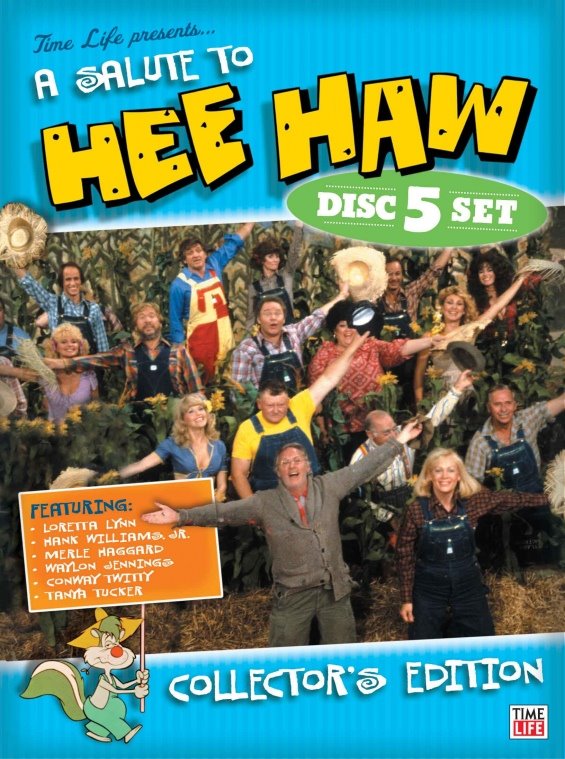
A Salute To Hee Haw - The Collector’s Edition


Written by Fantasma el Rey

Can I get a ‘yee haw’ for Hee Haw, y’all!

In a five-DVD boxed set, Time Life presents a television institution, the classic country and western variety show, which first hit the airwaves in 1969 on CBS. It contains eight episodes from the show’s early years: two from ’69, four episodes from ‘70, and one apiece from ‘73 and ’74, both after the show had moved to syndication. Packed with more corny jokes than you can shake a stick at and anchored by good performances by top country artists of the day, this set is a true treat.

The settings for the Hee Haw skits include a barbershop, a hayloft, front porches, basically anywhere that country humor can be found. Some jokes are told in story form and take a little longer in the telling while others are simple, quick hit jokes, seemingly influenced by “Laugh-In, which premiered a year earlier. There are also prerecorded scenes of country folks running around chasing each other or the very pretty females in the cast; I guess it was their attempt at being Benny Hill-Billy.

Led by co-hosts Buck Owens and Roy Clark, the cast is what holds it all together and makes the cornball jokes and gags come off so well. Junior Samples is the best example of this. With no professional stage training, he is outstanding; his simple, thick country delivery and lack of fancy “citified” ways makes him believable and lovable. It’s awesome to see Junior goof on the “big” words whose meaning he admittedly doesn’t know. Watching him during the cornfield jokes is just hilarious; the poor man tries his best at words like “geometry” and other polysyllables and simply sits back down after his fumbled attempts. These bloopers are left in the show and make it that much more fun to watch. After a season or two he even got his own segment, “Samples Sales,” as a used car salesman looking to make you a deal, even if it meant dressing up like a clown. All you had to do was call “BR-549.” For those of you familiar with the band of the same name, Junior’s number is precisely where they got it from.

The rest of the cast does a fine job as well. Two standouts were Canadian actors. Don Harron delivers news segments as Charlie Farquharson and Gordie Tapp as a Southern gentleman, who always has odd advice on life and is constantly getting blown up or whacked by a rubber chicken. “Pickin’ and Grinnin’” is probably the most fun to watch because it’s cool to see Buck and Roy play together and ad-lib some of their jokes, seeing them truly having fun is entertainment all its own.

The writing staff has to be given credit for being able to come up with material for so long, seeing as how the show ran for over twenty years. From show to show, the writers in these years varied slightly including performers Archie Campbell and Tapp. On the early shows legendary, cowboy sidekick Pat Buttrum gets some credit as well.

The musical performances stand above everything else. In every show, Buck and Roy do a couple of tunes. Roy has some fine numbers such as “Yesterday When I Was Young” and “Do You Believe This Town”, the latter looking at the hypocrisy of small-town life, which is very interesting and perhaps at odds with the show’s target audience. The Hager Twins did fine covers of solid country hits including Dave Dudley’s “Six Days On The Road”. Grandpa Jones shows how hard he can rock with some of his numbers, done with such speed and enthusiasm that you would think he was a rock ‘n’ roll star, not to mention his dancing and playing of the cowbells.

Some country legends show up to make appearances early in their careers, such as Hank Williams, Jr. and Tanya Tucker. Even future outlaws Merle Haggard and Waylon Jennings turn up to say hey and contribute very solid tunes; although Merle and Hank do look a might uncomfortable during their second songs. Yet with acts like these and surprises like Ray Charles, who apparently insisted on getting in on the comedy routines, it’s no wonder that week after week folks would tune in to see who would turn up.

Disk five is a very interesting and entertaining, providing an hour and twenty minutes worth of interviews with surviving cast members. Roy Clark, George Yanok, Lulu Roman, George “Goober” Lindsey, and The Hager Twins are the most insightful as to the shows beginnings and the good times had on set.

A Salute to Hee Haw is a fine set for any one with a major interest in the show and is a great look at what was probably the last of the true “family variety shows”, where everyone would gather around to see who would appear that week and laugh the week’s worries away. I myself can remember sitting around during my youth with my folks on a Saturday catching Hee Haw while we’d have a light dinner and a corny, hillbilly-inspired laugh.