Sunday, February 25, 2007

Sonny Rollins - Plus 4 & John Coltrane - Traneing In


Written by Fumo Verde

The stars of Rollins and Coltrane were on the rise during the late ‘50s and early ‘60s but it wasn't until recently that jazz musicians and fans have truly realized the impact that these two men had on contemporary jazz. Plus 4 featuring Rollins and Traneing In by Coltrane are two of the finest examples of art in motion, or at least the sound of motion.

First, a glance at Plus 4. This CD features Rollins on tenor sax along with Clifford Brown on trumpet (except track #4), Richie Powell on piano, George Morrow on bass, and Max Roach on drums. It contains five tracks with 32 minutes of swinging jazz, from “Valse Hot” right through to “Pent-Up House.”

Not since Monk had interpreted “Carolina Moon” could anyone else successfully grasp the idea of a jazz-waltz, yet Rollins does it with “Valse Hot.” He makes a waltz feel like you're dancing through the clouds, climbing and reaching with every note. Rollins likes to take notes and stretch them for all they are worth then puts them back all hot and wet. This sweet eight-minute jewel is followed by Sam Coslow’s “Kiss and Run.” The liner notes say that Rollins does more running than kissing in his version, and you can tell that to be a fact as soon as the song starts. Once again his tenor sax is jetting up and down the scales, pulling and pushing on every note in his path. That's Rollins; like our never-ending universe, he is always expanding and stretching forward.

“I Feel A Song Coming On” is another freight train rolling down the tracks at break-neck speed. Rollins and Brown square off for a duel of reed vs. brass as the drums, piano, and bass scurry around to get the best seat in the house to watch the brawl. This song’s energy and drum solos by Roach make it my favorite off the album.

Like a supernova, Plus 4 gets the feet tapping and the heart jumping. Even “Count Your Blessing Instead Of Sheep,” which has a slower tempo than all the others, still gives Rollins the opportunity to push the architecture of how to utilize a tenor sax in a traditional jazz band. To me, I feel that Sonny Rollins is the spirit and the heart of the tenor sax. The tenor sax has a mind and a soul too; it goes by the name of John Coltrane.


Traneing In is another incredible drop of water in the river of music that ran out of John Coltrane. Like Rollins, Coltrane fundamentally changed the way the tenor sax was used in jazz bands, and this is one of those albums that highlight this fact. It is comprised of Red Garland on piano, Paul Chambers on bass, Arthur Taylor on drums, and Coltrane with blueprints for a new era in jazz.

On the title track, Coltrane brings it on strong with a twelve-and-a-half minute jam. The mind of Coltrane takes over here, giving the voice of the sax room to breath, to think about where to flow to next. Coltrane runs the scales also, but with slight pauses before jumping to the next note or two, the anticipation of what follows gives the song its cleverness.

It is followed by “Slow Dance,” which opens with Chambers tickling the bass chords, bringing in a softness that allows Coltrane to cry out this song’s soul with the utmost tenderness. Timing is everything, and Coltrane knows when to let it out and when to keep it in. After a sweet, slow solo Coltrane lets Garland, Chambers, and Taylor take the wheel of the car and follow the route in their own direction, but not for too long.

“Bass Blues” follows, and you would think that the tempo and rhythms would be similar; well, think again. Coltrane gives a jump-start to it by revving up his sax and letting some steam out. Again Coltrane thinks before he steps, and by doing this, he raises the level of play amongst the other musicians.

Does it matter that Rollins has only three original compositions on Plus 4 and that Coltrane has only two on Traneing In? No, because any artist can translate any song, and though the song remains the same, the feeling and images the music brings about will always reflect the musician playing it. On these albums Coltrane and Rollins create from the experiences they have accumulated over their travels. The wisdom gained through other musicians, such as Dizzy Gillespie, Charlie Parker, Lester Young, and Coleman Hawkins and from each other, allowed Coltrane and Rollins to reconfigure how jazz sax should and could be played. They did it with different styles of play, but no matter how you look at it these two men were the pioneers of their time.

These two CDs are a history of how and when John Coltrane and Sonny Rollins started to rearrange the sounds of the tenor sax. Plus 4 and Traneing In are two very different CDs by two very different musicians who showed the world that anything is possible.

Friday, February 16, 2007

THE MESSENGERS


Written by Hombre Divertido

The Messengers fail to deliver.

If you have seen The Birds, Poltergeist, Amityville Horror, The Shining, and The Sixth Sense, than you have seen pieces of The Messengers done much better. This is an eighty-five minute concoction of other stories thrown together into a haunted house tale that hits every cliché possible.

The kids are attacked by dead people, know one believes them, they continue to stay in the house, and model behavior that know normal person ever would. A character is introduced from out of the blue that is sure to be key piece of the puzzle, and the big reveal at the end falls as flat as the performances in this film.

I would at least like to tell you that this is good brain candy i.e.: Leave your brain in the car, and go watch a movie that will make you jump every ten minutes, but The Messengers even fails on that front.

The biggest problem here is a complete lack of depth. The standard opening segment where we see what happened in the house prior to the arrival of our victim family is far too vague, as are the eventual attacks to the family. We’re not sure who or what is doing the nasty deeds, nor do we understand why. The writer and director fail to understand that part of the enjoyment gleaned from an audience stems from a desire to figure things out while grasping the rafters after being scared out of our seats. There are no such rafter-grabbing moments in this film, nor is there anything worth trying to figure out.

I could mention the special effects, but you have seen the best ones in the commercials. The majority of that which remains is nothing but computer generated clumsiness. I could mention the actors and make further reference to their performances, but they're all forgettable, and I’m sure they’ll appreciate no further association with this dud.

Recommendation: Send a message back by not paying to see this mess at the theatre or on DVD. Rent Poltergeist and The Birds for much more fun.

Thursday, February 15, 2007

David Martin: Something In Your Eyes


Written by Fumo Verde

Oh boy, here we go again. This one is for the little girls, and his name is David Martin. Martin is a blonde, blue-eye heartthrob with the voice of an angel. Looking like an advertising model for Polo, David Martin brings us his first CD Something In Your Eyes, which is a disc of love songs dedicated to David's girl, whoever she maybe. I didn't try to find out.

Let it be known that Martin wrote all these songs, and that this CD is all about love. Yes, Mr. Martin is a lover, but you wouldn't know that by the look of the CD cover. The title song opens up with only a piano, drums, and Martin’s voice, softly explaining his love for the woman who still holds him in awe. It is a remembrance piece that sounds more like the love theme to a cheesy ‘70s movie. Actually, all of these songs have that type of imprint, but that's because Martin's philosophy is all about relationships. "Our Love" truly shows this. The lyrics start off with Martin revealing things he loves, such as the smell of rain, watching the seasons change, and snow melting in his hair, until he lets his true feelings be heard. "Our Love is our love, and girl, I love our love." With deep lyrics like that, I won't forget my skim board.

This whole CD seems hollow and predictable with each song trying to out sap the other. Yes, love is great, but what makes a great love song is the love that has flourished with that special song in mind. But I'm no love doctor and neither is David Martin. His voice does the lyrics justice, but I just couldn't connect with anything that he was saying. His website describes him as being like one of the love-song writers of the ‘70s and ‘80s; i.e. Billy Joel and Sting, but those guys wrote more than love songs. Even more so, they wrote about the pains of love, not just how much they loved that person. The CD is dedicated to "his Girl," or at least that's what it says on the back of the liner notes.

There is nothing wrong with this CD; it's just nine songs dedicated to David Martin's girl and one song dedicated to his Lord. The music is played well, and the lyrics are sung with passion. Some very accomplished musicians back Martin and this gives the music its fullness, but that's about it. Maybe, in the future if David Martin comes out with something other that drippy-sappy love songs I might find more of a connection. I know a car accident helped Drake Bell.

Unless you're a teenage girl, or a very emotional woman at any age, this CD may not be your cup of tea. I only do tea with shrooms, and even that wouldn't have helped here.

Wednesday, February 14, 2007

BECAUSE I SAID SO


Written by Hombre Divertido

Because I Said So starring Diane Keaton and Mandy Moore, and directed by Michael Lehmann, is a contrived and convoluted story full of cute competent performances. Unfortunately, said performances are not enough to make this work regardless of who says so.

It is impossible to ignore the talent of Diane Keaton even in such a poor vehicle as Because I Said So where she is an overbearing mother set on marrying off the youngest of her three daughters played enjoyably albeit one dimensional by Mandy Moore. Keaton’s “Daphne”runs a lengthy personal ad and sets out to interview candidates for her daughter.

After the standard run through of bizarre characters, she decides on “Jason,” the rich architect played by horribly miscast Tom Everett Scott, who needs to find more quirky roles that better fit his look and abilities. During the process of finding Jason, Daphne also meets “Johnny” (Gabriel Macht) the musician who is all wrong for her daughter.

So Moore's character meets and starts dating both, and the majority of you can finish the story yourself, as could the majority of people who see the film since it is quite predictable, and full of clichés that we have seen in far too many superior films.

Lauren Graham and Piper Perabo play Daphne’s other two daughters, who seem to be either dressing or undressing in a number of scenes, and do nothing more than stand around and shrug their shoulders, or smile knowingly throughout the film.

These 109 minutes of film might make four episodes of a decent situation comedy, but as a motion picture, it is too predictable, and wastes the talent of its gifted cast.

Recommendation: If not for the comedic talent of Keaton who reaches the point of virtually mugging to the camera in an effort to make poorly directed physically comedic scenes remotely humorous, and a cute performance by Moore who appears to be developing in to bankable adult actor who needs some help with script selection, this outing would be a complete waste of time. Since the actors work so hard to make a poorly directed script work, this DVD is worth a rental at your local rental shop, but not something you should pay to see at the theatre.

Tuesday, February 13, 2007

Cracker/Camper Van Beethoven: First Annual Camp Out Live


Written by Fantasma el Rey

From out of “California’s High Desert” comes Cracker with Camper Van Beethoven and friends filmed at “The first annual camp out live at Pappy and Harriet’s Pioneertown Palace.” Where ever the hell that is? To be perfectly honest, I don’t care. For you see, joining these mavericks of alt-country are the side projects and solo outings by the likes of Johnny Hickman, Victor Krummenacher, and the ominous sounding Monks Of Doom. Along the way a few other band members get shine time of their own. Connecting all the offshoot bands together, besides their involvement with one of the two core bands, are their alternative country/ cow-punk sound.

The disk kicks off with CVB launching directly into “The Long Plastic Hallway” and moving quickly into “Tania” and that’s when things get good. “Tania” is where the sound of CVB is captured best, described as a band of gypsies (not the Jimi Hendrix band) meets the Charlie Daniels Band. Fiddles and mandolins soar as the solid rhythm section keeps time with lead singer and co-founder David Lowery’s vocals. The momentum keeps going as the band slides smoothly into “Eye Of Fatima Pt. I–II” and, as with most two-part tunes, this one turns into and ends as a raucous jam.

The last two songs are truly where it’s at for CVB. The thundering country rocker “51-7” is where the band comes together and lets it all roll. “Take The Skinheads Bowling” is the cult classic that is seemingly a solution to a social concern, yet it’s not. In fact it’s pretty much a little ditty about nothing at all. But it sure is fun to sing along with when you can find it.

The second act on this DVD is a complete change of pace: the acoustic set by Cracker’s guitar-slinging, songwriter Johnny Hickman. Accompanied only by his guitar and harmonica, Johnny captivates the audience with three tunes written in a Dylan-esque style. “The Great Decline,” “Beauregarde’s Retreat,” and “Little Tom” are awesome tunes that showcase Hickman’s writing style and his “tuff” baritone voice. “The Great Decline” is a remembrance of things past and contains a good line about our politicians being drunk with greed. While “Beauregarde’s Retreat” is his happy song about the simple things in life and not being distracted from the light. I say “happy” because as Hickman himself points out, his songs have a tendency to be a bit on the darker side of things. A good example is “Little Tom” about those who fall through the cracks. With this review and my previous one on Cracker, I am now a real Johnny Hickman fan and must search out his solo work

On to CVB’s Victor Krummenacher who punches in with his three moody alt. country numbers: “Not Coming Back,” “Bittersweet,” and “Questa Sunset.” The drums are steady and heavy, adding to the gloom as the steel guitar gently weeps behind the guitars. Victor’s dark country baritone carries his tunes easily to your ears and leaves you wanting to hear more than is given on this disc.

Krummenacher returns to team up with original CVB member Chris Pederson and checks in with their band “Monks Of Doom,” where things are sent spinning. Their heavy blues-rock meets alt-country stands out from the other bands on this disc. Krummenacher leads the band on “Poison” while Pederson takes vocal duties on the Stevie Ray Vaughan-inspired “Riverbed.” Drums crash and guitars flash as the Monks tear through the two songs. Too bad that’s all they have is all I’ve got to say.

Rounding out the solo performances is Jonathan Segel, who chimes in with his ten-minute long, southern-rock jam “Little Blue Fish,” and Greg Lisher who has an average country sound. Lisher’s vocals are a bit shaky and soft but pleasant, while his three numbers seem to blend together making it not a bad performance, just one that seems drowned out.

Lowery, Hickman, Krummenacher and Pederson get back on stage and the stomping is kicked into overdrive, as Cracker hits with the force of Mack truck, fueled by their energized punk/country sound. The band begins by ripping though “One Fine Day” and “Movie Star,” slowing only for “Big Dipper,” then it’s on to the explosive “Teen Angst” and “Low.” Booming drums, steady bass lines, and Hickman’s solid guitar are complimented by the piano and even an accordion. The wild “Teen Angst” and “Low” are as powerful as ever; the boys show that after all these years they have lost nothing. Somewhat sadly the only thing missing from the DVD is the crowd favorite “Euro Trash Girl,” yet it only takes away slightly from the overall excitement of the disc.

Closing out this must-have DVD for fans of Cracker, Camper Van Beethoven, and especially Johnny Hickman is the “Porchstock” footage. Which is an after-hours back-porch performance captured on a home camera, of Hickman and two unidentified guitarists. It’s cool to see Hickman freely and very loosely playing tunes that he admits he hasn’t played in years. This last segment is only flawed by the fact that now and again some drunk guy wonders in front of the camera to sing and curse along with the boys. Very reminiscent of a bad bootleg CD you pick up where throughout, a drunken girl can be heard talking and screaming way too loud.

All in all not a bad way to spend just over two hours enjoying a couple of familiar bands and getting a sampling of a few new ones. Presented with that overall Cracker/CVB vibe of no gimmicks or flash, just sass and kick ass! Now turn out the lights!

Monday, February 12, 2007

Grateful Dead: Live at the Cow Palace New Year's Eve 1976


Written by Fumo Verde

This one's probably just for the Heads but others who are getting into the jam side of rock and roll and bluegrass will dig this one also. It's live Dead, but unlike some of the bootleg tapes and CDs that sound like bootleg tapes, Live at the Cow Palace New Years Eve 1976 is as clear as a cowbell, and you can always use more cowbell. I read on the Dead's official site that this CD is recorded in HD. What will they think of next?

Now I'm not getting into a pissing match about if this is or isn't one of the best shows that they have ever done. I'm not like that; I just dig the music, and these three discs have that in abundance. The band sounds tight and the recording crew did a great job. I don't have an HD player of any sort, but I would be impressed if these discs sounded any better than they do on my standard equipment because all of these discs sound great for a live show.

This show comes off smoothly with Jerry Garcia and Bob Weir singing so in tune, not just with the lyrics and instruments, but also with each other. “Studio quality sound” is the best way for me to describe it. With Jerry howling soulfully and Bob’s vocals following right behind on “They Love Each Other,” the band takes the audience to a deeper blue than normal bluegrass.

The next song, “Looks Like Rain”, is one of my favorites and it follows masterfully behind “They Love Each Other”. Normally, Jerry is considered the soulful one, but those first words out of Bob’s mouth gave me chills and goose bumps. All this soul laid out to the backdrop of the gentle yet sturdy driving sound of Phil Lesh’s bass. Billy Kreutzmann and Mickey Hart exchange drum rips while Donna Godchaux’s voice shines throughout, and not just on this track, but the whole show. On this track you can see why the Dead needed her as much as they did. This is just a small micro look at this grand package of a show and of the band at that time.

I would have to say that this show was more bluegrass than rock or just outright jamming. The Dead have always used the jam trip to blend and mix genres of music. They can take a hard rocking song and give it a bluegrass-jazz feel, or take a traditional bluegrass or country song and give it a rock and roll soul with some psychedelic jamming. “Playing in the Band” has this type of flair to it. Guitars, keyboards, Phil’s bass, all the instruments head out for an adventure at this point of the show, and what a trip it is. Is it organized improv or just a chance for everyone to tune up again, or was the acid that good? I think I’ve made my decision.

“Eyes of the World,” “Wharf Rat,” “Scarlet Begonias,” and “Morning Dew” are just a few out of the twenty-two tracks divided up amongst three discs. I have to say, this was one of the most soulful sounding versions of “Wharf Rat” I have ever heard. This set also has one of the shortest versions of “Eyes of the World,” which is one of my all-time favorites because it’s true that “sometimes we live no particular way but our own.” The jam from “Eyes…” to “Wharf Rat” flows with only the magic that Grateful Dead can conjure up.

Of course, there is a “Drum” track, and from it the band drops into “Not Fade Away,” followed by “Morning Dew.” Do I have a problem with slower versions of “Bertha,” “Scarlet Begonias,” or “One More Saturday Night”? No I don't, and I actually like slower tempos on tunes such as those. When played with a slower beat or tempo, it gives the song a new spirit and can sometimes come off stronger than when first heard at its original rhythm. This is what live performances sound like, and this feeling can be felt on these CDs. Things like the cheers from the crowd can be softly heard during the song, but as the band stops or "tunes down" during transitions, the crowd sound gets a little louder, bringing the listener into the Cow Palace to enjoy the vibe that's going around.

Like I said, I'm not going to debate whether or not this one of those "special" shows, but from the sounds I have heard of these discs, I sure wish I had been at this show. What makes a great band isn’t just the music they make in the studio, but how well they can perform it live in front of people. The Grateful Dead have that ability; Live at the Cow Palace proves it.

Sunday, February 11, 2007

FLAGS OF OUR FATHERS


Written by Fumo Verde

I saw this film when it first came out in the theater and still consider it one of the best movies made in 2006. Director Clint Eastwood brings a new light not one often seen or even heard of when war movies concerning WW2 are made. They say the fog of war can confuse, but for those on the home front, that fog can conceal as well. Flags of Our Fathers isn't about the battle for Iwo Jima or Mount Suribachi; it is about the men who came back home and what happened to them after.

The acting was magnificent on the whole. Adam Beach's portrayal of Ira Hayes was incredible, sincere yet strong. He gave Hayes well deserved respect. The same goes for the performances of Ryan Phillippe, who played John Bradley, and Jesse Bradford, who played Rene Gagnon. These three men were the story’s stars, but the film contained outstanding performances all the around. The movie starts out with Tom McCarthy as writer James Bradley who only after the death of his farther John asks that unnerving question, "Dad, what did you do in the war?" Eastwood then takes us on the path of that question and hence we follow these men from the landings at Iwo Jima to a desolate road in nowhere, U.S.A. where John and Ira cross paths one more time, yet it is only a fleeting glimpse.

If you think the politicians now in D.C. are spinmeisters, you should have been living back in the ‘40s. FDR was the master and at that time this country needed it, providing something to grasp onto, a light we could see at the end of the tunnel. It had already been four long years of war, and though the county itself hadn’t been attacked since 1941 with the exception of the Japanese balloon-bombs, people we starting to ask questions. Back then there was a government program everybody had to sign up for, be you rich or poor, it was called rationing. People had not been asked but pretty much ordered to give up certain things like butter and gas. So after four years of going quietly without, Americans were wondering if what was going on overseas was worth it. They saw the graveyards increasing but couldn't see the hope. The flag being raised on Mount Suribachi became the symbol of true American heroism. Hope exploded across the country and the three survivors are now asked to serve again, but this time in a road show of victory.

These men, who had been fought the toughest battle of World War Two were now asked to participate in a "dog and pony" show so the American people would reach deep into their pockets and buy war bonds. Based on the book by James Bradley and Ron Powers, Eastwood follows this part of the war story. What happens to these three men will dishearten the sternest patriot. To think this is the way we treat our real heroes, not the ones in the capes or those on the silver screen, but the men who give their lives to secure the freedom of this country, particularly back when heroes were definitely in demand during the Cold War peace. Eastwood doesn't come off trying to highlight this part of what happens, he follows the truth of where these men went after in what is still today one of the most recognized pictures the world over.

I have friends over in Afghanistan and Iraq and the one thing I have learned not to say to them when they come back is "I know what you must be going through," because I don't. No one knows what soldiers go through during war. Unless you have been there yourself, you have no idea what it is like. Eastwood goes for that feeling, the feeling that the rest of us cannot connect with, he tries to show that while we who have not been there can imagine, those who have been there can never shake it, no matter how hard they try.

For those of you who do not understand what the big deal is about I would suggest a viewing of this film followed by Letters From Iwo Jima for both movies give a chilling account of the scars of war. Eastwood doesn't forget his history either. He reminds us that yet this picture of the flag raising is the most famous, it wasn't the first. The original flag was hoisted at 10:20am of the same day, Feb. 23 1945, but the battle for the whole island was still underway and wouldn't end until March 16, 1945. These stories are here to remind us of the sacrifices others have made for us, but they also warn us of the risks we face when we blindly follow without knowing why.

Thank you Mr. Eastwood for making this movie and giving respect to those who honestly deserve it. Please see these movies.

Thursday, February 08, 2007

PAN'S LABYRINTH


Written by Fantsma el Rey

Hello, fiends! Fantasma’s back. That’s right; I fell off the wagon for a while but now I’m on track and checking in with a crazy little review for the Oscar-nominated El Laberinto Del Fauno, Pan’s Labyrinth for the English release. With no further ado, a quick rundown of the story…

From the mind of writer-director Guillermo del Toro comes a terrifying tale of hideous monsters and gruesome deeds that only the most warped souls are capable of. And that’s just the role of the military men in dictator Francisco Franco’s 1944 Spain. At the heart of this story is an imaginative young girl who flees to the fairytale world of her mind to escape the horrors that will eventually engulf her.

Isolated in an old mill on a hill, young Ofelia must deal with not only the death of her father, but also the overbearing presents of her stepfather, the iron-fisted Capitan Vidal. As well as her mother’s troubled pregnancy. Let’s not forget the clean-up campaign against local rebels going on around her, which is the reason that the capitan was sent to the area to begin with, eventually sending for his new wife and unborn boy.

Very early into her stay, gunfire, explosions, cruelty, death, and the impending doom of her mother surround Ofelia. There are good people in her life as well, who will contribute to her fantasy with their kindhearted words and actions. Into these surroundings she is thrust and must now somehow cope. So how would any young person with only adults to interact with and a passion for books cope? By seeking refuge in the garden maze and inventing a world of her own, much like the ones that she has read about. Only in this world, she is the princess and heroine.

Large frogs that drain the land of life and baby-eating monsters that have eyes in their hands inhabit Ofelia’s new universe. Most important is the ancient faun (a half-man, half-goat creature, much like the panpipe-playing Greek god, Pan) who sets her on a journey that all heroes know they must face and overcome to be allowed their just rewards. Guided by fairies, she enters the phantom realm in order to fetch and return with the boons that will help her achieve her end goal. All the while the nightmares of war rage around her.

Del Toro has done a masterful job in the writing and directing of this film. The story flows and holds the viewer’s interest from beginning to end; there’s never a dull moment and I’ve seen it twice. His actors are brilliant, bringing his tale to wonderfully horrific life. There are shots that are beautiful; one scene in particular is Ofelia telling her unborn brother a story of the Rose of Life. The camera magnificently enters the world of mystery through the mother’s womb, the first place of magic and awe for us all. Del Toro is definitely on top of his game and shows what a creative mind can do.

What led me to tackle this review is that sadly more than once after watching the film I heard the questions, “…so was it all in her head” and yes, the truly concerning “what the hell was that all about?” Great Googa Mooga, people! Really this one isn’t that hard to figure. Was it in her head? No, it was real! My neighbor used to be a faun and had goat legs when he was a kid. He would send me around kicking light poles to call down spirits. Really, true story.

One could argue either point of reality or fantasy. Yet it is easy to see how and, as explained earlier, why a child could and would dream up this mystic world. Creating a world full of wonder and mystery is easy for a child with imagination and a little space to wander and roam. Trust me I know. When I was young, you could have handed me four sticks and I’d pretend to be anything: a rock ’n’ roll drummer, Roman legionnaire, or mythical hero searching for a dragon called “thoushalt”, but that’s a story that my therapist will have to deal with in my later years. And again, thank the lord I didn’t grow up in some war-infested place like Franco’s Spain or someplace in the Middle East that begins with an “I.” The creative folks out there will pick up on this in a heartbeat. Danny, Cristina, I’m looking at you. And thanks for the intelligent conversation and free tickets to my second viewing of this film.

As far as the “what was that?” question, really have we become that far removed or sunk that low as a movie-watching nation that a fantasy story laid over the atrocities of war is that hard to comprehend? Do the masses no longer take their own experiences to a movie, so that they can apply and interpret a film for themselves? Do we constantly need a director sitting next to us providing commentary? Oh wait; most people don’t even use that feature when they buy a DVD, so it mustn’t be that.

Seriously, I don’t know. Some can see the bigger picture and read between the lines to formulate their own valuable views, opinions, and explanations. I draw hope from the fact that out there on campuses across the nation and in living rooms throughout the land there are young ghoulies who do get it with out having to be spoon-fed. I know a few and God bless ‘em. I’m ramblin’ so…

Yes, I like Pan’s Labyrinth a bunch and recommend it to all. Especially my fellow creepy sorts who adore the things that go bump in the night. See it for yourself and draw your own conclusions as to how Ofelia made her adventures possible.

And a big phantom world of thanks to a certain “rockabilly-philly” who helped ol’ Fantasma find his way back to the creative world of the imaginative pen.

Sunday, January 28, 2007

Keller Williams: Dream


Written by Fumo Verde

Fumo here with one of the best-sounding CDs I've heard in a while. Dream-- wow, that's a big name to fill, but fill it he does. This disc contains sixteen tracks with some top musicians from every aspect of the music spectrum, folks like Bob Weir, Bela Fleck, Michael Franti, and the String Cheese Incident. With a line-up like that, I must be dreaming, but it’s not just my dream because Williams fulfills many of his by playing with all these amazing artists.

Each track has a totally different sound from the one before it, giving the CD a "cool mix" style. "Play This" is the first track and it starts off fast and hard, which Williams explains why in the liner notes. I've often wondered how an artist gets idea for songs. "Play This" was something that came about after he was asked if he could write a song that could be played on the radio. Williams listened to a certain station for a while and that's what gave him the inspiration. It kind of has that Punk-Shout-Rock-Sing quality you might find on any billboard-pushing FM station nowadays, but Williams gives it a little twist.

Switch over to "Cadillac" and you find the trio of Williams, Bob Weir, and Bob's dog, Jackson Hamlet Weir, recorded at Weir's house in California. The root of this tune has a definite blues sound with a little bluegrass feel to it. "I love to cover Dead songs, and to have Bob Weir sing one of mine is a dream come true,” Williams says on the liner notes. He also said that he wrote the song with Weir in mind. The story is about a guy going to pick up his Cadillac. "Red and white/ creamy leather/ Roof stuck down/ praying for better weather." Both men play acoustically as Jackson barks in the background for effect. I play first each time I turn the power on my player.
From here we'll jump over to "Cookies," a jam tune where Williams laid down the tracks and then sent it onto to Fareed Haque, an associate professor of guitar at Northern Illinois University. Haque is an accomplished guitarist but he also plays an instrument that is a cross between a guitar and a sitar. The sounds off this track are unbelievable and though it's time is just less than five minutes, I still consider it a damn good jam.

Williams didn't set out to make an album with all his favorite people doing what he thought they should do. He made it with them in mind, and gave them the freedom to use their talents, and if that changed the original way he first had a track, then so be it. He found out that by letting the other artists add to his dreams, they became more vibrant and colorful.

Keller Williams is a great jam artist with witty lyrics and a light-hearted tone who brings fun back into music. Dream can be described only by its name because it was a dream for him to have worked with his hall of fame, and it is a dream for those who hear it. An abundance of sound that is sure to please the ear, the mind, and the soul. As crazy as this world can get, sometimes we just need to kick back and dream, and here's the soundtrack to do that. Have fun.

Tuesday, January 23, 2007

THE MASKED MOVIE SNOBS PICK THE WORST FILMS OF 2006


Caballero Oscuro
The Pink Panther

I like the original Pink Panther films. I like Steve Martin. I even like Beyonce. But the combination of all of them in the latest ill-advised studio remake is the worst idea and execution of the year. Remember when Steve Martin cared about his films? Remember when he was funny and sometimes even dramatic and wasn't just cashing a paycheck? Steve Martin couldn't successfully replace Peter Sellers under any circumstances, and he's not helped by the incredibly weak material patched together into a less-than-serviceable final product. The sight gags are obvious a mile away, the plot is completely common, and there's absolutely no chemistry between any of the stars. In short, it's a frustratingly mundane attempt to pander to the masses that fails miserably on all counts.


Cara de Pescado
The Break-Up

Choosing a film to win the honors of being the worst film all year is sometimes as difficult as selecting the best, other years it is quite easy. Picking the worst of 2006 fell somewhere in between as I could pick three films I didn't like at all. Do I pick one that had some enjoyable moments but had jokes that went too far to the point of being old and unfunny, a dumb film that pissed me off more than it made me laugh, or do I pick one that was just uncomfortable? Since I at least liked the bear and chicken in Borat, and Material Girls did have a few moments where I at least smiled, I decided to go with The Break-Up. It was advertised as though it would be some cute Romantic Comedy, but there was nothing romantic nor comical about the movie.

It is uncomfortable when you're with friends who are bickering or siblings who fight a lot. The Break-Up is 105 minutes of that sort of uncomfortable squabbling. I don't need to waste over an hour and a half of my life watching people fight when there is no point to it. They don't resolve their problems, nor do they even seem to try. Vince Vaughn didn't even look attractive in it. No, the only two good things about The Break-Up were Jennifer Aniston's butt and the condo. I am looking to buy a home, maybe they could have sold it to me and quickly gotten out of my life.


Hombre Divertido
Poseidon

When asked to choose my worst movie of 2006, many came to mind: The Break-Up, Accepted, How to Eat Fried Worms, and Nacho Libre. Oh Nacho Libre was bad, and so disappointing, but it was not the worst movie of the year. Now, granted, I did not see every movie this year, and I am sure there are some very deserving films out there, but for me; it rises and sinks with Poseidon, a horribly under-utilized all-star cast, underdeveloped story, poor special effects, and a complete failure in comparison to the original.

How it was possible to take the 1972 classic Irwin Allen production, and turn it into the shipwreck that it is I have no idea, but I must applaud the lack of effort put into this.

Irwin Allen knew that the key to the success of a disaster film is to give us characters that we care about, and that is done by developing the characters prior to the disaster. He did this brilliantly in The Poseidon Adventure. We got none of that in Poseidon.

I said it when I first reviewed it, and I’ll say it again: This film is a snooze fest from start to finish that generates little excitement or interest.

Recommendation: Wait for it to come out on DVD, and then rent the original.


Mil Peliculas
Silent Hill

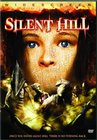
The worst film I recall seeing was Silent Hill. The egregiously boring based-on-a-videogame turd. The plot, story, characters and sound were dreadful, other than that it was fine. I would recommend banning everyone but its cinematographer from any future work in the film industry. Although all he did was copy the video game's look exactly he did not manage screw that up. Can't really supply a synopsis as I have already deleted this abomination and sent all its links to my mental recycle bin.


Sombrero Grande
RV

When a drama is seriously awful, it can often turn amusing for all the wrong reasons. Sometimes, as is best illustrated with the infamous Plan 9 From Outer Space, the film can become all the more enjoyable for its laughable qualities.

But what happens when a deliberate comedy is downright awful, when not a chuckle is to be gained and there's certainly no serious or dramatic enjoyment to be had? Well then you have the worst kind of movie; one that offers no legitimate entertainment...a movie like RV.

Unlike other no-doubt laughless wonders that came out this year (Date Movie, Deck the Halls, etc.), RV is one movie I made the mistake of actually presuming might hold the promise of a few laughs and so subjected myself to watching. With the cancellation of the genius Arrested Development last year I was eager to see actors Will Arnett and Tony Hale show up in post-Bluth family roles, but in RV Hale has little more than a cameo and Arnett is utterly wasted in the “villain” role by the incompetent script and inept direction.

Egregiously ill-conceived in just about every way, RV offers painful, lengthy set-ups that lead to such comedic gems as Robin Williams getting soaked in liquid fecal matter. The ill-deserved egotism of director Barry Sonnenfeld shines through in every belabored camera turn that focuses on his mug which he has plastered larger that life on the side of the titicular recreational vehicle.

RV is utterly worthless; a laugh—or even smirk—free “comedy” that will remain the worst time I spent in all 2006 watching a movie. This RV is to be avoided as if it were barreling down the road toward you.


El Bicho
American Dreamz

From the trailer, American Dreamz gathers subject matter from politics to pop culture in what could have been a brilliant, biting satire about the current state of America and its citizenry. Instead, what is delivered is a Saturday Night Live parody. Unfortunately for the audience, it’s the unfunny, last sketch of the night that begins at 12:51 A.M. as filler between commercials before the host says, “Good night.” I sat in a theatre where no one laughed and if I hadn’t been reviewing the film, I would have walked out after about 40 minutes from sheer boredom.

Writer/director Paul Weitz has obviously generated a great deal of money from the American Pie franchise because I don’t understand how this film got made. The “comedy” was non-existent. Only someone surrounded by yes-men and ass-kissers would think this script was ready to go. Put an unknown screenwriter’s name on the front page and it would hit the trashcan so fast a sonic boom would have been heard from miles around. Other than the people who need a paycheck and maybe Hugh Grant, who is given a chance to play off-type, I don’t believe anyone read this script before agreeing to make it.

American Dreamz has aspirations to be something grand but its ideas are so obvious they are rendered lame. American Idol purposely picks contestants that are bad so we can laugh at them. No. Who knew? Thanks for the revelation. Chaney controls the President and what he says. Really? Never heard that before. Now, I’m no fan of the President, but the film paints him as borderline retarded, distracted by shiny objects. I’m not sure if it was supposed to be funny or commentary since it accomplished neither. Weitz and his lackeys need to realize that just because you have an idea does not make it good, unique or funny. If he had reviewed this film, he would have thought it both brilliant and humorous to have the headline read: American Nightmarez.