Showing posts with label Jamon Y. Huevos. Show all posts

Wednesday, June 27, 2007

1408


Written by Jámon Y. Huevos

Mikael Hafstrom’s 1408 gets to take a seat of honor next to The Shining as the second of two truly great haunted hotel movies to spark from the mind of Stephen King. John Cusack plays Mike Enslin, the author of two books of haunted hotel reviews. Having separated from his wife after the untimely death of their daughter, Enslin would like nothing more than to believe in the afterlife; unfortunately, he’s never seen any proof. That all changes when he spends the night in room 1408 at New York City’s Dolphin Hotel.

John Cusack cannot receive enough accolades for his taut performance of the heart-broken Enslin. Eighty percent of the film is Cusack in a room by himself and he pulls it off in amazing style. It’s Cusack’s own genuine humanity that shines through so many of the characters he portrays, and Enslin comes off as witty, smart, funny, and sad in a rich and multi-dimensional performance. You just want to hang out with this guy; however, you do not want to hang out in room 1408.

Room 1408 is spectacularly haunted. The screenwriters and director refuse to cut the audience apart with cheap thrills. Even when they have something jump out of the shadows, you feel like those moments were earned because of the more subtle terrors filling the screen for most of the movie. The horror starts slow and then builds and builds. Every possibility is loaded into that room, from ghosts and gruesome murders to fire and ice. This is one roller coaster that is ninety percent slow movement up a long hill, ripe with tension and fear, and ten percent gut-wrenching drop. It’s all about timing and special effects, and the editors and artists work some great magic.

There is one sour note in 1408, and it is very sour. Samuel L. Jackson is an empty hole of acting nothingness in the center of this film. 1408 finally proves that unless Jackson is being shot at, he should stay home in bed. Virtually everybody else in the cast is able to hold their own against Cusack’s magnetism. Of special note are Mary McCormack as Enslin’s wife and Jasmine Jessica Anthony as Enslin’s daughter. Jackson, on the other hand, tries to act entirely with his eyebrows and a straight-edge speaking cadence. This makes his performance look like two caffeinated inch worms frolicking atop a single piano note. It’s an interesting visual, but there ain’t nothing there.

1408 does exactly what it sets out to do, send shivers down your spine with an intelligent story. I’m not sure it could have worked without John Cusack in the lead; he is the perfect everyman. That aside, 1408 is a smart psychological drama with some great bumps in the dark.

Monday, June 25, 2007

ABOVE THE LAW


Written by Jámon Y. Huevos

The mid-80s Hong Kong action film, Above the Law, directed by Cory Yuen, begins with a bang – a whole bunch of bangs. Bullets fly, cars crash, feet hit noses. It’s everything one would expect from the genre. However, it’s pretty tough to get into this film, but you’ve got to stick with it if you’re a fan of high-octane action on a dime budget.

Nobody is going to accuse Above the Law of having a deep plot or great acting. In fact, the first twenty minutes are nearly bad enough to knock you out of the film for good. Then four cars attempt to simultaneously hit our star (Yuen Biao) in a parking garage. It’s a great scene with amazing stunts and extremely well placed ramps leading up the backs of the ubiquitous Mitsubishis. These are real stunts, too; the old-fashioned, non-CGI kind that blow your mind. Sure, you sometimes see the ropes and pulleys, but you also see the very real sweat, pained contortions, and smatterings of genuine human blood.

Cynthia Rothrock and Peter Cunningham have great moments in Above the Law. Brought in to help sell the film overseas, both martial arts experts are truly incredible on screen. They have lame dialogue, stupid entrances and exits, bad hairdo’s, but, holy cow, they kick a ton of ass. Cunningham is especially devious as an assassin with the world’s tiniest heart. After killing all the adults in the room, he blows up the leftover children from a distance. Dang, that’s a tough-hearted dude.

Halfway through you will realize there is not going to be a happy ending. In fact, this is the double-downer version of the film. Even the alternate endings don’t add much hope. One alternate ending is even more brutal, and that’s with somebody surviving. Those alternate endings are fun to watch; in fact, the special features are what sold me on Above the Law. It was the long interviews with Yuen Biao, Cynthia Rothrock, and Peter Cunningham that ended up giving the film a bit of much needed depth and placing it squarely in its moment in history.

Above the Law is for Hong Kong cinema fans. Nobody else is going to be won over by this over-the-top presentation. For fans, though, it is a very special treat.

Friday, June 22, 2007

Rufus Wainwright: Release the Stars


Written by Jámon Y. Huevos

When I first heard Rufus Wainwright’s “Oh What a World” from his amazing Want One, I had to keep playing it over and over again because I couldn’t believe what I was hearing. That song is immediately funny, smart, witty, and, dare I say it, jaunty. All of Want One had me at the edge of my seat. Wainwright has a couple more albums under his belt now, and his latest, the self-produced Release the Stars, is a worthy addition to his work.

There is the immediate fear that Rufus Wainwright producing Rufus Wainwright will be over the top, sentimental, self-conscious, and self-amused. Luckily, each and every song in Release the Stars is able to cavort with the edge without tumbling over. That said, it is easy to hate this CD for the first few rotations. One feels as though there is a single twelve-part song being reeled out here; however, over time, the songs break away from each other to show their own dimensions and sensibilities.

Of special note is the haunting “Leaving for Paris No. 2.” Just piano, bass, and Wainwright’s vocals delivering a letter, no, a sticky note, explaining the title. Simple without being simplistic, the song resonates with deep emotion and thoughtfulness. Every line is a compact gem: “And when I get there, I will lose the ring you gave me.” See? Compact, gemlike. Also, the final track, “Release the Stars,” is a finale in every sense of the word. It sounds as though Wainwright is beginning to gather his Broadway show. I’ll bet he wore high heels and a diamond-studded tiara in the studio while belting out, “Didn’t you know that old Hollywood is over? So why not just release the gates and let them all come out. Remember that without them there would be no Paramount.” It ain’t Sinatra, but it sure is Minnelli, and Wainwright makes it work.

If you are a Rufus Wainwright fan, then you will neither be surprised nor disappointed by Release the Stars. If this is your first contact with the son of the equally fascinating Loudon Wainwright III, you’ll want to quickly get back to the basics with Poses and Want One and Want Two; those CDs are the primers for this new polished work.

Sunday, June 10, 2007

The War at Home: The Complete First Season


Reviewed by Jámon Y. Huevos

I’ll bet two-hundred bucks that at the end of every day of shooting, the cast of The War at Home went to dinner at a swanky glass and steel restaurant and said, “If we just had some good writers, this show could really take off.” Meanwhile, at a Denny’s across town, the writers ate their Grand Slams and lamented with, “If we just had some decent actors, this show…” The truth, though, is everybody associated with this trash is at fault and should be held accountable.

The War at Home: The Complete First Season wants to be a very modern, very hip sitcom for, I guess, politically incorrect liberals. Michael Rapaport plays Dave Gold, an insurance salesman with a pretty wife and three spunky kids. Rapaport is great in movies, lame on television. Somebody must have told him to ham it the hell up because he does and then he does some more. Rapaport has better comic timing than this which is why I’m sure he went home each night and screamed about the writing.

Dave’s wife Vicky, played by Anita Barone, has the better role as a mother who has to come down on her children for doing all the things she used to do just fifteen years earlier. That joke, however, wears thin quick. The Golds have three children, Hillary, Larry, and Mike, and surprise, surprise, each one has a completely different personality with quirky traits. Hillary is the hot daughter with a brain and heart—not since Married with Children has a television show so thoroughly encouraged middle-aged men to consider criminal sexual penetration of an underage girl. Larry is in the show so the father can make “fag” jokes about his own son. And, folks, I don’t mean “gay” jokes; these are definitely “fag” jokes. Youngest son Mike is in the show to give us an idea what a normal kid is supposed to look like. This way, if we aren’t sure what is meant to be a funny character trait, we can look to Mike for a view of “normality.”

The War at Home: The Complete First Season is an absolute wreck from episode one to episode way-too-many. The acting is stilted and clumsy. The writing is obvious and trite. The “clever monologues, flashbacks, flash-forwards and confessionals” (back of the box b.s.) are not clever, and the word “confessional” is about as misused as a goldfish in a Chinese restaurant. There are some special features; unaired scenes that were unaired and not meant to be seen, and a gag reel which is appropriately titled.

Recommendation: Buy a copy of The War at Home: The Complete First Season and take it back to your trailer home where you can yuck it up in the same sweaty chair you use to masturbate to Adult Swim.

Wednesday, May 23, 2007

THE HOST


Written by Jámon Y. Huevos

Korean director BONG Joon-ho has created the most memorable “monster” movie in decades with his beautiful film The Host. Taking place in present day South Korea, The Host is about three generations of a family dealing with the disappearance of their youngest member, Hyun-seo. When an extremely large catfish-looking, monkey-climbing, human-consuming, chemically-created monster comes out of the river to wreak havoc on the locals, it’s up to Hyun-seo’s father, aunt, uncle, and grandfather to ignore their idiotic government and rescue her before she loses her life to a gruesome digestive process.

There is so much to praise about The Host, but the most astounding accomplishment is its ability to walk the thin line between humor and pathos. BONG Joon-ho somehow finds a way to get the audience to laugh while a family mourns and to feel like crying while government clowns make a mockery of dealing with an emergency. This is done by paying attention to depth of character in the way that only Jaws has accomplished previously. You want the family to achieve its goals; you want the government to be knocked down; you want the host to find peace in a society it neither created nor necessarily wants to be forced to live in.

There is a long-standing theory that to show the monster is to kill the effect. When examining Aliens, we can agree that this theory is not always correct: it is not necessarily what the monster looks like, it is how it is utilized. The monster in The Host is especially frightening because it invariably shows up in broad daylight, in full view, and moving fast, fast, fast. There will be complainers about the realism of the CGI in spots. To this, I say, deal with it. The audience is told in the first thirty seconds that the real monster here is governments that wish to clean up what they have decided is dirty in this world. And, believe me, those monsters couldn’t be more lifelike. If you cannot take a jab about American warmongering, then this film is not for you; the gloves are off here, and the United States (and, to a lesser degree, the South Korean government) takes a brutal, funny beating in every other scene.

The Host is the end result of pitch-perfect directing, acting, writing, cinematography, special effects, and two pinches of luck and charm. It will make you laugh while it frightens you. The Host reaches the greatest heights of filmmaking and is a gift to those of us who believe movies can not only be entertaining, but also stand as great art.

Saturday, March 31, 2007

SACCO AND VANZETTI


Written by Jámon Y. Huevos

Textbook Chapter Also Boring on Film

Filmmaker Peter Miller has garnered his first directing credit with the documentary Sacco and Vanzetti. The film recounts the sad tale of two Italian immigrant anarchists, Nicola Sacco and Bartolomeo Vanzetti, accused of murder and executed in Boston in 1927 after a trial filled with prejudice and the loud rally cries of the working class from, literally, all over the world. The film is told through the words of relatives and those who were children during the trial and execution; also, modern historians (none of whom list credentials explaining why we should listen to them) give their take on the events, while Tony Shalhoub and John Turturro read the letters of Sacco and Vanzetti.

The story is poignant and important even though the director and editor do everything they can to keep the film from being interesting in any way. Early on, we are shown the doorway to Sacco’s childhood home. Was the door to his house in a nice neighborhood? Did rowdy kids kick the door as they passed it? Was life behind the door particularly tough or loving? We can’t know; we can only know it is a red door and then we’re moving on to the next bit of partial information. A historian says that Vanzetti got along great with the children in the neighborhood where he was a fishmonger. Wonderful, but what does it mean? Should this information lead us to believe he was a good man and therefore not capable of murder?

The best moments in the film are when Shalhoub and Turturro read the private thoughts of Sacco and Vanzetti. Unfortunately, this is rarely done. We get about five letters from each of them, and they are obviously cut for time. Because of this, we never get the nuances of who these men were. We know they were anarchists, but their motivation is never made clear. We know the trial and rulings were specious and politically motivated, but we don’t get a clue as to why people would go so far to convict the wrong men. Over and over again, we are told that Sacco and Vanzetti met their untimely end because they were Italian. That’s definitely scary, especially in the light of current U. S. politics, but Miller won’t let you come to your own conclusions about the insight Sacco and Vanzetti might give us in regard to present-day civil liberties and the rights of immigrants. Instead, from the opening crawl, we are blatantly told to keep our eyes peeled for meaning. And, just in case we miss it, Miller shows us recent pictures from Iraq and Guantanamo Bay.

Out of nowhere, in the final minutes of the film, Miller attempts to change the direction of the documentary into a treatise on how the Sacco and Vanzetti trial influenced twentieth-century artists. Too bad not all the art influenced by the Sacco and Vanzetti tragedy is worth viewing.

Saturday, December 23, 2006

THE DEAD GIRL


Written by Jámon Y. Huevos

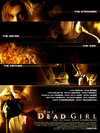
Karen Moncrieff (Blue Car – 2002) has given audiences her take on violence against women in her dark and compelling film The Dead Girl. Five women are deeply affected by the appearance of a young woman’s brutally beaten body in a lonely field. The story unfolds in a sequence of five complete stories revolving around the impact of the corpse on the stranger, the sister, the wife, the mother, and the dead girl.

Each of the five stories is persuasive. The ways in which the dead girl affects the women feels tragically natural. While each of the women acts in ways most of us would hope we could avoid, Moncrieff has written a script in which all the actions are believable; frightening, sure, but these women inhabit a world in which women are mutilated and dumped like so much trash. The Dead Girl does an admirable job of mixing that darkness with hope. All of the women, after all, work steadily toward finding a way to coexist in a violent world.

Movies that tell their stories in a series of what amount to independent short films need to resonate with each other if the audience is to feel connected with a single story arc. The arc in The Dead Girl is the emotional impact of a dead woman in the woods. That is a huge emotional weight, and the film does its best to keep that emotion streaming seamlessly from section to section. The problem is that when we meet new characters every twenty minutes, time is needed for the audience to connect with those people. You will find yourself longing for more in each section; more characterization, longer scenes, a bigger sense of history for each of the characters. There are certain moments and lines we might accept as not being over the top if they’d had two hours to earn them; however, ten minutes into a story arc, when a mother tells her daughter that God took the wrong child from her, it’s hard to stifle a groan.

The film is peppered with fabulous performances. Toni Collette and Giovanni Ribisi are especially compelling in their morbid, and strangely comic, roles in which they give a believable look at a burgeoning, but messed up, romance. Giovanni Ribisi has paid his dues, it is high time for audiences to see him for the stellar actor he is. Also, Brittany Murphy gives a surprisingly emotional performance that has depth and a manic charm. Murphy seems to be in every other film these days; this is the role where she deserves to be taken seriously.

The Dead Girl does need to be seen. For every moment it falls short, there is a moment made beautiful by the gorgeous cinematography, clean editing, and meticulous direction. Modern news has deflated the calamity of violence toward women into a sound bite surrounded by a rush for ratings. The Dead Girl has the necessary impact to break open this topic for serious discourse.

Monday, December 11, 2006

HAPPY FEET


Written by Jámon Y. Huevos

Since audiences flipped over the documentary March of the Penguins (2005), there have been more penguins in the media than you can shake a seal club at. Because of this penguin mania, it was inevitable we would get a fully animated production in the form of Happy Feet.

Penguins have a heart song. This is their personal ad that helps them find a mate, keep warm in the scary winter, and express their individuality. Sadly, Mumble (Elijah Wood – and you will be amazed by how much that fuzzy penguin really looks and acts like Elijah Wood), is born devoid of a heart song. The kid can dance, though. Too bad dancing is completely frowned upon. Mumble journeys away from the flock and runs into a group of wild and crazy penguins who know how to have a wild and crazy time. This is exactly when the film turns dark, dark, dark.

This darkness occurs in all exceptional animated features (have we forgotten the gunshots and their targets in 1942’s Bambi?). “Happy Feet” is absolutely about finding your so-called heart song, but it is also about environmental disaster, human encroachment, border issues, homosexuality (discussed as arguments about the immorality of being different), and fighting the power. All these issues are deftly handled with humor and (usually) even-handedness. It isn’t hard, though, to see which side of the political fence the filmmakers lean on. If your six-year-old notices the political innuendoes, then, dang it, pat her on the noggin’ and be proud of your genius offspring.

What makes the movie a great work are the direction and animation. The chase scenes are so well imagined that young children are going to be scared. Those scenes are as close to being on a roller coaster as one can get. The incredible animation is revealed slowly but surely, building and building as the scenes unfold. Because of this, the initial reaction is that the animation is okay, but two-thirds of the way through the movie you will be asking yourself if the humans are animated or filmed (filmed). Finding the live-action segments to be this confusing is an amazing feeling. How do you get cartoon penguins (and I mean these are obviously cartoon penguins) seem so alive next to real humans? Answer: ridiculously well crafted animation. You may, however, tire of the if-a-blue-penguin-eye-fills-the-screen-you-should-feel-melancholy shot.

There are tons of popular songs in the movie (sitting through the music credits takes as long as sitting through Woodstock). Unfortunately, those songs are jim-jammed into any available moment without a whole lot of attention to efficacy or theme. I always prefer hearing original songs, and can only think of two examples of movies that used popular music to intelligent effect: Moulin Rouge (2001) and (yep, no joke) Muppets in Space (1999 - check it out if this bothers you).

The voice acting is mostly great. Robin Williams is excellent as two very different penguins. Hugh Jackman, on the other hand, gives the worst Elvis impersonation since my uncle’s parole hearing. The film is about penguins; penguins that sing and dance; penguins that sing and dance and are really fuzzy and adorable. It’s a no-brainer; get your children to Happy Feet.

Thursday, December 07, 2006

TENACIOUS D IN THE PICK OF DESTINY


Written by Jámon Y. Huevos

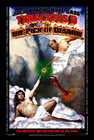
Jack Black and Kyle Gass have had a career as the world’s most awesome rock band, Tenacious D, since their pretty damn funny but short-lived series on HBO. That series, and a 2001 album, have garnered them a loyal following of fanboys and fangirls who like their twisted, sexually explicit, and wonderfully disgusting humor. Their movie, Tenacious D in The Pick of Destiny, attempts to introduce their comedic, but actually solid, musical talents to a broader audience.

The film is split in two halves. The first half chronicles the meeting of JB (Jack Black) and KG (Kyle Gass) and the formation of Tenacious D. Once the band is assembled and ready to rock our socks off, the second half of the movie has the pair traveling Abbott and Costello style to the Rock and Roll Museum (that’s right, Museum) in search of the single guitar pick that all the greatest rockers (Dude! Eddie Van Halen!) have used to get their careers headed directly into the pants of hot babes. The fact the pick was forged from one of Satan’s own front teeth can only lead to mayhem and hijinx.

The Pick of Destiny tries to recreate the best bits from the HBO series. Fans will be left scratching their heads wondering why a comedy team would steal from themselves. Their biggest fan ever, Lee, flits in and out of the movie with as much a sense of necessity as a pickle spear leaning against a Chevy. A song from Tenacious D’s first album, “Kyle Quit the Band,” is re-crafted and made less funny and less comically poignant in the movie as a song titled “Dude (I Totally Miss You)”. None of their old material was made better by a bigger budget or more time to flesh out their ideas. This is doubly unfortunate since the new material gets less play because the old material is taking up much needed space.

The movie does have its moments, and there are enough solid one-liners to keep you smiling from scene to scene. Pick of Destiny works best when it is a rock opera, and is punctuated by fantastic, belted out cameos by Meatloaf and Ronnie James Dio. Sadly, it is not a rock opera often enough. It is also a mystery as to why Tenacious D pulls so many punches. Instead of the outrageous ten-minute skits from the HBO series, we are left with a string of sketches that don’t add up to much, mostly because Black and Gass appear frightened to push the boundaries of their R rating. In theatres where JB and KG are fighting for screen time with the likes of Borat, you’ll be left asking for a bit more social commentary than farting and pot smoking.

There is a scene tacked on to the end of the credits (much like this sentence dangles from this review) that is an absolute must-see if you are twelve years old and mildly retarded.