Thursday, August 24, 2006

The Old Grey Whistle Test Vol. 3


Written by Tio Esqueleto

Spanning from 1971 – 1987, The Old Grey Whistle Test was the perfect platform for the album rock period when commercial pop was overshadowed by good ol’ fashioned musicianship, innovation, and albums you could listen to and enjoy from the first groove on Side A to the last groove on Side B. It premiered on BBC2, and up to that point, the standard for weekly musical performance television was Top of the Pops in the UK, and American Bandstand here in the states. What The Old Grey Whistle Test offered was something new, something different.

Top of the Pops and American Bandstand, for the most part, promoted both big and small acts performing their current hit via canned music, smiles, and lip sync. The Old Grey Whistle Test gave these same artists (focusing more on the up-and-comer rather than the tried-and-true) the opportunity to play their songs completely live (with the occasional live vocal over a pre-recorded audio track) and, in many cases, were encouraged to play deep album cuts in place of their current hit. This paved the way for such 1970s American staples as The Midnight Special and Don Kirschner’s Rock Concert, both of which prided themselves on their all the way “live” performances.

On August 29th, BBC Video, in conjunction with Warner Home Video, will release The Old Grey Whistle Test Vol. 3 on DVD, both separately, and as part of a limited edition box set, compiling this new offering with two previously released editions of this legendary live performance show. In contrast to the first two volumes, which featured familiar hits and artists like Lynyrd Skynyrd’s “Freebird” and Talking Heads’ “Psycho Killer”, Vol. 3 focuses more on the lesser-known songs and acts in a catalogue that spans 16 innovative years, offering an even more eclectic, and almost overtly British group of performances. All of which have since gone on to become record shop darlings on either side of the pond. Had Yo La Tango, !!! (chk-chk-chk), or Le Tigre been around circa ’71-’87, they more than likely would have made it on this installment.

Some performances certainly stick with you over others, and with a collection like this, beauty is certainly in the eye of the beholder. Memorable performances include Stealers Wheel shedding their signature, Dylan-esque vocals, for a grittier, more Paul Rogers and Bad Co., rendition of “I Get By” from 1972. Freddy King’s “Boogie Funk” is a stellar offering from 1973 of traditional blues with just a touch of ‘70s funk, dripping with all things Chicago. In the same vein, B.B. King also delivers a strait shot of Chicago blues with his rendition of “When It All Comes Down/Hold On”.

A 1976 performance from Janis Ian reminds us what a perfect song can be with her signature, and sweetly haunting, song “At Seventeen”, including an introduction dedication to the real life cheerleaders who inspired it. The Jam’s “A Bomb in Wardour Street” captures a seminal Brit band as they embark on their prime, while “Chelsea Girl” gives us a rare look at an alt rocking, pre-Breakfast Club, Simple Minds in 1979. Finally, King Crimson’s “Frame By Frame”, from 1982, is a rare look at Fripp, Bruford, Levin, and Belew, at their best. Also of note are stand out performances by Jackson Brown, P.I.L., and a rare look at Japan that would make any Radiohead fan proud to know their hero’s heroes.

The Old Grey Whistle Test Vol. 3 runs the gamut from traditional blues and rock, to singer songwriter pop, to punk and new wave, to traditional and contemporary folk. Many of which, are debuting their sound for the very first time. Sadly, for some the first would also be their last. On its own, it may prove a little to schizophrenic or “out there” for the random music DVD purchase, but to those in the know, and certainly as part of a three-disc set, it is more than acceptable; it is essential.

Monday, August 21, 2006

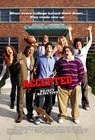
ACCEPTED


Written by Hombre Divertido

Accepted is unacceptable:

Never has a film been so confused about what it wanted to be. College frat movie a la Animal House? Sneaky kid gets away with everything a la Ferris Bueller? Weak kids overcome odds a la Revenge of the Nerds? Adolescent message movie a la Pretty in Pink?

This film has several qualities of previously successful ventures, yet achieves nothing.

It is certainly not the performances that cause this film to fail; it is the script and the direction. The cast is clearly talented, and does the most with what they have, but the audience is left with a collection of scenes that don’t belong in the same film.

In the script: high school senior Bartleby Gaines (Justin Long), who has received numerous college rejection letters, devises a plan to fool everyone into thinking he is college-bound. Bartleby and his similarly rejected friends take over an abandoned building, create a fake web site, hire a friend's uncle (Lewis Black) to pose as a dean, and open their own University.

Seems like a good idea, Yet the execution leaves not only a lot to be desired, but too many questions. The plot is riddled with holes as developments go unexplained and characters unexplored. The latter is quite sad as the character actors seem to be pulling desperately at the reins, and clearly the audience wants to see more of them and who they are.

Instead the audience scratches their respective heads trying to figure out: where the quirky best friend fits in as he jumps from helping out with the plan to attending the college next door which just so happens to be populated with the films antagonists; or trying to understand how and why all the new students showed up at the fictional institute; or why the newly appointed dean is the way he is. Unfortunately, scratching is all there is to do as little is explained or explored and the audience is left unsatisfied, if not irritated.

The writers attempt to throw a message in at the end, but it is far too little far too late, and the only message received is that the movie going dollar should have been spent on something else.

Recommendation: This film is a mess. Wait for it to come out on DVD, and then, don’t rent it.

Sunday, August 20, 2006

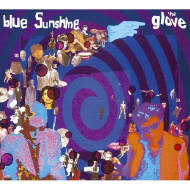
The Glove: Blue Sunshine


Written by Fantasma el Rey

The Glove, legendary side project of The Cure’s Robert Smith and Siouxsie and the Banshees’ Steven Severin gets the deluxe treatment on this remastered two-disk set. The reissue of this album is another installment in the series of Cure albums being given the same deluxe treatment: bonus tracks on the first disk and a second disk of rarities from the same time period. Each two-disk set provides insight into the band’s history and musical stages; every album released so far, as well as the ones to follow, are a dream wonderland for fans of The Cure.

And as far as wonderlands go, The Glove’s sound is very psychedelic and dream-like at times, which is exactly what Smith and Severin set out to do with this project. Meeting sometime in 1979, it took our heroes a few years to finally get something together. Both had an interest in recording material such as this, yet the original thought was that they might just put out a single or two but with those two brilliant minds together an album’s worth of songs was easy to create.

It wasn’t until 1983 when it all came together and the two began to come up with songs to record. Due to contractual reasons, Smith was only allowed two vocal tracks, so our boys had to find themselves a lead singer. After a few auditions, they settled on a woman who never sang professionally before: Jeanette Landray, girlfriend of “Budgie”, the Banshees’ drummer. So, armed with a drum machine, synthesizer and other instruments new to them, such as the sitar and dulcimer, the studio was entered and recording began.

Blue Sunshine opens strong with the single release, “Like An Animal”, about a man dropping heavy objects from a high-rise onto those passing below. Sitar and falling/swirling effects aside, the thick-yet-simple music is what likens this track so much to the sound of New Order, who had begun to make the scene just a year or so before, rising from the ashes of Joy Division. The odd plops and plucks of from the newly utilized instruments give The Glove the psychedelic feel they were after, while losing none of the drive of the tune.

“Looking Glass Girl” slows the pace a bit and brings to mind the Banshees’ “Dear Prudence”. Smith and Severin were trying to avoid that “The Cure meet the Banshees” vibe, a difficult task considering they were instrumental in the creation of each band’s sound. The connection to their previous work is reinforced by Landray’s vocals. Not that she sounds so much like Siouxsie Sioux, but there’s that feeling of forlorn detachment in her delivery. “Sex-Eye-Make-Up” sounds most like something from the three previous Cure records with a dark, creeping feeling of a gloomy, gothic late night. The powerful guitar breaks The Cure mold and adds some flavor.

Smith makes his first vocal appearance on Severin’s “Mr. Alphabet Says”, a tune that has a solid, steady-pounding piano that jumps at times. He returns on the self-penned “Perfect Murder”. Rather than sing, his delivery is more a screech and wail. The song foreshadows where he will be taking The Cure in a just a over a year with The Head On The Door.

“A Blues In Drag”, the first of two instrumentals, is a slow, piano-led number with weeping strings alongside, a perfect mid-album track that sets up the following song very well. “Punish Me With Kisses” has a strong Joy Division sound a la Closer. The lyrics are awesome with lines about truly being punished by kisses, such as “your morning smile of torture/ holds me in its grip” and “to stay would be too dangerous/ to break the make believe”. I’m sure most of us, for reasons good or bad, have been somewhere or with someone that we should not have and felt torn to stay or go. Stay and hurt them or yourself or go for those same reasons. That’s why we’re drawn to this music and these bands to begin with.

The proper album closes with the odd instrumental “Relax”. A very psychedelic, moody track with a sense of foreboding that provides the perfect ending, yet at the same time seeming very much like the beginning of something, reminding me of the intros to modern Cure shows.

The bonus tracks to disk one include the instrumental “The Man From Nowhere”, which is a spy-movie-inspired little ditty that plays as an interlude between tracks. “Mouth To Mouth” should have been included on the album, it’s one of the stronger up-tempo songs that would have made the final product that much more potent. The last track on the CD is a very danceable club mix of “Like an Animal”. The sitar along with the drum machine is kicked into a gypsy frenzy, a very enjoyable closing track and farewell to disk one.

Disk two of The Glove is the “what could have been” CD. It contains Smith’s vocals on the albums demos before the suits got involved. We hear him expand his vocal range with more pep, albeit a dark pep, screeches, and sound effects, while keeping to his low seething, subdued anger on other tracks. There are more traces of the future Cure sound in these demos.

Smith’s vocals do make some of the tracks stronger; however, they obviously give the songs more of a Cure feel. It is very cool but at the same time, that would have made The Glove just another Cure album. Looking back, it is better that Smith only sang on two tracks. Landray’s vocals and delivery of them give The Glove a life of its own, making it more enjoyable. When we hear Smith sing on the album, we’re glad to hear him, but his vocals don’t stand out as much from the work that he has done in the past.

If he had sung on the entire album, it would have been The Head On The Door two albums early, making you wonder what would have been The Cure’s future? Would fans have been ready for that sound in 1983? Demos tend to subdue the sounds of bands. On the finished product would those sounds have been brought to the fore? Then again these are only demos, so anything could have happened.

The world is full of “what-ifs” and it seems that either way The Glove’s Blue Sunshine would have been enjoyable to hear. As it stands both versions included on this new set are good and stand apart from one another. Both have their high points, disk two is more of a lost treasure whereas disk one I like a bit more for the fact that it sounds, even though they tried not to, like a blend of The Cure and the Banshees due to the female lead vocals.

So there you have it ghoulies, go out and find this one, if you haven’t already done so. Sit back and enjoy, what is and what could have been. Feel free to draw back into your mind and ponder questions of your own and see where it leaves you.

Friday, August 18, 2006

GIRL, INTERRUPTED

Written by El Mono Santo

I've wanted to see this film since it first came out. What young adult male would pass up those dark, expressive, captivating eyes (Ryder) or that wide smile and the super-sized lips begging to be kissed (Jolie)? But Ryder was so thin and skeletal, I kept having flashbacks of Natalie Portman in V for Vendetta who looked like a starving Ethiopian (minus inflated stomach) or a sexless fetus. I know an emaciated look was important to the film and several of its characters, but it seemed obvious that the lighting crew, make-up artists, and other craftsmen only had to bring out what was (not) already there.

The acting was better than I anticipated and I enjoyed the cast. The characters were fun and our two leading ladies compelling. Although it had nothing that would split your sides, there were quite a few places that tickled the funny bone—including an unintentional bit of cinematic soothsaying at the opening in which Ryder apologetically recollects through interior monologue: “have you ever...stolen something when you had the cash?” And the structure of the film, broken and disjointed, shifting us through various moments of life, pulled us into Ryder's clouded, subjective world very effectively.

Unfortunately, the film wasn't complete—even with a few deleted scenes that should have been included to make better sense of different situations and characters. It seemed more like a series of events we followed which pretty much ended where it began and gave few answers. Since this was adapted from a novel which had no typical plot line structure, perhaps we can be a little forgiving.

It followed the theme of insanity and inability (or refusal) to grasp truth by giving conflicting perspectives. The film concludes with the idea that you should leave one world (the world of rebellion and the pursuit of dreams or fantasies) for the other (the world of control, decision, truth, and judgment), but this is questioned at several points. Maybe it's the doctors who are crazy and the patients sane. And what is freedom? Is it getting out of the institution and back into the world where you do as you are told or allowing yourself to experience life the way you want no matter what anyone else says or thinks? The rebellious and revolutionary make the wrong choices and therefore are mentally ill (yikes!), or perhaps we are all mentally ill to a greater or lesser extent. All these options are presented and none really refuted, clouding the overall message.

This is ultimately a morality tale. It made truth the doubled edged sword--the hinge on which the lives of people swung either to better or worse. The lives of the characters spiral from life to death as they deny or interrupt truth. It is not until they stop running from truth and face it that they break down and have a chance to change for the better. The “moment of truth” comes for Ryder with the death of her friend in which she faces truth and breaks down in the solace of her stalwart mentor. Jolie's moment comes from reading Ryder's diary about how various characters hide from the truth instead of facing it. When the rough and tough chick demands that she be uncovered as well, Ryder obliges and it is almost too much for Jolie to take. But we see in the final scenes that this is a turning point for her as well when she cries and admits the truth of her position to Ryder, saying “I'm not really dead.” So the truth not only saved and set free Ryder, but is on course to save and set free Jolie as well.

Tuesday, August 15, 2006

DONNIE DARKO


Written by El Mono Santo

So I finally saw the film. Seems to make everyone's top ten, twenty, pick your number, greatest films of all time. Also seems everyone who's seen it recommends it highly, while everyone who hasn't seen it has no clue it even exists. I was formerly one of the ignorants, but cumulative praise via word of mouth finally sent me on a mission to Blockbuster.

As anyone who takes a gander at my favorite film list will immediately see, I've got a special place in my heart for Post-Modern films...not to mention music, art, and almost everything else in that stream... So this film did not fail to delight and excite--even if I happen to disagree with it fundamentally.

Donnie Darko is, basically, mysticism or romanticism for the Existentialist. I guess this was too much for the U.S. audience, so they had to market it as a horror teen flick. But in a way, horror and teen are also what it's all about. The protagonist is a young man suffering from what one philosopher called "angst" but which is better termed existential despair--something Post-Modern youth (like myself many moons ago) really, really get--not just in terms of understanding, but in terms of individual existence. While the film is very good, what makes it top the charts or hit home is this ability to communicate at a fundamental level what defines so many in this era of the Western world. But that is also precisely a fundamental reason why this film is self-contradictory.

Donnie is the Post-Modern superhero. Unlike Superman, who stands for truth and justice and fights against those who twist things to error so that a happy ending is not perverted, Donnie stands for finding meaning in the chaos, for creating his own truth in a world without it, for being able to face the unhappy ending with a smile because of the journey to that end. The road of Existentialism--either in the philosophy books or in this film--is a non-rational personal experience that gives hope and meaning to face a reality that is too much to bear and that would ultimately be better off destroyed (either in reality or outside it).

Like Sam Lowry in the Gilliam edit of Brazil, Donnie destroys the world by going insane--at least, that is how to describe it from outside the Post-Modern world-view. In the world-view of this film and many living in the world today, Donnie has not lost hold of reality, he has conquered it in the only way available to him until the end. He has saved himself and become the Existential savior. That is what makes him a comedic character instead of a tragic one. And it is also something that can inspire and give non-rational hope and meaning to other Existentialists who, living a self-contradictory existence anyway, will not mind defining themselves by the same token--in fact will glory in it.

Sunday, August 13, 2006

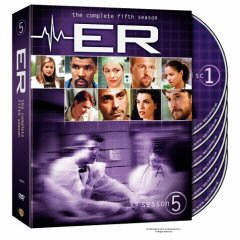
ER - The Complete Fifth Season.


Written by Hombre Divertido

After four full seasons of a show, any fan might fear that the ever-elusive shark may be preparing to be jumped.

In the case of the fifth season of ER, one might fear the shark has arrived in the form of Kellie Martin, who came to fame on the popular ABC series Life Goes On. Ms. Martin plays medical student Lucy Knight, who experiences her first day in the ER, within the first episode of season five.

Though Ms. Martin did not turn out to be the shark, it is clear in the first few episodes of season five, that they are a circling. Mare Winningham of St. Elmo’s Fire fame shows up, as does a constipated horse, a patient wired with dynamite, a stricken magician, and much more. For the most part interesting premises abound, yet handled in all too trite of a fashion

This was the year where the writers clearly started to forget that the success of the show in the early years was due to the storylines being based more on the patients than on the staff. The exception to that rule in season five is when the staff leaves the ER. Those stories, though revolving around the staff, are some of the best of this season, with one in particular being one of the best ever.

Luckily for ER fans, the writers regain their early series form after the first few episodes, the storylines settle down, and season five turns out to be a great season. Fans still have the original cast, sans Sherry Stringfield, for most of this season and they all have their limbs. In fact, Dr. Romano is at his enjoyable worst in many episodes of season five.

As mentioned, there are a few gems here, primarily when the staff leaves the ER. Dr. Carter (Noah Wiley) makes a few trips outside the ER during this season, but it is episode sixteen entitled “Middle of Nowhere” that is the best of the bunch. This episode focuses on Dr. Benton (Eriq LaSalle) working at a rural clinic in Mississippi. It is brilliantly written by Carol Flint, the direction by Jonathan Kaplan is excellent, and features a great score.

Season five also marks the last of George Clooney as Dr. Ross. The departure is well worth watching as the episodes leading up to it are well crafted. Again, primarily because it is not all focused on the staff. We are introduced to a mother struggling with the slow death of her son to a debilitating disease that she passed on to not only him, but to his older brother who has already succumbed to the effects.

The extras in this set are not much to see. Each of the 6 DVDs contains what are called outpatient outtakes i.e.: Deleted scenes. The sixth DVD also includes one of the worst gag reels ever seen. It literally looks like they went back and told the actors to make some mistakes so they could have a gag reel.

Recommendation: This is a key season, and thus a must have for any true ER fan. It is also a must for any Eriq LaSalle fan simply for episode sixteen and his part in the conclusion of episode five.

The episodes improve as the season progresses, so buy the set, and chuck disk one.

Tuesday, August 08, 2006

TALLADEGA NIGHTS:THE BALLAD OF RICKY BOBBY


Written by Hombre Divertido

Ricky circles the track in first place, but his recent ballad has him circling the drain most of the time.

When you advertise a movie as coming from the people who brought you Anchorman and The Forty-Year-Old Virgin, you are setting the bar pretty high, and as we all know, racecars don’t jump as many bars as they stop at.

There are numerous bad elements of Talladega Nights: The Ballad of Ricky Bobby. The story is weak, the directing is bad, the editing is amateurish, but where it fails the most in comparison to the above-mentioned films is in the supporting characters and cast. Will Ferrell is a talented comedic actor who continues to give memorable performances. In Anchorman, he was surrounded with not only talented actors, but with a script that allowed for the supporting characters to have depth, and be funny. Not so here. Though most of the actors have proven their talent in other films, they have no chance with this script.

Ricky Bobby is the NASCAR golden boy, with a trophy wife, two sons (Walker and Texas Ranger), and a best friend who is also a racer. You get little more of a description or introduction into the Bobby friends and family in the film, with the exception of Reese Bobby, Ricky’s’ sauced, semi-professional racecar-driving father portrayed perfectly by Gary Cole in what is the best performance in the film.

John C. Reilly appears to be in over his comedic head as Ricky’s’ best friend Cal Naughton Jr., though he certainly received no help from the writers. The rest of the cast is equally unimpressive hitting an all-time low with the performance of Sacha Baron Cohen as Jean Girard, our antagonist. Mr. Cohen displays no comedic timing whatsoever, and is for the most part, painful to watch.

Where Talladega Nights does live up to a comparison to Anchorman is in its simplistic hero to loser and back storyline, as Ricky crashes, and has trouble getting back on the track ala Tom Cruise's Cole Trickle in Days of Thunder.

Though the writers went terribly wrong in the depth of story and character, they did manage to come up with some hysterical comedic bits. Whether or not they came up with enough for an entire film is certainly open for discussion. The Bobby family sitting down to dinner and opening with a prayer is solid funny, and there are many other good laughs in the film, yet there are also several that made the commercials, and did not make the final cut of the film. This type of choice leaves the audience wondering: Though the film will induce laughter, are we more inclined to be laughing at the humor in the film, or at the production as a whole?

Recommendation: This is like going to a bad all-you-can-eat buffet when you are really hungry. It may seem like a good idea at the time, but when you’re done eating, you can’t help but look around and say, “What was I thinking?”, and then head home to take a shower.

If you are hungry for laughs, you will get fed here because you can’t escape the fact that Will Ferrell is funny, and this film has some great laughs in it, but don’t be surprised if you stand up when it’s over and say, “What was I thinking?”, and then head home for a shower.

Wait for the DVD.

Monday, July 31, 2006

LADY IN THE WATER


Written by Hombre Divertido

Lady in the Water has tremendous depth.

So M. Night Shyamalan attends a MENSA meeting, where he requests their assistance in remaking the 1987 film Batteries Not Included. A brainstorming session ensues where members in attendance suggest that rather than small spaceships; they use The Little Mermaid. “Oh!” one member screams, “M (Because that is of course what they would call him) lets include peoples search for their purpose, because that book, The Purpose-Driven Life by Rick Warren, is so popular right now.” The result is Lady in the Water, a film so deep, that it requires multiple viewings.

According to reports, that is not the way this story came about, but one cannot help but feel that way, as they are trying to scramble to find paper and pen to take notes during this 110-minute cavalcade of twists and turns. Actually stemming from a bedtime story Shyamalan concocted for his daughters, Lady in the Water is a brilliant piece of storytelling by a master at his craft.

Shyamalan is smart enough to know that the story is secondary to the characters, and if he is able to get the audience to care about the characters, they will invest the brainpower to follow this labyrinth of a tale.

Care about the characters the audience does, as they are introduced to all the inhabitants of the apartment complex which is watched over by our hero; Caretaker Cleveland Heep played excellently by Paul Giamatti. It is Heep who first discovers the Lady in the Water, who goes by the name of Story and is played with subtle intensity by Bryce Dallas Howard, and interestingly enough lives beneath the apartment pool.

Story leaves the pool on a mission, and finds the assistance of not only Heep, but eventually the majority of the tenants of the apartment.

Shyamalan, not only pulls us in with the vivid characters, but with film work, angles, and lighting, that allows us to experience not only the life of Caretaker Heep, but what it’s like to live in this apartment complex as well.

Oh yes, on some levels, this story may just be too much of a good thing. There are creatures and characters in Story’s world whose motivation is difficult to follow. Some may feel a bit set up as we are introduced to the interesting characteristics of our tenants. Mr. Heep seems to posses amazing diving techniques as he investigates Story’s home beneath the pool. On many levels, some people may decide it is just too much to invest their time in. Most will want to see it again, so as to figure out what they missed.

One might wonder what the film might have been like had Shyamalan simplified the story and made it easier to follow. As George Costanza said in a classic episode of Seinfeld: “I’m not dumbing it down for any mass audience!”

Recommendation: It would be quite easy to drown in the complex story that is Lady in The Water. Make sure you don’t see the late show, so that you can sit through it a second time and take it all in. Then go purchase The Purpose-Driven Life.

Tuesday, July 25, 2006

MONSTER HOUSE (2006)


Written by Hombre Divertido

Well worth the ninety-one minute stay.

Robert Zemeckis and Steven Speilberg (co-producers with Jason Clark, Jack Rapke, and Steve Starkey) have brought us a fun summer movie for the whole family. Well, maybe not the whole family, as the imagery may be a bit much for children under seven or eight, but great fun for the rest of us.

In this story, no adults believe three youths' assertion that a neighboring residence is a living creature that means them harm. With Halloween approaching, the trio must find a way to destroy the structure before innocent trick-or-treaters meet ghastly ends.

This film takes risks, and though they don’t always pay off, the audience can’t help but appreciate the effort.

Potential Spoiler Warning: The following paragraphs may contain plot points.

The story is risky as it avoids the typical rational explanation ending, and instead explains that the house is actually haunted. This works as the details are provided in a manner that even the youngest viewer can understand and enjoy.

Where the risks did not completely pay off were in the animation where processes continue to evolve. This film (viewed in 3D) was visually exciting, but makes a drastic transition midway through the film. During the first half of the film, you can’t help but feel like this could have easily been a live action film, as it certainly feels like it. Once our Monster House comes to life, you appreciate that it is indeed animated, to a point. The more alive our house becomes, the busier the film gets. As we reach the climax of the film, the house becomes mobile, and the story becomes secondary to the effects, which is too bad.

The three-dimensional aspects added to the visual appeal of the film, though it lacked the usual effect of things coming out at the audience.

The vocal performances in this film are spot on. Mitchel Musso (DJ), Sam Lerner (Chowder), Spencer Locke (Jenny) play the children to perfection, but it is Steve Buscemi as the crotchety neighbor Mr. Nebbercracker who steals this film. The supporting cast is outstanding as well with Jason Lee as the babysitter’s (Maggie Gyllenhaal) boyfriend Bones (he’s in a band), and an all-too-brief vocal appearance by Jon Heder (Napoleon Dynamite) that left us wanting more.

Judging from the numerous previews prior to the showing of Monster House, there are numerous 3-D animated films headed our way in coming months. Hopefully, producers will remember that the story is as important as the animation. Successful ventures of the past have included both great animation, and storylines that contain plots that kids can follow and humor that adults can appreciate.

Recommendation: From the basement to the attic, Monster House works on many levels. Catch it in 3-D if you can, but catch it either way.

Monday, July 24, 2006

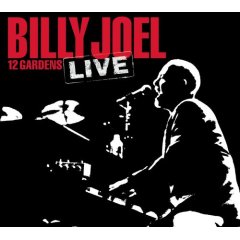
Billy Joel: 12 Gardens Live


Written by Hombre Divertido

One always takes a risk when purchasing a CD of a live performance. You can’t be sure of the quality of the recording or the performance. The artist may be a superior studio performer but may not translate well to a live setting. The artist may have been playing the same songs for years, and has now decided to tweak them, which often disappoints the audience. Luckily, Billy Joel’s new effort suffers very little from any of these potential sales killers.

Recorded live at Madison Square Garden this new two-disc set delivers over and over again. With a total of 30 songs, there is something in this set for everyone, as Mr. Joel still manages to exude the energy of an angry young man, belting out hit after hit.

When one listens to these classics, you can’t help but be impressed by the career longevity of Joel, who wrote all of the songs. Another challenge of a live recording can be the audience, but the sound mix is excellent here as we are treated to the energy of the crowd without detracting from the quality of the performance.

Joel is backed up quite capably by a talented group of performers who make a strong effort to allow him to be the focus. They are Crystal Tallefero (vocals, guitar); Andy Cicon (vocals, bass guitar); Tommy Byrnes (guitar); Mark Rivera (saxophone, keyboards); Richie Cannata (saxophone); Carl Fischer (trumpet, trombone); David Rosenthal (piano, organ, keyboards).

There are a few bumps in the road, as in “The Night is Still Young” where Joel’s vocals are combined in a duet with Taleifero that does not quite work, and the second disc ends with an unlisted 31st song which is a weak, or maybe just a tired, Joel closing out with “It’s Still Rock and Roll to Me.” That ending might leave some disappointed, but there is too much quality here in both musical genius and memories to allow anything to distract from the overall performance.

Recommendation: Make sure you see Billy Joel's next concert, and get a hold of this effort until you do.