Sunday, November 12, 2006

Dwight Yoakam: Guitars, Cadillacs, Etc., Etc. Deluxe Edition


Written by Fantasma el Rey

Dwight Yaokam’s first album, Guitars, Cadillacs, Etc., Etc., is back and better than ever. With this two-disk set the original offering is given the deluxe treatment, complete with remastered sound, demos from 1981 and a live performance from 1986. One of my favorite albums ever since I first heard my mother play it, I energetically jumped at the chance to give this new edition a spin and see how it sounds.

Dwight Yoakam has a sound that can best be described as revved-up hillbilly music, a paraphrase from one of my favorite bands, The Chop Tops, who described their music as revved up rockabilly. Like The Chop Tops’ rockabilly, Dwight’s hillbilly country is traditional but kicked up to maximum velocity, presented and mixed with his own personal touch and influences. Much the same way as other youths of the past have done in country music, Elvis, Gram Parsons, all three Hanks, etc., etc., Dwight’s sound first made its way to our ears with Guitars, Cadillacs, Etc., Etc. It is now remastered and expanded into two CDs that are presented in chronological order. This works because it gives the sense of something new instead of a simple rehashing.

Dwight’s demos from 1981 open disk one and we get to hear version of songs that would eventually find their way on to Guitars, Cadillacs as well as on his future albums. In comparison to the final versions, you can hear how some of the demos are missing a bit of the magic that is Dwight’s signature sound. Although to start disk one, “This Drinkin’ Will Kill Me” is a perfect example of his revved-up sound, a self-penned tune styled after the “drinking your sorrows away” classics of days past. Fiddles jump, the pedal steel wails, and the electric guitar cooks while a steady driving rhythm section that takes a page from Johnny Cash backs Dwight’s plaintive vocals and acoustic guitar. Mix in lyrics such as “Death can come from this broken heart/ Or it can come from this bottle/ So why prolong the agony/ Hey bartender/ I think I’ll hit the throttle.” This one, along with “I’ll Be Gone,” sum up Dwight’s jump sound pretty well.

Not only can Dwight get a hillbilly tune to hop but he shows how even at this early stage in his career he’s mastered the slow drinkin’ song. “It Won’t Hurt” is a tune that prepared ol’ Fantasma for life’s heartaches, “It won’t hurt/ When I fall down from this barstool,” “It wont hurt ‘cause this whisky eases misery/ But even whisky/ Cannot ease your hurting me.” I think most of us have lived that line at one time or another. The demo for “You’re The One,” which wouldn’t turn up until the early ‘90s is also here, foretelling how Dwight wouldn’t lose sight of his original style. Dwight’s arrangements are pulled tight and drawn in close for these slow slices of pain.

The next ten tracks have us leaping forward five years and into the released version of Guitars, Cadillacs, Etc., Etc., which are the songs that set the country world on fire and made Dwight a true country icon. Dwight went back to his demos for half the album, added two more original tunes and threw in three old favorites. The album is set ablaze quickly by a stomping reworking of Johnny Horton’s classic “Honky Tonk Man;” the song fits the album perfectly, matching the title track punch for punch. The two remaining cover tunes are June Carter’s “Ring Of Fire” and Harland Howard’s “Heartaches By The Number,” both bare Dwight’s revved-up approach.

The two new songs include the title track and the heartbreaking “South Of Cincinnati,” which finds a women writing to a man everyday after he left her fourteen years earlier. She tells that drunken fool that if he ever makes it back to the South, back where Dixieland begins, then she’ll be his again. However, out of her pride, she never sends the letters. The fiddles are slow and weep alongside the pedal steel guitar while Dwight delivers his lyrics through vocals that’ll brings a tear to your eye.

“Guitars, Cadillacs” proves that Dwight is a poet of the common man and anyone who’s been heartbroken, really. “But thank you girl/ For teaching me/ Brand new ways to be cruel.” Lord knows I’ve learned a thing or two from a kitten that had me fooled. Rounding out the album are five of the demos slightly reworked and modified in final versions, “It Won’t Hurt,” “I’ll Be Gone,” “Twenty Years,” “Miner’s Prayer,” and the most notable change being “Bury Me,” now a duet with Maria McKee.

Disk two is where it’s at, a live performance from The Roxy in Hollywood. Recorded in 1986 as the album was starting to heat up, we get a portrait of Dwight and his band in full effect. By this time the band had been together for over two years and the music captured that night was flowing fast, furious, and nearly flawless. They kick start the show with a jumping version of Bill Monroe’s “Can’t You Hear Me Calling,” moving smoothly right into their then-current radio hit “Honky Tonk Man.” The mood is kept alive when Dwight introduces his tribute to the Bakersfield sound of Buck Owens and Merle Haggard, the now-classic “Guitars, Cadillacs.” From there, he goes right back to Monroe for “Rocky Road Blues,” which was actually suggested by Monroe himself. Of the twelve songs played that night seven were off of the Guitars, Cadillacs album and have that sped-up, live spin to them, making disk two the real jewel of this set.

Two live gems are the revamped covers of Hank Williams Sr.’s “My Buckets Got A Hole In It” and a blues song, turned rockabilly staple by a young Elvis Presley, Junior Parker’s “Mystery Train.” I find it interesting that the songs Dwight covers are considered to be rockabilly standards and historically speaking, rockabilly is hepped-up country to begin with. So with that said, it’s no surprise that in his early paying gigs, Dwight was support for roots rock legends such as The Blasters and Los Lobos. Both bands are known for taking their musical heritage and turning it into something fresh and new, while keeping it oddly traditional.

Dwight’s playful banter with the crowd is further proof that he is connected to the people he performs and writes for, adding to the wonder that is Guitars, Cadillacs, Etc., Etc. Dwight put it best when in response to the crowd’s roar he confesses, “It’s just old hillbilly stuff.” I only disagree because I do believe that he makes it fresh and keeps the flame alive with each album he puts out and in every show that he does.

Thursday, November 09, 2006

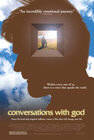
Conversations with God


Written by Hombre Divertido

Though a bit heavy handed and reminiscent of a ‘70s made-for-television movie in performance, storytelling, and music, Conversations with God, which was adapted from the books by Neale Donald Walsch, does an effective job of telling the tale of a man’s journey not only from homelessness to affluence, but from being alone to having a relationship and conversations with God.

As is the case in many films, the flashback method of storytelling can often get in the way of effectively getting the message across, and does so to some extent here, but once we get past the clutter and are able to connect with Neale (Slightly overacted by Henry Czerny), this film does create moments that do pull us in.

If you can get past where the story is lacking, it is the immense vulnerability of Neale as he grasps on to any rung of his previous level of existence while slowly slipping further and further down society’s ladder that allows us to relate to his circumstances.

In one of the most poignant scenes in the film, we see Neale searching through a dumpster for cans to recycle into cash. Eyeing a half-eaten sandwich, Neale struggles with the decision to cross a line that he has set as the difference between himself and those in his new surroundings.

Neale Donald Walsch obviously went on a rollercoaster ride that is a fear for many of us, and though we may not all agree on where he found his salvation, and to whom he attributes his rebirth and level of success, watching how he deals with the situations that we all fear is a solid base on which to build a story for all to see.

There are moments in this movie that indicate God’s clear intervention, which may cause the secular world to dismiss this film as nothing more than preaching, but those willing to look beyond their own views, or those of the storyteller’s, will find an intriguing tale here.

A bigger budget might have allowed for the elimination of certain distractions such as make-up (Neal’s hair and beard never quite look right), and more elaboration relating to certain aspect of the story, such as the accident and subsequent legal matters that began Neale on his journey would have allowed the audience to relate and understand more at the start of the film.

It is certainly good to leave the audience wanting more, but that is different than leaving the audience wondering: “Why didn’t you show us that?” For example, one might wonder why, after becoming an on-air personality at a radio station, we never see or hear Neale doing the job. Actually, more than one might wonder that.

Recommendation: As with most films dealing with the topic of finding God, they tend to appeal more to the choir, as they are not edgy enough for those who most need to hear the song.

Out in very limited release; this may be a tough film to find until it comes out on DVD. Worth seeing in any format when you find it.

Wednesday, November 08, 2006

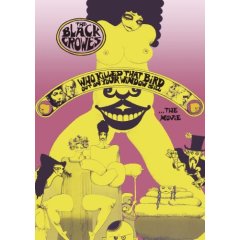
The Black Crowes: Who Killed That Bird Out On Your Window Sill


Written by Fantasma el Rey

The Black Crowes hit as hard as ever here on their first music movie, now finally making its appearance on DVD. Who Killed That Bird Out On Your Window Sill was filmed way back in 1992, as a young Fantasma was entering high school and being turned on to these Kats via my brother in-law Rob. Released sometime after their second album, The Southern Harmony And Musical Companion, the movie lets us into the world of the wild young Crowes, as they do some touring and radio interviews.

The title for the movie is lifted out of the lyrics of the hit song “Remedy”, found on Southern Harmony. The sound for the music tracks is outstanding even at a low volume this thing screams, which is perfectly all right, the louder the better when it comes to The Black Crowes. The DVD consists of videos the band made for their first two albums, live performances from concerts and in the studio. Laced throughout the film are montages and excerpts from radio interviews, most of which are very humorous.

The core of The Black Crowes and focal point of the film are the Robinson brothers, Chris, vocals, and Rich, guitar. The interviews seem to be, for the most part, all Chris; his answers contain a hint of truth but are mostly made up tales that provide laughs and keep the mood light while preserving the mystery of who the Crowes really are. Some of the questions that are repeatedly asked, such as “Why do brothers in music fight so much?”, “Do you guys fight?”, and “How did the band start?” are shown together and we are given a few of Chris’ best responses. As to how the band started, according to Chris, his parents kept a chart and as they grew they were allowed to consume more alcohol and handed instruments to play. The best snippet is from a Japanese show, where Chris, Rich, and guitarist Mark Ford look so lost and confused its hilarious. They do their best to stay with it, giving shy little smiles and trying to keep focused. You can pick out key words, such as the title of the new album, number one and big success.

The meat and potatoes of this disk are the videos and live footage, captured at various spots, the farthest off being Moscow. There are seven videos here, including “Jealous Again,” the jumping “Hard To Handle,” “She Talks To Angels,” and “Remedy”. Most of these are taken from concerts or are really no more than the band wandering around and playing on a sound stage while Chris dances. “She Talks To Angels” is the one that stands apart; filmed in sepia tone and set in such a way that shadows abound and light seems to shine on the band up-ward from the floor. A great way to express one of the bands more serious songs in film form.

The live portions are highlighted by the footage taken from The Crowes European tour; of particular interest is the concert in Moscow. For reasons unknown, some of the Russian police as well as fans are bloodied. There was a clash between the two, no doubt. “Why?” is the question that goes unanswered. Yet as the scene rolls on we find people walking though and around the police line, so alls well that begins bloody, I guess? All this as the boys belt out the rollicking, guitar-driven “Stare It Cold” as Chris sings “we just want you to have a good time”. As they continue we get more average outdoor concert shots of the crowd and everyone having a blast as The Crowes perform; you can even see that some of the younger police officers are enjoying themselves. The montages are mostly more footage from the radio shows or films of the photo sessions that were done for publicity stills and or The Southern Harmony cover.

The movie provides a great opportunity to see The Black Crowes at their young, wild best and at what is the beginning of the fame that would take them to smoke-filled, hazy heights. A very entertaining 83 minutes of them having fun and doing things the way that they see fit. Watching Chris spin his “Fumo Verde” inspired tales to the questions that he has heard way too many times, is a hoot and will make you laugh. Note the closing scene and how a very tired and high Chris mixes up his words and slowly catches himself with the help of his brother Rich and bass player Johnny Colt. It is very interesting to see him now that he has mellowed nearly fifteen years later. Seeing the band jive together and play around is a fun trip as well.

To view The Black Crowes in a full live, rip-roarin’ performance, check out Freak ‘N’ Roll Into The Fog, the DVD taped live in 2005 at the legendary Fillmore auditorium in San Francisco. It captures the sound and feel of the band perfectly. To paraphrase Chris “the music knows…when theatrics become more important” and so do The Black Crowes. That is what they’ve managed to avoid all these years and why they still rock hard live.

Tuesday, November 07, 2006

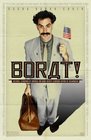
BORAT


Written by Hombre Divertido

Destined to be a college campus classic, Borat takes the standard fish-out-of-water concept and brings the comedic vehicle to some of the rankest levels seen in years.

Borat, 20th Century Fox's big-screen incarnation of Sacha Baron Cohen's Kazakh journalist from Da Ali G Show, travels to America to learn of our country. A premise ripe with comedic opportunities that stirred the emotions of the actual citizens of Kazakhstan, as reported in the news weeks before the release of the film, and rightfully so as this story depicts them as being far more backwards than anything we’ve encountered cinematically since Deliverance.

After briefly introducing us to Borat’s home and family, our story really begins in New York, as the actual trip to America is skipped all together which was an interesting directorial choice as it would have seemed to have been fraught with comedic opportunities. Nonetheless, we pick up our hero in the big city, as the camera follows him through many adventures, interviews, etc. Though most of the jokes we hear while meeting Borat’s family have been heard before, there are some gems delivered in the introduction of other town folk, and the interviews and footage of his experiences in the first few days in the big city are quite humorous. Unfortunately, the story then breaks down as does the film itself.

It is disappointing that the writer and director could not have stuck to their proverbial instinctive guns and delivered a mockumentary revolving around a foreign reporter traveling to our country full of subtle humor equal to the bear head in the refrigerator, rather than have so much potential get lost on a weak story filled with cheap jokes as Borat becomes obsessed with getting to California to find Pamela Anderson.

The final cut of this film plays like a cross between a mockumentary and a situation comedy, with the situation comedy scenes looking staged and sorely out of place. The cast takes tremendous risks in some of the improvised scenes and many of them pay off. Unfortunately some of the staged material comes off as simply offensive, though loved by many.

Recommendation: This film has some classic comedic moments in it as well as some that are classically offensive and absurd. It is sure to be a box-office bonanza, but cannot compete with classic mockumentaries of the past such as This is Spinal Tap where subtle humor reigned.

For better constructed fish-out-of-water tales regarding foreigners coming to the United States you might want to check out Moscow on the Hudson or even Crocodile Dundee, though it is apparent that today’s movie going audience prefers Borat bringing his fecal matter to the dinner table in a bag rather than Crocodile Dundee attempting to understand the purpose of a bidet.

Monday, November 06, 2006

THE BOSS OF IT ALL


FROM THE PUSAN FILM FESTIVAL
A report from Carlito de Corea

In his latest film, Lars von Trier uses a metafictional approach to deliver a satirical narrative. That is to say, he tells us that he’s telling us a story, and how. Sort of. The Boss of it All begins with the narrator, perhaps von Trier himself, letting us in on the joke, as he tells us his film is not to be taken seriously, nor is any serious meaning to be taken from it. Just another typical story with the usual parts and players, he continues, having fun as he once again blows apart the apparatus of conventional storytelling.

The boss of an IT corporation hires an actor to pretend that he is the boss of the company during an important negotiation to sell the company off. Circumstances become complicated as the real “boss of it all” and the actor pretending to be “the boss of it all” begin to butt heads about how things should be handled. Romance and sexual exploits also crop up as office workers in the company mistake the actor for someone else, and tensions between the owner of the Icelandic corporation intending to buy the IT corp. and “the boss of it all” escalate.

Von Trier lets us in on the game in this film as it periodically describes its own constructs. But this apparent self-consciousness is misleading. While the film gives the impression of letting the cat out of the bag, so to speak, the comedic tension is never lost and the narrative continues to move forward. The simultaneous accomplishment of poking fun at the process of drawing in an audience with all the typical and corny constructs of storytelling and then drawing the audience into a corny, constructed story, is quite a statement.

Another interesting effect in this film is the fine line between what the actors are going through and what the characters are going through. It is almost as if the actors are waiting for the director to fill them in on what the story is or where it is heading next, rather than the employees at the company being confused about who their boss is. This is a wonderful illusion, or perhaps not, that helps to create the feeling that no one knows what is going to happen next, neither the audience nor the actors, as the story whimsically and absurdly changes direction at various moments.

I thought the film was successful in managing these different elements, blending a seemingly loose and spontaneous style with a deceptively well-controlled narrative, and tight, well-acted scenes, all of which climax in a humorous and touching ending, albeit a self-conscious one. Well written and directed, this movie is just fun to watch, and at times laugh out loud funny. It was a big hit at the Pusan Film Festival this year and I recommend seeing it.

Sunday, November 05, 2006

Robert Plant and the Strange Sensation


Written by Fantasma el Rey

Robert Plant and his backing band The Strange Sensation reel, rock and sway their way through this Sound Stage performance, covering some of his solo tunes as well as reworked Led Zeppelin classics, on this first ever music DVD from Robert Plant. The Strange Sensation was handpicked from some of the best and most varied musicians that England had to offer, from electronica to brit pop and all held together by Plant’s passionate vocal wail. These classics are approached with a world music vibe that shines and carries the day, expanding the groove where the Plant and Page project left off.

The Strange Sensation has a wonderful world music sound, percussion heavy and rhythmically funky, spitting out all kinds of keyboard tricks while holding fast to a solid rock drive. The expanded-upon Zeppelin songs include “No Quarter,” “Black Dog,” “Four Sticks,” “Gallows Pole,” and a jamming version of “Whole Lotta Love.” Sticking with the blues/rock base and expanding them by the addition of keyboards and more percussion/hand drums than you can shake four sticks at.

The music becomes funkier and a bit spacey at times, but that’s alright because it’s a new take on old favorites and Plant’s vocals remain the same. The drums are jazzier too yet still thunder when they should. The guitar drives are hard and heavy, while new instruments like the gimbri and darbouka only add to the rockin’ cocktail that is The Strange Sensation. “Whole Lotta Love,” done as it should be, a long jam, is the perfect example of this band at its creative best. The entire band comes together very well here and the tune is the perfect closer for the original broadcast performance.

“Tin Pan Valley” and “The Enchanter” are the two songs where drummer Clive Deamer and keyboardist John Baggott, both from the electronica/trip-hop unit Portishead get a chance to shine and bring forth their style and brand of pop/rock. “Tin Pan Valley” opens with Baggott’s keyboard mastery, and Deamer’s steady drumming put the band in a trip-hop mood, while the guitar soars around them. The song s structure allows the band to break this vibe by kicking everything up and then bringing you back down to mellow out and chill. The drum machine soaked beat on “The Enchanter” takes a page right out of the Portishead book, while the sitar-esque guitar, darbouka rhythms (a Turkish conga/bongo type of drum) and Plant’s echo-laden moans send this one spinning into orbit.

The bonus tracks are two old favorites made popular by Plant contemporaries Jimi Hendrix and Bob Dylan. “Hey Joe” is a tune best associated with Hendrix, although not one of his originals, while “Girl From The North Country” was written and recorded by Dylan. Both are essentially folk tunes, one rocked up a bit more than the other. The Strange Sensation rework them yet maintain the true feel of the songs. Guitarist Skin retains the driving force on “Hey Joe,” meanwhile second guitarist Justin Adams picks up the gimbri (a North African lute-like string instrument) and the infused keyboard samples take the song someplace it’s never been before. For “Girl From The North Country” bassist Billy Fuller switches to the upright bass, Adams rocks the mandolin and Baggott shows us how well he can tickle the ivories. Which all make for a wonderfully mellow closer to the show and DVD.

Robert Plant shows that he can still rock at close to sixty years of age and that his musical vision is still fresh. Plant’s energy is perfectly matched by his band, who help bring his vision to life while leaving their own fingerprints on the overall sound. The sound stage audio is awesome and the camera angles give you the feeling of being right there in the mix, on stage next to the band, a wonderful place to record Robert Plant’s first music DVD.

Saturday, November 04, 2006

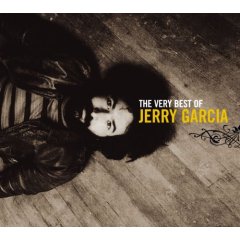
The Very Best of Jerry Garcia


Written by Fumo Verde

I meet this CD with mixed emotions. First, I love Jerry: the way he plays, his voice, the lyrics written by him and Robert Hunter over the years, the entire Jerry Garcia experience. There was no doubt that when I received this two-disk set that I would totally dig on what was waiting for me inside.

Yet, I had to wonder why music companies keep pumping out music by dead artists. I know that Jerry made a lot of music in his time, and I am grateful that it keeps coming to light, but Jerry needs to take a break. Shit, man, the poor Kat has been working harder now than he did when he was a live, or so it seems.

On a more professional note, this is a two-disk set with twenty-six tracks that catch Jerry at peak moments. Now don't start complaining to me out about what is better and what is best and all that; I didn't name this set. Do I think it’s the very best? Like I said above, Jerry made so much music with so many people aside from his work with The Grateful Dead. What might be one of his best performances to one might seem "phoned in" by someone else.

The way I take this as being the "very best" is like this: here on these CDs, Jerry is at one of his peak moments. He's in the zone and to catch any musician in one of those moments is like watching a shooting star from beginning to end. These tracks here do that. Jerry is right in the pocket and you can hear it and sense it.

CD number one has sixteen tracks, all recorded in studios over various times in various places. This is what the Garcia sound is like in a studio: crisp, clear, and all the notes are played well. One can perceive the true sound of Garcia. His professionalism shines through and can stand up to any soundboard mixer around.

Let me also be clear that none of the songs on either of these CDs are played with the Dead. This is all the Jerry Garcia Band and the JGAB (Jerry Garcia Acoustic Band), with two exceptions. On disc two, track 1 is played by Old & In The Way, a collective with Vassar Clements, David Grisman, Peter Rowan, John Kahn, and, of course, Garcia. The other is track number seven, "Dear Prudence" played by Reconstruction, a John Kahn jazz band.

As disc one was the studio Jerry, disc two, with its ten tracks, is the concert Jerry. Here's were the real magic happens. Once again, different venues at different times, but each song has the same flair. I enjoy live recordings because the energy from the audience can sometimes creep through the speakers and electrify you, give you the chills, and bring back good memories.

The downside to live tracks happens when the singer sings away from the microphone. You miss some of the lyrics, which is one of the main reasons you are listening. This happens on track number three, "Ripple," but for the most part, these songs have been around and most of us Deadheads, Jerry freaks, or whatever already know what's about to be sung, so in truth, I'm just being a whiner.

The Very Best of Jerry Garcia is great for a collector or a fan of Garcia. It is also a great mix of bluegrass and blues and with songs like "Run For the Roses," "Cats Under the Stars," and "Sugaree" you can't go wrong. I'm not going to say that this is Garcia's "very best", but it comes pretty damn close.

Friday, November 03, 2006

SAW III


Written by Hombre Divertido

I don’t remember the last time I Saw a movie where the audience clapped at the beginning, but not at the end. Such is the case with Saw III. Unfortunately, the audience was not happy with what they Saw.

In this installment, Jigsaw (Played with great restraint, and relying totally on his ability to speak in a frightening tone, by Tobin Bell) is close to death. In order to see what might be his last “test” (Worry not; Saw IV should be on its way) play out; he has his protégé (Shawnee Smith; Who is more psycho than diabolically evil) kidnap a doctor (Bahar Soomekh). Dr. Lynn Denlon is then fitted with a collar set to explode should Jigsaw's heart stop beating, or if she gets too far from his life-support equipment.

As Dr. Denlon goes about trying to keep Jigsaw alive, which includes graphic brain surgery, we are witnesses to the previously mentioned “test”. In said test, we are introduced to Jeff (Angus Macfadyen) who is depressed and considering suicide due to the death of his daughter and the light sentence given to the man deemed responsible for her death. Jeff is put into situations where he must decide if he wants to risk his own well being to save the lives of people involved in either the death of his daughter or the subsequent legal proceedings.

In the case of Jeff, this is the weakest attempt at manipulating an audience to care about someone in a motion picture since we were introduced to Kurt Russell’s’ character in Stargate.
Though some of the situations we see Jeff deal with are certainly as gratifying as previous Saw endeavors, as a whole this film does not work. The failure is primarily due to the fact that the writers forgot from whence they came. Saw III simply fails to build on the success of its predecessors.

Saw III spends far too much time dealing with Jigsaw and too little time dealing with the predicaments of his captives. The success of the previous films was far more enthralling because we could understand the fear of the victims, the intensity of the situations they found themselves in, and the mystery of not knowing who put them there or why. This time out, not enough time is dedicated to allowing us to appreciate all the above mentioned elements. Jigsaw was more frightening when we knew less about him. Now he just seems like the guy who worked at the record store in an episode of Seinfeld.

It may appear inconsistent to say this about a film from the Saw series, but the violence this time was too gratuitous. We see people die early in the film that we are barely even introduced to, so it comes off as the writer saying: “I’ve got a creative way to kill someone, but I can’t work it into the story, so I’ll just show it to you at the beginning to get you warmed up.”

We are left with a clear setup for Saw IV, and can only hope that the writers will return to their roots now that Jigsaw has failed his last test.

Recommendation: You would better off watching Saw three times than watching Saw III.

Thursday, November 02, 2006

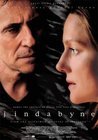
JINDABYNE


FROM THE PUSAN FILM FESTIVAL
A report from Carlito de Corea


Director Ray Lawrence takes a longer look at some of the questions raised by Raymond Carver’s short story, “So Much Water So Close to Home.” The same story was covered, but in less detail, by Robert Altman’s 1993 film, Short Cuts.

The film revolves around the racist killing of an Aboriginal woman, and the subsequent mistakes made by a local group of fishing buddies, led by Gabriel Byrne, who find her body. You may remember the part in Short Cuts where Fred Ward is on a fishing trip and finds a dead girl, and the troubles he faces with his wife when he gets home.

Lawrence does a great job of showing how something innocuous can become a serious indictment in the blink of an eye. What seems a harmless decision by the four friends about what to do with the dead girl’s body, later takes on enormous implications where much more is read into their actions by the media, the Aboriginal community, and even the people closest to them.

Back in civilization proper, the men begin to realize the seriousness of what they’ve done, emerging from the spell of their trip. As their deeds come to light, and they are assailed by their community, we realize that we too have been seduced into forgetting for a moment what the right and proper thing would have been to do. We are almost complicit in their actions.

As with all great stories, Jindabyne makes us understand both sides of the dilemma. There are no villains, only real people, with the exception of the killer who remains unrecognized in their midst, and whose presence we feel implicitly throughout the film.

Interestingly, I found the tone of this film reminiscent in some ways of Short Cuts, the stark natural sound at times underscored with an ambient, and alternately menacing, soundtrack. But for me there was something in Jindabyne, in tone and feel, beyond the dry quirky feel of Short Cuts, something richer, even reverent. With Lawrence there is a heavy reliance or trust in the environment, a willingness to foreground the natural elements to create a deeper experience, utilizing nature as a character in itself.

And in Jindabyne I wondered if Lawrence wasn’t suggesting that we are missing something that perhaps native peoples are in touch with—the animate, or animus, in what we often do not think of as alive, such as the often-shot wind in the trees, or the thrum of the power lines over the heads of the men as they descend into the gorge toward the river to begin their fishing expedition. We don’t just watch Jindabyne, we feel it.

Like his previous film, Lantana, Jindabyne is slow but steady. The plot is not as intricate, but is equally suspenseful. Even when nothing is happening, you find yourself engrossed in his images somehow. Lawrence has the patience to study a scene, a character, for longer than the average director, and yet without leaving the viewer with the impression that it is mere indulgence. There is always something behind what we are seeing, an underlying tension that Lawrence is so good at sustaining, both through the creation of characters we feel and care about and well-layered storytelling.

The Australian cast lends a lot to the authentic, small town feel of Jindabyne, and the Irish auto mechanic, played by Gabriel Byrne, is especially interesting to watch in this film. Jindabyne held my interest from its violent start to its emotional finish. I recommend it.

Wednesday, November 01, 2006

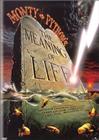
MONTY PYTHON'S THE MEANING OF LIFE


Written by El Mono Santo

The Monty Python troupe... You either love them or hate them. In my youth, I adored them. I formed and was President of the Monty Python Club (officially the Dead Parrot Society) senior year of high school. I never laughed harder in my life than the first time I saw that bovine get launched in Holy Grail. And who among us will ever forget the penalty for saying “Jehovah” from Life of Brian? But I never liked Meaning of Life.

Meaning of Life is not horrible... The soundtrack is hilarious and the film has its moments. But overall, I've always thought of this as their big flop. Considering that its artists speak multiple languages, are educated at some of the most prestigious institutions, and have an exceptional knowledge of everything from philosophy to history to art, I hoped for their erudite sophistications to come through in a film which purposes to answer “the big question”. Except for a brief mention of Schopenhauer, my hopes were frustrated. In the end, the answer to the question of the meaning of life is this:


“Try and be nice to people, avoid eating fat, read a good book every now and
then, get some walking in, and try to live together in peace and harmony with
people of all creeds and nations.”


I, of all people, know the Pythons better than that. The real meaning of life that the Python's preached--the meaning that is presupposed in the songs, skits, and actual structure of the film itself—is that life is ultimately absurd. The Pythons used comedy as an expression for their view of reality. Since the vast, empty, impersonal cosmos is ultimately greater than man and there is nothing beyond or greater than that, the film focuses on all the different so-called “stages of life” in humanity (from birth to death and the big Christmas party at the end) that are the only things that make man who and what he is. Therefore the meaning is simply to be as you are. A man lives, breathes, shits, and hopefully has some fun along the way, therefore go and do so, amen.

It is ultimately an anti-philosophy or an anti-meaning. The Pythons have failed to find an answer because they never believed there was one. The film is a mockery of life, not an attempt to find its meaning. Along the way, it turns this anti-philosophy on the most special moments of life in order to show them up as fraudulent. Before the credits roll, even the voice of the Pythons is silenced in the great meaningless nothing of space.

To quote an earlier film, "you come from nothing, you're going back to nothing, what have you lost? Nothing."