Saturday, November 04, 2006

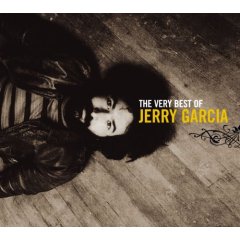
The Very Best of Jerry Garcia


Written by Fumo Verde

I meet this CD with mixed emotions. First, I love Jerry: the way he plays, his voice, the lyrics written by him and Robert Hunter over the years, the entire Jerry Garcia experience. There was no doubt that when I received this two-disk set that I would totally dig on what was waiting for me inside.

Yet, I had to wonder why music companies keep pumping out music by dead artists. I know that Jerry made a lot of music in his time, and I am grateful that it keeps coming to light, but Jerry needs to take a break. Shit, man, the poor Kat has been working harder now than he did when he was a live, or so it seems.

On a more professional note, this is a two-disk set with twenty-six tracks that catch Jerry at peak moments. Now don't start complaining to me out about what is better and what is best and all that; I didn't name this set. Do I think it’s the very best? Like I said above, Jerry made so much music with so many people aside from his work with The Grateful Dead. What might be one of his best performances to one might seem "phoned in" by someone else.

The way I take this as being the "very best" is like this: here on these CDs, Jerry is at one of his peak moments. He's in the zone and to catch any musician in one of those moments is like watching a shooting star from beginning to end. These tracks here do that. Jerry is right in the pocket and you can hear it and sense it.

CD number one has sixteen tracks, all recorded in studios over various times in various places. This is what the Garcia sound is like in a studio: crisp, clear, and all the notes are played well. One can perceive the true sound of Garcia. His professionalism shines through and can stand up to any soundboard mixer around.

Let me also be clear that none of the songs on either of these CDs are played with the Dead. This is all the Jerry Garcia Band and the JGAB (Jerry Garcia Acoustic Band), with two exceptions. On disc two, track 1 is played by Old & In The Way, a collective with Vassar Clements, David Grisman, Peter Rowan, John Kahn, and, of course, Garcia. The other is track number seven, "Dear Prudence" played by Reconstruction, a John Kahn jazz band.

As disc one was the studio Jerry, disc two, with its ten tracks, is the concert Jerry. Here's were the real magic happens. Once again, different venues at different times, but each song has the same flair. I enjoy live recordings because the energy from the audience can sometimes creep through the speakers and electrify you, give you the chills, and bring back good memories.

The downside to live tracks happens when the singer sings away from the microphone. You miss some of the lyrics, which is one of the main reasons you are listening. This happens on track number three, "Ripple," but for the most part, these songs have been around and most of us Deadheads, Jerry freaks, or whatever already know what's about to be sung, so in truth, I'm just being a whiner.

The Very Best of Jerry Garcia is great for a collector or a fan of Garcia. It is also a great mix of bluegrass and blues and with songs like "Run For the Roses," "Cats Under the Stars," and "Sugaree" you can't go wrong. I'm not going to say that this is Garcia's "very best", but it comes pretty damn close.

Friday, November 03, 2006

SAW III


Written by Hombre Divertido

I don’t remember the last time I Saw a movie where the audience clapped at the beginning, but not at the end. Such is the case with Saw III. Unfortunately, the audience was not happy with what they Saw.

In this installment, Jigsaw (Played with great restraint, and relying totally on his ability to speak in a frightening tone, by Tobin Bell) is close to death. In order to see what might be his last “test” (Worry not; Saw IV should be on its way) play out; he has his protégé (Shawnee Smith; Who is more psycho than diabolically evil) kidnap a doctor (Bahar Soomekh). Dr. Lynn Denlon is then fitted with a collar set to explode should Jigsaw's heart stop beating, or if she gets too far from his life-support equipment.

As Dr. Denlon goes about trying to keep Jigsaw alive, which includes graphic brain surgery, we are witnesses to the previously mentioned “test”. In said test, we are introduced to Jeff (Angus Macfadyen) who is depressed and considering suicide due to the death of his daughter and the light sentence given to the man deemed responsible for her death. Jeff is put into situations where he must decide if he wants to risk his own well being to save the lives of people involved in either the death of his daughter or the subsequent legal proceedings.

In the case of Jeff, this is the weakest attempt at manipulating an audience to care about someone in a motion picture since we were introduced to Kurt Russell’s’ character in Stargate.
Though some of the situations we see Jeff deal with are certainly as gratifying as previous Saw endeavors, as a whole this film does not work. The failure is primarily due to the fact that the writers forgot from whence they came. Saw III simply fails to build on the success of its predecessors.

Saw III spends far too much time dealing with Jigsaw and too little time dealing with the predicaments of his captives. The success of the previous films was far more enthralling because we could understand the fear of the victims, the intensity of the situations they found themselves in, and the mystery of not knowing who put them there or why. This time out, not enough time is dedicated to allowing us to appreciate all the above mentioned elements. Jigsaw was more frightening when we knew less about him. Now he just seems like the guy who worked at the record store in an episode of Seinfeld.

It may appear inconsistent to say this about a film from the Saw series, but the violence this time was too gratuitous. We see people die early in the film that we are barely even introduced to, so it comes off as the writer saying: “I’ve got a creative way to kill someone, but I can’t work it into the story, so I’ll just show it to you at the beginning to get you warmed up.”

We are left with a clear setup for Saw IV, and can only hope that the writers will return to their roots now that Jigsaw has failed his last test.

Recommendation: You would better off watching Saw three times than watching Saw III.

Thursday, November 02, 2006

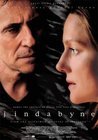
JINDABYNE


FROM THE PUSAN FILM FESTIVAL
A report from Carlito de Corea


Director Ray Lawrence takes a longer look at some of the questions raised by Raymond Carver’s short story, “So Much Water So Close to Home.” The same story was covered, but in less detail, by Robert Altman’s 1993 film, Short Cuts.

The film revolves around the racist killing of an Aboriginal woman, and the subsequent mistakes made by a local group of fishing buddies, led by Gabriel Byrne, who find her body. You may remember the part in Short Cuts where Fred Ward is on a fishing trip and finds a dead girl, and the troubles he faces with his wife when he gets home.

Lawrence does a great job of showing how something innocuous can become a serious indictment in the blink of an eye. What seems a harmless decision by the four friends about what to do with the dead girl’s body, later takes on enormous implications where much more is read into their actions by the media, the Aboriginal community, and even the people closest to them.

Back in civilization proper, the men begin to realize the seriousness of what they’ve done, emerging from the spell of their trip. As their deeds come to light, and they are assailed by their community, we realize that we too have been seduced into forgetting for a moment what the right and proper thing would have been to do. We are almost complicit in their actions.

As with all great stories, Jindabyne makes us understand both sides of the dilemma. There are no villains, only real people, with the exception of the killer who remains unrecognized in their midst, and whose presence we feel implicitly throughout the film.

Interestingly, I found the tone of this film reminiscent in some ways of Short Cuts, the stark natural sound at times underscored with an ambient, and alternately menacing, soundtrack. But for me there was something in Jindabyne, in tone and feel, beyond the dry quirky feel of Short Cuts, something richer, even reverent. With Lawrence there is a heavy reliance or trust in the environment, a willingness to foreground the natural elements to create a deeper experience, utilizing nature as a character in itself.

And in Jindabyne I wondered if Lawrence wasn’t suggesting that we are missing something that perhaps native peoples are in touch with—the animate, or animus, in what we often do not think of as alive, such as the often-shot wind in the trees, or the thrum of the power lines over the heads of the men as they descend into the gorge toward the river to begin their fishing expedition. We don’t just watch Jindabyne, we feel it.

Like his previous film, Lantana, Jindabyne is slow but steady. The plot is not as intricate, but is equally suspenseful. Even when nothing is happening, you find yourself engrossed in his images somehow. Lawrence has the patience to study a scene, a character, for longer than the average director, and yet without leaving the viewer with the impression that it is mere indulgence. There is always something behind what we are seeing, an underlying tension that Lawrence is so good at sustaining, both through the creation of characters we feel and care about and well-layered storytelling.

The Australian cast lends a lot to the authentic, small town feel of Jindabyne, and the Irish auto mechanic, played by Gabriel Byrne, is especially interesting to watch in this film. Jindabyne held my interest from its violent start to its emotional finish. I recommend it.

Wednesday, November 01, 2006

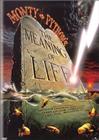
MONTY PYTHON'S THE MEANING OF LIFE


Written by El Mono Santo

The Monty Python troupe... You either love them or hate them. In my youth, I adored them. I formed and was President of the Monty Python Club (officially the Dead Parrot Society) senior year of high school. I never laughed harder in my life than the first time I saw that bovine get launched in Holy Grail. And who among us will ever forget the penalty for saying “Jehovah” from Life of Brian? But I never liked Meaning of Life.

Meaning of Life is not horrible... The soundtrack is hilarious and the film has its moments. But overall, I've always thought of this as their big flop. Considering that its artists speak multiple languages, are educated at some of the most prestigious institutions, and have an exceptional knowledge of everything from philosophy to history to art, I hoped for their erudite sophistications to come through in a film which purposes to answer “the big question”. Except for a brief mention of Schopenhauer, my hopes were frustrated. In the end, the answer to the question of the meaning of life is this:


“Try and be nice to people, avoid eating fat, read a good book every now and
then, get some walking in, and try to live together in peace and harmony with
people of all creeds and nations.”


I, of all people, know the Pythons better than that. The real meaning of life that the Python's preached--the meaning that is presupposed in the songs, skits, and actual structure of the film itself—is that life is ultimately absurd. The Pythons used comedy as an expression for their view of reality. Since the vast, empty, impersonal cosmos is ultimately greater than man and there is nothing beyond or greater than that, the film focuses on all the different so-called “stages of life” in humanity (from birth to death and the big Christmas party at the end) that are the only things that make man who and what he is. Therefore the meaning is simply to be as you are. A man lives, breathes, shits, and hopefully has some fun along the way, therefore go and do so, amen.

It is ultimately an anti-philosophy or an anti-meaning. The Pythons have failed to find an answer because they never believed there was one. The film is a mockery of life, not an attempt to find its meaning. Along the way, it turns this anti-philosophy on the most special moments of life in order to show them up as fraudulent. Before the credits roll, even the voice of the Pythons is silenced in the great meaningless nothing of space.

To quote an earlier film, "you come from nothing, you're going back to nothing, what have you lost? Nothing."

Tuesday, October 31, 2006

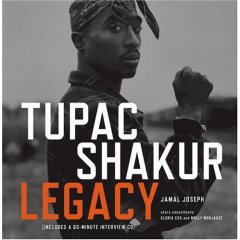
TUPAC SHAKUR LEGACY by Jamal Jospeh


Written by Fumo Verde

A few months ago, I thought I put in for a request to see a DVD on Tupac Shakur. I received the conformation from the contact that "the book will be sent to you as soon as the publisher gets it out." Huh?! I wouldn't mind spending 60 or 70 minutes watching a documentary about Tupac, but to read another book, whoa. Babies, I'm reading three books now, but I had already accepted the assignment to do the review. Then, a very large package arrived. I recognized the area of origin, and thought "Shit, is this that Tupac book or frackin' War and Peace?"

Katz and Kittenz, let me tell you, when I opened this package up, well the phrase "blown away" is an understatement. To start off, I really can't say I am a Tupac fan. I don't have any of his music, but I know his voice when I hear it coming through the speakers. I always liked what I heard, but just never got into him and I don't really know why.

Sliding the hardbound book out of the case, the first thing you see is a full cover of Tupac dressed in white on a soft-colored background made my mind race. "Wow, this is going to be sweet!" and babies, it is. This book isn't just another bio about the untimely death of an American icon, but a pictorial history of a man, who, through all his triumphs and tragedies never forgot where he came from or what the words “respect” and “family” mean. There are over 60 pages filled with pictures of Tupac, his family and friends, and copies of poems, song lyrics and other ideas that filled the mind of such an interesting young man.

There are photos of Tupac at school, in the streets with his buddies, hanging out with his mom, and working in the studios. There's even one with him and Janet Jackson on the set of Poetic Justice. But that isn't all, kiddies. There are pullouts reminiscent of Nick Bantock’s Griffin & Sabine trilogy. Let me explain, throughout the book, there are pages inside of the pages. Some are slid into a slit cut into the page itself, which can be easily pulled out, such as Tupac's letter to Interscope Records naming Suge Knight as his manager and David Kenner as his lawyer. Other pullouts are paper envelopes that contain items such as Tupac's inmate I.D. card from New York’s Clinton Correctional Facility. Although they are obviously not the authentic items, both have been recreated to look and feel like the real deal.

This book is full of surprises on every page. Like, I didn't know that his mom was Afeni Shakur, the Black Panther Activist. She gives a foreword and if you do get this book, please read what this amazing woman has to say concerning her son and his life, and one can see where Tupac gained his incredible knowledge and insight about the world.

Author Jamal Joseph also has a note on the foreword page. He explains how he is related to Tupac and how he watched him grow up. The story he relates to the reader throughout the book is about his close friend and how he watched this young boy turn into such a great and talented man. Joseph ends his author's note with, "It is what I miss the most. Those eyes that could see the past, present and future at the same time, and that smile that could re-arrange time and space into endless possibilities."

With a beginning that ends like that, get ready to not only read the story of Tupac Shakur, but to see it in images that the mainstream media couldn't even touch. He was not only a talented rapper, but also a political activist, entrepreneur, artist, chef and so much more. Tupac once said, "I'm not saying I'm going to change the world. But I guarantee that I will spark the brain that will change the world," and if he hasn't yet, this book just might be the spark that starts that flame.

This is a great book, and one hell of a collector’s item. For those of you how are fans, you will be overjoyed by what this book contains. For anyone who likes the history of music and the people who make it, put this book out on the coffee table. It needs to be in place where it can be appreciated, like the man who it’s about. Better than any Behind The Music episode could explain and with no commercials, Tupac Shakur Legacy brings to light the soul of an artist, a friend, and a man.

This is Fumo Verde, keeping it real.

P.S. I was going to let this be a surprise, but it’s hard to keep this mouth shut. Behind the front cover, taped inside, is a DVD, with over 60 minutes of interviews with Tupac and more.

Thursday, October 26, 2006

The White Stripes: Rhinoceros

Written by Fantasma el Rey

The White Stripes, as we all know, are bad to the candy-striped bone; not even a Seven Nation Army could hold them back. And I might not hold back on picking up Rhinoceros, if I found it for a very low price.

The DVD has no real interviews with The White Stripes yet does have early footage of Jack and Meg. It’s not much; maybe a total of five minutes but it’s better than the Cure documentary put out by this same company. (Support a Snob and check out my review for The Cure: Lost In The Labyrinth. While you’re looking around our site, buy some merchandise too. We have many cool and hip things to choose from. Jack White wears Snob merch. It’s true! I have fake photos to prove it!). There are interviews with people who actually know The Stripes: club owners, producers, friends and a few members of the Detroit bands that Jack played with. These people were there before the levee broke and The Stripes began their conquest of the known world. The documentary, actually titled Candy Coloured Blues, is informative and sheds some light on their early years and formation, although this disk “contains no original music by The White Stripes”.

John Anthony Gillis was dubbed “Jack” after joining the country/rock band Goober And The Peas as drummer, and it was during this time that he met and would eventually marry Meg White, adopting her surname and becoming Jack White. Shortly thereafter The Peas broke up. Jack then taught Meg to play drums and The White Stripes were born. Though dedicated to The Stripes, Jack would still play in two other bands, the alt. country-sounding Tabernacle and solid rockers The Go, even appearing on the latter’s debut single. Jack would fade from these bands as The Stripes began to hit and as he turned his thoughts to recording their first album, The White Stripes.

Some time after that they began to tour the U.S. with bands Pavement and Sleater-Kinney as well as recording their second album De Stijl, which led to more success and tours of Japan and Australia. Yet it wasn’t until their third release, White Blood Cells, that the world at large began to know their name. Rhinoceros then quickly stumbles into and glosses over Elephant and ends about there as well. The closing chapter on the disk is about the “future” of The White Stripes and where the people interviewed think the band will go?

On the whole, Rhinoceros is an all right disk for the casual fan; it does contain good information about their early years, though it’s not very entertaining. On the other hand, the visual gimmicks on this disk can be annoying. The split/striped screens and red tint in every other shot, which makes the titles a bit hard to see, gives these not so fresh eyes a hard time and a mild headache to boot. The production quality is not as bad the previously mentioned Cure documentary, but at least there is footage rather than close-ups of still photographs and actual music used in the background between segments instead of muzak. If you know all this information already, then this disk is not for you. If you must own everything White Stripes, then you’ll get it anyway.

Where does Fantasma think The White Stripes will go? The White Stripes will have a big hit on their next effort, something to do with a flower, perhaps an oddly colored orchid? Things get a little hazy here, but Jack’s love for country music will shine and I see him climbing a cold mountain. The Stripes will bring a new band on tour, real greenhorns and from them Jack will pick two to be in his new project, their name will be…the excellent tellers of anecdotes. And they too will score big hits and tour the nation and beyond.

Tuesday, October 24, 2006

THE PRESTIGE


Written by Hombre Divertido

Though it has much Prestige, it is still extremely unsatisfying.

I cannot think of another occasion where seeing one film had made me wish I had reviewed another, but that is the case here. Seeing The Prestige made me wish I had not been too wrapped up in other projects, and thus unable to find the time to write up a review after seeing The Illusionist. We were graced with two period pieces on the subject of magicians this movie going season, and The Illusionist was much better than The Prestige.

In the Prestige, we are introduced to Robert Angier (Hugh Jackman) and Alfred Borden (Christian Bale), both aspiring magicians. They, along with Angier's love Julia (Piper Perabo), are working for a professional magician while learning the craft. An accident occurs, Julia is killed, and Angier blames Borden. Borden and Angier become professional magicians respectively, and a war ensues not only as one attempts to better the other, but also as Angier seeks retribution for the death of Julia.

Ah, if the story had been told that simply. Instead the story jumps from one time period and location to another in an editing job worthy of Jason Voorhies. Even more disappointing is the payoff at the end, where our questions are answered in not only a disappointing fashion but with ridiculous explanations as well.

The Prestige has great qualities. The sets are wonderful, costumes excellent, effects leave you thinking that you’ve seen a magic trick, and not camera or computer magic, and the performances are top notch. Scarlett Johansson as Olivia Wenscombe, the new assistant of Angier and eventual center of a lover triangle, is mesmerizing, and David Bowie gives a stoic performance as Tesla, the scientist from whom Angier seeks true magic. Michael Caine seems a bit confused in his role as the voice of reason, though it had more to do with the script than his performance.

It is the editing and direction that let us down here as the choice was made to tell the story in a way that leaves the audience to wonder if they missed a reel of the film somewhere in the 130 minutes that they did see.

Like an elaborate trick by a magician with great showmanship, most will like what they see here, but find themselves waiting for the payoff, or to use magician vernacular, the prestige, and be disappointed when it’s over as all they saw was a lot of misdirection and flair, but little substance.

Recommendation: Wait for both The Illusionist and The Prestige to come out on DVD and…well, you don’t need to be a magician to figure out which is the recommended rental.

Sunday, October 22, 2006

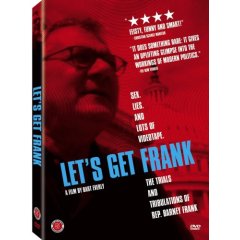
LET'S GET FRANK


Written by Fumo Verde

Bart Everly examines one of Congress’ shining stars, Representative Barney Frank, Democrat from Massachusetts’ 4th congressional district since 1981. The documentary follows him through the halls of Congress and details why he was the "go-to guy" when it came to the House deciding someone's fate during the impeachment proceedings of President Bill Clinton.

In 1990, Frank received a reprimand from the House for fixing 33 parking tickets for Steve Gobie, a male prostitute who he hired through a personal ad. Gobie ran a prostitution ring out of Frank’s apartment, but the House Ethics Committee found no proof of Frank’s involvement. Eight years later, Frank was thrust into the spotlight of a sex-crazed media whose only thoughts were about how deep did the cigar go. He brought rationalization, humor, and a sense of what the American public was really concerned about: privacy.

By having unlimited accesses to Frank for 24 months, Everly gives us an inside view to not only Frank and his life, but how D.C. looks from the other side of the TV. Everly doesn't start this out like one of those VH1’s Behind The Music segments; he drops us right into the firestorm of the Clinton impeachment hearings. At first, that's what I thought this whole thing was going to be about, but Everly and his editors made some clever cuts, bringing up the past to show not only what, but why things were going the way they were, which helped weave the story that was being told.

Frank came out of the closet in 1987 at the suggestion of then House Speaker Tip O'Neil. Not just for himself, but also to assist "Every gay Representative to come out of the room," as O'Neil said. Frank replied, "That's closet, Mr. Speaker." A funny little anecdote that lends credit to the old proverb, the truth will set you free. In coming out of the closet, O'Neil explained, the other side wouldn't be able to use that against you.

But the film is not all about Frank being gay. Like I said, Clinton’s impeachment is in the air, and the Republicans smell blood. Frank’s quick wit and sense of good politics (opposite of the fear politics that has been going on as of late) and his dealings with sex and lies made him the linchpin in the defense of the President.

Most of this documentary revolves around the 1998 hearings and how Frank made valid points, along with Maxine Waters, and basically showed not only the media, but also the American public that the case the Republicans were chasing down was not only unjust, but also unimportant in the minds of almost every American. I remember this all to well, I thought, “He got a blowjob from a fat chick. Who fucking cares? This is how Frank explained it, but with more eloquence and dignity.

More up-to-date concerns are in there too, like gay marriage. Here again, Frank throws down a fantastic speech. "How is it an attack on your marriage if I love another man? Is your marriage going to fall apart? Are you going to get a divorce? Does it make you love your wife less?" Barney asks these questions to other members of the House, and as they respond, "No, my marriage will not be affected," Frank gives a rational yet witty explanation on why there shouldn't be any amendments that refuse rights to certain citizens just because of their sexual orientation.

Barney Frank is frank and he doesn't mince words. He’s an extremely intelligent man, whose sharpness is only matched by his humor and is one of those rare lawmakers that we as Americans only get to see every once in a while. This documentary provides a testimony for a man who stands up for the true American values: life, liberty, and the pursuit of happiness.

Even though Let’s Get Frank came out a few weeks before the next election, it won't change anybody’s minds on who or how to vote, but it will give you a good look at a man who should run for president. Barney Frank is a Representative who is trying to represent all the people, not just the gay people, not just minorities, but also all the people. He has gained the respect of men and women from both sides of the aisle, and as long as he keeps being himself, that respect should never wane.

This is Fumo, saying " Vote; it’s the only right we have left. Don't lose it."

Saturday, October 21, 2006

A Life Less Lived: The Gothic Box


Written by Fantasma el Rey

It was a dark and stormy Friday the thirteenth. What better time to listen to selections from Rhino’s A Life Less Lived: The Gothic Box? Sorry, we’re not talking about not Ostro- or Visi- or the fall of Rome here. We’re talking music; music that us creepy sorts drew funny looks for listening to from other kids in high school. What most people fail to realize is that the Gothic sound is more than just slow gloom, doom, Edger Allen Poe, and sexual perversions. Many Goth bands have a jump to them while carrying dark overtones, and yes, sex plays a large part as well. The vocals have a dark passion to them. Emotions run high, which only adds to the mystique of the dark poetry and twisted tales of loss and love. This darkness combined with the lyrics that make you wonder “what the hell was the inspiration behind that?” is what draws people to the music and also what brings the music together under the Gothic banner.

The set itself is dressed in a black leather corset and comes with a nifty book filled with photos and artist’s commentaries; three CDs and a DVD contain videos from some of the bands represented in the boxed set. Making my desire to own the full set that much stronger, for you see, ghoulies, I received only a sample disk, but that’s all right because some of my favorite bands are present. The Cure being one. They show up here with the wonderful “Charlotte Sometimes” and the disk moves very smoothly into Bauhaus’ “She’s In Parties”; two tunes that capture the gloom and darkness of the scene perfectly. Both bands bring their dark poetry to life through their distinct sound, though Bauhaus, as the name reflects, is more art-driven sound, which comes through in lead singer Peter Murphy’s stage presence as well. See them live; I highly recommend it.

The Sisters Of Mercy’s “Temple Of Love” kicks things up a few notches and illustrates the fact that Gothic music is not all slow; in fact, some of it is very much the opposite, rhythmic and danceable. At Goth clubs, the atmosphere is dark and often dreary, but as with all other clubs, you go to dance and move. Hell, what could be more seductive than a raven-haired, vampire vixen in thigh-high boots swaying and grooving to the thundering sounds of the queen of them all, Siouxsie Sue and the Banshees, as she belts out “Spellbound”? Another song that makes its way to the set and one that simply drives me mad. I dig the tumbling drum effect, as if someone is falling, after Siouxsie sings the line, “throw them down the stairs.” I love her voice and that song. Many more danceable tunes fill The Gothic Box, from bands such as Lords Of The New Church, The March Violets and Specimen, who bring their funky bass lines.

The track and artist that stands out the most on the entire box is “The Weeping Song” by Nick Cave and The Bad Seeds. It is actually a duet with Bad Seeds guitarist Blixa Bargeld, whose primary band, Einsturzende Neubauten, also appears on the box. By far the most poetic storyteller on the entire scene, Cave paints picture with his lyrics that are concerned with religion, violence and the overall darkness of people in general. The music on this track is awesome. He uses big bass drums, steady brushes, fluttering handclaps, and a ghostly xylophone to bring his tale home and set his sound apart. Cave was also part of The Birthday Party, another band heard on The Gothic Box.

On the other end of the Gothic spectrum from Cave is the highly influential Ministry, who punch in with “So What,” an insane, fire-driven trip past Hell’s gates. Their impact can be felt when listening to artist and bands such as Marilyn Manson, Nine Inch Nails, and My Life With The Thrill Kill Kult. The intense, screaming vocals, synth samples, heavy guitars, and bass mixed with the sometimes explicit lyrics involving politics, dark fantasies, and more sex is what separates them from the other bands here. These are the guys who weren’t afraid to push and experiment to fashion a unique sound.

A Life Less Lived is packed with the best that Gothic music has to offer: Echo And The Bunnymen, The Cult, The Creatures, Christian Death, Joy Division, The Damned and Love and Rockets to name just a few; there are also appearances by some of the members of these bands in solo outings.

My only complaint is that Rhino approaches this project as a novelty thing. Supposedly included in the book is a section on how to dance Gothic. The set is promoted as “5 hours of mood-lowering music” and even the title, A Life Less Lived, seems to be a knock. As for “Mood-lowering”, at times some songs are, but many are danceable and upbeat, which make it hard to sustain a bad mood. And as far as a life less lived, I’d say that the Gothic lifestyle, for those that truly live it, is anything but. The scene is involving, the clubs jump, all the darkness attached screams nightlife, and there’s an intense interest in the unseen things that go bump in it.

With that said, I did enjoy my sample disk and look forward to experiencing the rest of the boxed set and I do thank Rhino for putting it out. I would also like to thank my best friend and musical brother, Eric, whose insight and thoughts always help to make listening more enjoyable. And thanks to El Bicho himself for bending a kid’s ear to the sound and excitement that is Bauhaus!

Friday, October 20, 2006

The Essential Alice In Chains


Written by Fumo Verde

The first time I heard Alice In Chains I thought, “Whoa, finally a band out of Seattle where you can actually understand the lyrics, and the music and melodies are fantastic.” The song I heard on the radio was "Man In The Box"; it blew me away. "I'm the man in the box/ Buried in my shit." Man, I could relate to that, and so did most of us who are labeled Generation X or whatever.

For me, the sound coming out of the Seattle in the early ‘90s was hard, raw, and passion-driven. It had to be to scrub out the ‘80s glam-pop still echoing on the radio. Alice In Chains was one of those bands that quietly exploded on to the scene as compared to Nirvana or Soundgarden, but everybody was listening. AIC blends their well-polished playing with deep passionate lyrics that reflect the pain, the frustration, and the ever-present dissatisfaction with life.

The first disc has 16 tracks that cover the albums of Facelift, Dirt, and the EP SAP. Track # 1 is "We Die Young", which has a heavy metal tone with its charging guitar and steady rock beat. “Man In The Box” follows it. Other tracks go deeper into the minds of Jerry Cantrell and Layne Staley, such as "Rain When I Die." The song starts out with an ominous vibe from Mike Starr's thumping bass riffs. Cantrell stretches and twists the notes crying out from his guitar. Both combine with Staley's voice and Sean Kinney's driving drumbeats into pain and loss. Also included on this disc are "Angry Chair," "Brother," "Dirt," and concluding with "Rooster," one of AIC's most notable songs.

Disc two contains 12 tracks from the albums of Jar of Flies, Alice In Chains, and two tracks recorded for MTV’s Unplugged. Starting out with "No Excuses", which became a radio favorite when it was released, AIC was coming into their own and their music was just getting better. Jar of Flies" still sits close to my CD player and gets played at least once a month.

"I Stay Away" comes next and this song proves what Steffan Chirazi said in the liner notes about these men not just being simply musicians or artists, but they are craftsmen, who don't come up with a bunch of throwaway shit and keep what works. They nurture and develop a song, improving on it and always fine tuning it until it is perfected. The song is a prime example of how the band blends the harmonies of bass (then being played by Mike Inez), guitar, drums, and vocals into an almost symphonic sound that resonates throughout the complete works of the band.

Although AIC has a very distinct sound, no songs sound alike due to the band’s eclectic sense for music in general. “Would?” finishes out the second disc; another signature song that even today gets radio play on the rock channels around the country. Even though they have suffered the untimely death of Staley via drug overdose, and long periods in between new recordings, AIC still has a strong following and are just recently resumed touring. This 2-CD set is an essential collection even if you just like them a little. If you lend an ear to this set, I'm sure you'll become a fan for life.

This is Fumo saying, take care babies.