Saturday, December 09, 2006

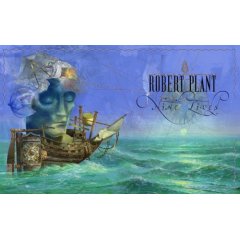
Robert Plant - Nine Lives (Sampler)


Written by Fumo Verde

Are you ready for this? Nine Lives is a ten-disc box set that includes all nine of his solo albums, remastered and expanded with some "extras," if you know what I mean. It also includes a sixty-minute film on DVD that takes you on a tour of Robert's solo career, which began after Led Zeppelin disbanded in 1980. But that's not all on the DVD. There are interviews with Plant about each of the albums and with other musicians who know him and are still to this day inspired by his artistry, such as Roger Daltrey, Tori Amos, and Lenny Kravitz.

This would have been an awesome set to get to review, but unfortunately I could only get a sampler CD. This disc pulled together fourteen songs, including radio hits "29 Palms," of which I can never get enough, and "Ship Of Fools," which is one of the soundtracks to my life. It also has B-sides, "Far Post" and "Oompa (Watery Bint)," and previously unreleased songs. "Turnaround" is classic Plant with a rocking blues beat and his cool melodic vocals. I swear that this man sounds just as good in 2006 as he did back when Jimmy and John heard him wailing the blues in 1968. Another unreleased demo is a sweet tune called "Rollercoaster". A jazzy, retro keyboard sound provides the backdrop as Plant causally recants a tale of love in almost a whisper.

Hey, babies, if the sampler CD is this good, I can only imagine what this ten-disc pack is going to be like. The collection includes 1982’s Pictures at Eleven, 1983’s The Principle of Moments, 1985’s Shaken ‘n’ Stirred, 1988’s Now and Zen, 1990’s Manic Nirvana, 1993’s Fate of Nations, 2002’s Dreamland, 2005’s Mighty Rearranger, and even The Honeydrippers EP. Plant has had a long and incredible career spanning over thirty years, and yes, that's including the Zeppelin years. Say what you like, but he is a world-class music icon. After such a powerful rock band breaks up, the brightly lit stars usually burn out, but not Plant. His ideas and insights keep getting stronger with every new song he puts out.

The sampler's liner notes also tell me that not only do you get the DVD and nine CDs but also a sixty-page book with rare pictures and artwork are also included in this box set. As soon as this hits the stores, I am going to get myself a Christmas present. Just reading the liner notes on this sample sleeve made my mouth water. For those who are fans of Robert Plant, this is a must-have. Expanded CDs, a bonus-packed DVD and a sixty-page photo book makes Nine Lives my pick of the year for box sets.

Friday, December 08, 2006

Drake Bell: It's Only Time


Written by Fumo Verde

Yes, it was only time until Drake Bell made the jump from The Amanda Show on Nickelodeon to making music, or at least trying to. Bell, who had started his acting career at the age of five, began playing the guitar at age thirteen, and now at the ripe old age of twenty has come out with his second CD, It's Only Time. Bell has a great-looking resume that includes some made-for-TV movies and shows on Nickelodeon, but that's where he should have either stopped or got off the bus. There's no other way to put this: this album sucks. I don't know what his first one sounded like, but some record executive should have probably listened to it, so I wouldn't have had to suffer through this one.

We start out hearing sounds from the bridge of a submarine. Admiral C.J. Abraham greets our ears with his faceless voice. Abraham co-wrote all these little ditties along with Bell and Michael Cocoran. You would think that with three of them working on songwriting one would have had something to say. "Up Periscope" is the first track, and when the music started, I thought I had popped in one of my eight-year-old nephew's CDs. Not only does Bell come to us from Nickelodeon, so does his music. "Up Periscope," like all the songs, is super upbeat and "happy-happy." It's the type of music that makes me angry. Angry that anyone would spend money on making bad music like this when there are kids starving on the streets of America as we speak.

This whole CD sounds like it was made for a pre-teen, after-church TV special. "The entire world is beautiful and I love you" is the theme on It's Only Time and that course is never strayed from. If Bell is trying to break from his youthful ties, he best get off the set of Nickelodeon and go into the word on his own. The songs are contrived and the melodies bounce around like odd jams by The Beatles on bad acid. Like all sugarcoated pop artists, Bell has the illusion of being brokenhearted and blue, but there's no feeling to it. No soul or spirit and nothing that catches the listener’s attention.

Even when I read the liner notes and the song lyrics, there wasn't anything I could relate to. Some of his words were so out of whack, I had to refer to my buddy Ferg to see if he could make heads or tales of what Bell was saying. For example, in track number eight, "Fallen For You," the song opens with "The first time I saw you, I thought you were barefoot. Your hair pulled back, your jelly shoes. Should I lie about my age? Your Buddy Holly glasses on a Betty Davis negative." As these lifeless words are being spewed out, the music is moving at a Sesame Street-pace. Words like that with children’s music backing it up make my brain feel like it's going to have an aneurysm. The fourth line in the title track states "I'm more refined in my recent years." Yeah, that's a big jump from eighteen to twenty, a coming of age so to say.

The worst thing to say about this CD is that it probably won't be Bell's last. But if he does come out with another one, I hope he lives more of life than what lays within the studio compound of Nickelodeon and The Amanda Show.

Thursday, December 07, 2006

TENACIOUS D IN THE PICK OF DESTINY


Written by Jámon Y. Huevos

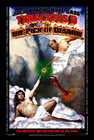
Jack Black and Kyle Gass have had a career as the world’s most awesome rock band, Tenacious D, since their pretty damn funny but short-lived series on HBO. That series, and a 2001 album, have garnered them a loyal following of fanboys and fangirls who like their twisted, sexually explicit, and wonderfully disgusting humor. Their movie, Tenacious D in The Pick of Destiny, attempts to introduce their comedic, but actually solid, musical talents to a broader audience.

The film is split in two halves. The first half chronicles the meeting of JB (Jack Black) and KG (Kyle Gass) and the formation of Tenacious D. Once the band is assembled and ready to rock our socks off, the second half of the movie has the pair traveling Abbott and Costello style to the Rock and Roll Museum (that’s right, Museum) in search of the single guitar pick that all the greatest rockers (Dude! Eddie Van Halen!) have used to get their careers headed directly into the pants of hot babes. The fact the pick was forged from one of Satan’s own front teeth can only lead to mayhem and hijinx.

The Pick of Destiny tries to recreate the best bits from the HBO series. Fans will be left scratching their heads wondering why a comedy team would steal from themselves. Their biggest fan ever, Lee, flits in and out of the movie with as much a sense of necessity as a pickle spear leaning against a Chevy. A song from Tenacious D’s first album, “Kyle Quit the Band,” is re-crafted and made less funny and less comically poignant in the movie as a song titled “Dude (I Totally Miss You)”. None of their old material was made better by a bigger budget or more time to flesh out their ideas. This is doubly unfortunate since the new material gets less play because the old material is taking up much needed space.

The movie does have its moments, and there are enough solid one-liners to keep you smiling from scene to scene. Pick of Destiny works best when it is a rock opera, and is punctuated by fantastic, belted out cameos by Meatloaf and Ronnie James Dio. Sadly, it is not a rock opera often enough. It is also a mystery as to why Tenacious D pulls so many punches. Instead of the outrageous ten-minute skits from the HBO series, we are left with a string of sketches that don’t add up to much, mostly because Black and Gass appear frightened to push the boundaries of their R rating. In theatres where JB and KG are fighting for screen time with the likes of Borat, you’ll be left asking for a bit more social commentary than farting and pot smoking.

There is a scene tacked on to the end of the credits (much like this sentence dangles from this review) that is an absolute must-see if you are twelve years old and mildly retarded.

Monday, December 04, 2006

Depeche Mode: A Broken Frame


Written by Tío Esqueleto

Following the success of their seminal first album, 1981’s Speak and Spell, Depeche Mode was faced with a major dilemma. How to carry on without Vince Clarke? Clarke, the band’s songwriter and all-around musical architect, abruptly left the group citing creative differences, and a general distaste for the interviews, television spots, and constant attention that comes with a band whose star is rapidly rising. With him gone, it was up to remaining members Andrew Fletcher, Dave Gahan, and Martin Gore to prove to Clarke (and themselves) that they could carry on with Gore as sole songwriter and arranger. What ensues is 1982’s A Broken Frame, their first album as a three piece, and an album that longtime producer, and Mute Records founder, Daniel Miller would call “a transitional album” and later refer to as the beginning of the so-called dark phase.

The 2nd installment of Rhino Records re-releasing, and remastering, of the Depeche Mode catalogue includes A Broken Frame, 1984’s Some Great Reward, and 1993’s Songs of Faith and Devotion. This follows the initial re-releases of 1981’s Speak and Spell, 1987’s Music for The Masses, and 1990’s Violator. Each two-disc set comes packaged in a slick, gatefold slipcase and includes a CD of the album, as well as a bonus DVD with the album digitally remastered in 5.0, with various extras.

The CD, minus the art on the actual disc itself, has nothing to offer that wasn’t included on its original UK release. Singles include “See You,” “The Meaning of Love,” and “Leave in Silence.” Also on this album are such fan favorites as “My Secret Garden,” “Monument,” and “The Sun and The Rainfall.” A Broken Frame most certainly is a transitional album. It is a reboot, of sorts, taking the band from Clark’s original point of view to the more complex song structures of Gore’s more brooding, melancholic point of view. It is an obvious window into the future of the Depeche Mode we are familiar with today, a landmark album in a discography spanning 25 years.

The DVD, as you can imagine, is the intended point of purchase, not just for A Broken Frame, but for all of these Rhino remasters, with a bevy of audio and video content to offer. Each track from the album is reproduced in both 5.1 Dolby Digital Surround and DTS 5.1, as well as a stereo 2.0 mix. The DTS 5.1 is sure to set any audiophile’s head spinning, fan or not, most notably with “Monument” and the sweetly haunting “Leave In Silence.”

Also included on the DVD are the three rare B-sides to each of the aforementioned singles: “Now This Is Fun” (originally b/w “See You”), “Oberkorn: It’s a Small Town” (b/w “The Meaning of Love”), and “Excerpt from: My Secret Garden” (b/w “Leave In Silence”). Until now, all three of these cuts were only available on the original vinyl releases, and through The Singles box sets.

Also in 5.1 and 2.0 stereo mix are six tracks from A Broken Frame recorded live in Hammersmith in October 1982. Included are two singles (“See You” and “The Meaning of Love”) as well as “My Secret Garden,” “Satellite,” “A Photograph of You,” and an extremely rare, and wonderful rendition of “Nothing To Fear.” Outside of the overall sound quality, this is the major perk to this purchase.

Rounding out the DVD is the video content. Depeche Mode: 1982 (The beginning of their so called dark phase) is a continuation (one would assume the second installment) of the ongoing documentary produced specifically for these special editions. Each member, past and present (if applicable), as well as producer Miller and various players in the Depeche Mode family, from public relations to tour managers, recalls the atmosphere and events surrounding this release.

This particular episode deals mainly with the loss of Vince Clarke, the appointing of Martin Gore as sole songwriter, and the direction the band took, therein. Each member gives a detailed account, and it is always nice to get anything with Clarke reminiscing about his Mode days before going on to form Yazoo and Erasure. We learn that his post break-up intention was to pursue a day job, but that he was unexpectedly tapped to do a demo for a then relatively unknown Alison Moyet. The addition of eventual fourth member Alan Wilder is also covered here, from his beginnings as a hired gun brought on to help with the live shows leading up to the album’s release to his eventual retention in the lineup that would go on to define them. All in all, a very insightful 30 minutes, on a very important album.

Very few bands are, or were, as collectible as Depeche Mode has been throughout their career. To date, six Depeche Mode albums have been given the Rhino “Special Edition” treatment, with the four remaining albums slated for an early ’07 release. All of which, have been nothing short of spectacular. These re-releases have been lovingly put together with the fans in mind. A souvenir from a particular band, for a particular album, if you will. Have a favorite Depeche Mode album or period? Perhaps, A Broken Frame? Then I highly recommend picking up that souvenir.

Friday, December 01, 2006

ACCEPTED


Written by Fumo Verde

Hey, peoples. This is Fumo with my buddy Ferg. Say, “Hi,” Ferg.

Ferg: Hi.

Ferg and I just finished watching Accepted, which stars Justin Long (The Mac from the Mac/PC commercials) and stand-up comedian Lewis Black. This flick came out in the theaters a while ago but is now on DVD. When Ferg and I saw the trailers, we thought this would be kind of funny, but we didn't think that it would have been "ten dollars in the theater" funny, so as soon as it hit the disc, we were on it. We were right. It’s funny with lots of good laughs, but it also has an underlying statement. The whole thought that only those who go to the best colleges get the best jobs, and statistically speaking, this is true, but they don’t necessarily the best education.

It stars Justin Long as Bartelby Gains, a quick-witted youth who couldn't get accepted to any of the colleges he applied for. Nor do his friends Hands, played by Columbus Short, and Rory, played by Maria Thayer. To fool their parents, Bartelby creates a fake acceptance letter from the South Harmon Institute of Technology or S.H.I.T. He gains the help of his best friend Sherman (Jonah Hill) to help him build a website and set up a bank account because Bartelby knows his dad will check in on all this. The scam becomes even more elaborate when Bartleby and his cohorts lease a building, clean it up, and rent other students to stand around to make it look like a real college campus. Lewis Black comes in as a washed up professor and is paid to act as dean of students.

All goes well, until hundreds of kids show up at the door saying that they too were accepted to S.H.I.T. Now Bartelby and his buddies have to either tell everyone that the school is all a lie, or start up a college. The zaniness begins as Bartelby has the students choose what classes they would like to attend. There are classes like Bullshitting 232 and Rock Your Face Off 101. Shit, if I knew there were classes like that I would still be at college.

The whole thing is kind of corny with four kids cleaning up a building and getting their college-educated parents into falling for their little ruse. It's all kind of hard to believe, but it still has its moments. The acting is good and Lewis Black is fucking hilarious as the dean of students. He holds court outside of his trailer that is parked in the back of the campus, giving dissertations on life and what it means to be an American in this day and age.

Sherman Schrader (Hill) is awesome, especially when he had to dress up in a hotdog suit and would yell to students passing by "Ask me about my wiener." Here is where the subtext comes in. Even though Sherman got accepted to the college he wanted, it's not working out the way he was told it would be. He is still considered an outcast and is struggling now to get accepted by his fellow students.

Since the movie Animal House college comedies have fallen short, and although Accepted doesn’t come close, and what would with a PG-13 rating, it does have some good jokes and funny scenes. The cast is funny and they all play their parts well, especially Long, Hill, and Black.

The extras are cool, too. There's a map of S.H.I.T. to cruise the campus and check out the behind the scenes action, as well as a gag reel and interviews. This is good for one of those nights where there's nothing on TV and you don't feel like doing much. Pop this in, pack a bowl, sit back and get ready for some corny laughs that will get a tear or two to run from your eye.

This is Fumo saying, “Good night.” Oh yeah, Ferg did you want to add anything?

Ferg: I liked the fact that the school mascot was a sandwich. Get it a Shit sandwich. I like sandwiches.

Thursday, November 30, 2006

The Pretenders: Pretenders


Written by Fantsama el Rey

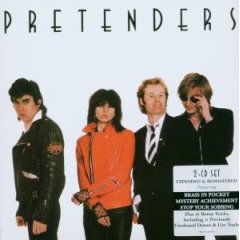
Sounding better than ever, The Pretenders’ first album, simply titled Pretenders, has been remastered and re-released. Augmented with a second disk of B-sides, demos, and live tracks, it is still all killer, no filler. This American-fronted, British band’s first recording ranks as one of their best and puts them side by side with other classic rock debuts as The Doors and Led Zeppelin.

Everyone knows at least one Pretenders' tune; check out the singles collection to see what I mean. A few popular songs off of this album are self-penned dandies, “Kid” and “Brass In Pocket,” alongside Ray Davies’ “Stop Your Sobbing.” Then we have cult favorites that include the likes of “Precious” and “Tattooed Love Boys,” two in-your-face rockers with hard, raw attitude.

The album is divided into a rocking punkish part and a dreamy part, where guitar/vocalist Chrissie Hynde’s displays her softer side. The songs in this mode are the more popular or at least the more well known of the band, which is really too bad because the original line-up of Pete Farndon bass, James Honeyman-Scott guitars/keyboards, and Martin Chambers drums can rock with the best of them. Oh, don’t get me wrong; the singles do jump but the others tracks are fierce and have more drive to them. By the time of these recordings, guitarist Honeyman-Scott was heavily under the influence of rockabilly guitar hero Dave Edmunds, which adds to their sound.

Released in late 1979, Pretenders opens with “Precious,” and we hear how hard the band hits. The drums crash and the bass has a solid, driving pulse while the guitars swirl and soar around them. Hynde’s lyrics are delivered with force by her seething vocal attack, “Trapped in a world/ That they never made/ But not me baby/ I’m too precious/ I had to fuck off”. “The Phone Call” and “Tattooed Love Boys” keep the pace and the latter finds our heroine hangin’ with the shop boys and learning that when you shoot your mouth off with this crowd, they’ll show you “What that hole was for.”

“Stop Your Sobbing” begins the “dreamy side” of the album where Hynde’s vocals become smoother and more polished as she brings out her singing voice. The music still has a solid rock drive and loses none of its force just because it switches gears and downshifts a bit. The singles are pulled from this lot for obvious reasons and it does make the album as a whole more of a surprise upon first listen.

“Kid,” “Brass In Pocket,” and “Lovers” appear to be quaint tales of love. Yet these lyrics take on a new life when you take into consideration Hynde’s quote about the themes of her songs, “The usual stuff. A bit of prostitution, a little scamming, a hustle here and a hustle there…” Now, even if she is joking, you still get a different take on the songs. Armed with this new insight listen to “Brass In Pocket” again and tell me the song doesn’t change a bit. And not to be forgotten, the video game-inspired instrumental “Space Invader,” a catchy number with some nice sound effects from the time.

Disk two is all bonus materials and seems to have no specific order. According to the liner notes, there are two B-sides to “Brass In Pocket”: “Swinging London” and “Nervous But Shy”. Some B-sides are from singles that wouldn’t be released until almost two years later. “Cuban Slide” is the B-side to “Talk Of The Town,” and “Porcelain” was on the back of “Message Of Love.” These tunes wouldn’t emerge until the follow-up album, Pretenders II.

These sides show the influence that rock ‘n’ roll standards had on this band. “Cuban Slide” is dripping with the classic Bo Diddley beat with more Cuban flare. If I have to describe Diddley’s beat, then you should stop reading this and begin your Rock ‘n’ Roll 101 class… seriously. For those that know, you can hear some Arthur Lee and Love-inspired guitar work on “Porcelain;” think the epic “John Lee Hooker” also known as “Revelation.” While listening to “Nervous But Shy,” keep “Your Friend And Mine-Neal’s Song” in mind.

The demos and live tracks provide a good example of the band in their early days. The demos show that the band always had a pop sensibility to their sound. “Brass In Pocket” remains very much the same, except that in this version Hynde sings “Your special, so special” instead of the more powerful “I’m special, so special.” “Kid” rocks harder and is stil rougher around the edges, while “Stop Your Sobbing” has more of a pop/country vibe too it. Keeping the country vibe going is The Eagles-inspired “Tequila,” a slow drinking song, and with a title like that who would have figured?

The closing five tracks illustrate how The Pretenders cut loose with songs played live. They give off an easy going, R & B party atmosphere on “I Need Somebody,” while rockin’ into “Mystery Achievement;” both recorded for the BBC in ’79. On the tracks recorded in front of an audience, they kick down the doors and blow the roof off the joint. “Precious” and “Tattooed Love Boys” are punk fast and rockabilly infused. Here The Pretenders sound very much like a Los Angeles band you may have heard of, X. I find it interesting that both bands have a rockabilly-inspired guitarist, although X’s Billy Zoom is a rockabilly hero all his own now. Stomping disk two to an end is “Sabre Dance” in which we find Hynde doing her calm vocals a la “Sobbing” as Honeyman-Scott goes wild in front of her. Another fascinating live track and one hell of a way to end Pretenders disk two.

Well done and rocking from beginning to end, Pretenders is a must for any fan of the band and rock ‘n’ roll in general. It was and is a great loss that this line-up only got to do two albums before the death of guitarist James Honeyman-Scott and the departure of bass man Pete Farndon. The world is a bit emptier without solid rockers like them, but we have the music that they did record and thank the rock gods that X and Bo Diddley can still be found playing smaller venues.

Wednesday, November 29, 2006

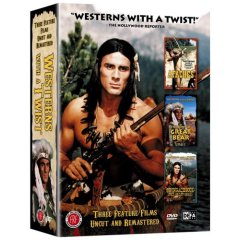
Westerns with a Twist (The Sons of the Great Bear / Chingachgook - The Great Snake / Apaches)


Written by Fumo Verde

Ok, katz and kittenz, here's one of those times when looking through glazed, bloodshot eyes pays off. Coming straight out of what was once known as East Germany are three feature films about the American West. Go ahead; do your double take. Yes, East German films, made smack in the middle of the Cold War, about what life was like in America during the Westward Expansion of the 1800s. I asked to review this just to see what the Communist propaganda machine was pumping out about American history, when life was overshadowed by the fears of living under a red moon, or in this case a red, white, and blue moon.

The DEFA was the East German film industry that produced such...uh, epics as this. Known as “Red Westerns,” they spin tales of the Old West from what they considered the Indians' side of the story. All three films were shot in places like Uzbekistan and Romania and the dialogue is German. Serbian actor, stuntman, and author, Gojko Mitic stars in all three films playing the German James Bond of Native Americans as he fights the never-ending battles of what is called the "great white tide."

The first flick I picked out of the pack was the first one made, which was The Sons of Great Bear done in 1965. The story is about the white man’s lust for gold. It’s found in the Black Hills of the Dakota Territory, and slowly but surely the Natives are being pushed out. Great Bear is a chief who has hidden his tribe’s gold. How or why these Dakota Indians had gold was never told. Maybe the East Germans were prescient about Indian gaming?

One white guy named Red Fox, apparently the East Germans weren’t up on American comedians, happens to be friends with chief Great Bear, so much so that he calls him his brother. Ah, but as Cain downed Abel, Red stabs Great Bear when the Chief refuses to tell where he hid the tribe’s secret stash. The sons of Great Bear wait a few years before going on the warpath and seeking revenge. In the meantime, they suffer being moved to a barren, desolate reservation and being treated poorly by the U.S. Army and any white settler who happens to be in the camera's eye.

Like American Westerns of that same timespan, the hero never runs out of courage, compassion, guts, or ammunition. The scenery is breathtaking with its open valleys and snow-capped mountain ranges. Even the hot and dry lands of the American Southwest seem to have a counterpart in Eastern Europe. Now, I'm not talking like Red Rock or Choco Valley, more like Death Valley or that drive out east on the 10 freeway to Rubidoux.

This type of backdrop was used for Apaches, filmed in 1973, which again was completely over the top in how evil the white settlers were and how easily the Native Americans could turn back the onslaught of white oppression. In Apaches, there is a treaty signed with the Mexican Government, a copper mining company, and the Apaches. The U.S. Government sends out Johnson to exterminate the Apaches to, as Johnson sees it, secure the mine and search for more copper. On the day of celebration of the peace treaty signing, Johnson, who has been given a cannon from the U.S. Army, fires it into a crowd of Apaches receiving flour rations from the mining community. Mitic's character is one of the few survivors. He, along with his old father and a few other braves seek revenge on Johnson and his band of cutthroats.

The final film I found shaking my head to was Chingachgook: The Great Snake made in 1967. Based on a James Fenimore Cooper novel, our red brothers have just recently met with the French and English and are learning the hard way that working with the whites isn't all that they said it would be. Great Snake is a Delaware, and the Huron have swiped his wife-to-be. As always, every white man within earshot is the devil with the exception of Great Snake's only white friend named (are you ready for this?) Deerslayer. Yes, the only good white guy is named after a great symbolic animal of Native culture. Awesome.

The funny thing about these movies and what they had to say is that they do have a point. The Europeans at the time believed themselves better than the native peoples in whatever land they had just "discovered." A good example came in Chingachgook where an older English officer was expressing to one of his junior officers that "...we are here to exploit these natives and make sure that they war with themselves so we may take the land and all that we can profit from." Now, true that's what happened, but I don't think people went around telling it like that. Not every settler wanted to keep an Indian scalp as badge of honor. The bigger picture here is that not every capitalist will kill you for the sake of the bottom line, although a few will.

These movies shouldn't be taken seriously when it comes to historical fact, although one can get the gist of what the East Germans were saying. They exploited the exploits of the early European settlers of this nation, and used that to confirm the so-called glory of Communism. Capitalism expanded this country, but it alone didn’t kill off the Native American Indian. Fear, bigotry, and a non-yielding view that the savages’ beliefs were an act of devil worshipall contributed in the destruction of the native peoples, yet the East Germans didn't seem to catch that. Their whole target was the capitalist pig, and it shows.

As for the acting, it was all right, about as good as the American Westerns of the same era. The music was as expansive as the land the Indians covered. It went from orchestrated symphonies to guitar and harmonica duos, and one time I swear I thought I heard a Beach Blanket Bingo type of rock music, but that could have been the super haze that was dropped into my bowl.

These movies are out there, but they do give some insight to what the people behind the Iron Curtain were viewing. The Red Westerns were the mirror opposite of the American Westerns: the good guy always won in the end, yet when he road off into the sunset, instead of waving his hat, he held up a tomahawk that he waved above his feathered headdress. I suggest that if one were to watch these Westerns, one needs to get twisted.

This is Fumo.... pack one for me.
Saturday, November 25, 2006

WHAT WE WANT, WHAT WE BELIEVE


Written by Fumo Verde

The Black Panther Party was considered one of the most dangerous militant groups in America back in the late 1960s and early 1970s, and I never really understood why. To be honest, I haven't come across much information regarding the BPP, with the exception of a few documentaries about those times where for brief moments the Panthers were mentioned.

Here on a four-DVD set, Roz Payne has graciously given us a chance to look closer into this movement with footage from Newsreel Films, the unofficial documenters of not only the Black Panther Party, but the whole leftist revolution that was breaking through during some of the most violent times in this county's history. What We Want, What We Believe isn't a documentary, but a living history preserved on film to show future generations how citizens united in a common cause can get the attention of the U.S. government.

The first disc contains footage from Newsreel Films, who became the default documenters for the BPP, and has interviews with founding members such as Stokely Carmichael, Bobby Seale, and Huey P. Newton. The first segment is called "Off the Pigs," a rally chant used at BPP demonstrations; it, along with the next two segments, "Mayday" and "Repression," deals with the filmed events that the Panthers put together: demonstrations, speaking appearances, and the Breakfast Program, which gained mainstream media recognition as being one of the improvements that the Panthers had brought about to their communities. Feeding the poor always runs well with the press, as long as they make their money on it. The Panthers did it for the kids, and not for the praise.

The second segment has a great interview with party member, Field Marshall Donald Cox. Payne gives the retired general almost two hours of airtime here, and it is well worth it. He gives a great view from the inside of the party, and runs down certain reasons why the BPP came about. One of my favorite parts happens as Cox is explaining why the Panthers carried guns. He explains that, not only did they have the right as American citizens, but that the cops at that time we targeting black males and that if the cops had gun "...we have guns too, and if you're gonna shoot at us, we gonna shoot back motherfuckers." As the statement finishes, Cox brings a joint to his lips and takes a big drag. This Kat has got my vote...for anything. The final segment of disc one ends with the 35th Reunion of the BPP, which shows interviews with members past and present.

The highlight of disc two is the interview with FBI agent William A Cohendet, known as WAC due to his initials on the reports that were filled and processed by him to send back to Hoover, who was anxiously waiting in back in D.C. WAC's reports became famous not because of the great intelligence that the FBI was gathering on the BPP, but because the way WAC had written them. He created some of the most humorous federal reports ever because he and his team had come to realize that the Panthers were not so dangerous, and like every revolutionist party, the infighting and paranoid attacks on each other would be the un-doing of the Panthers.

Payne brings up the Counter Intelligence Program, or COINTELPRO, which the FBI used to deal with the Panthers. Seizing on the paranoia, the Federal Bureau of Intimidation added fuel to the fire by sending letters to party members that reinforced the paranoia that each member was out to get the other. The rest of disc two along with three and four contains more interviews with other FBI agents and with the filmmakers at Newsreel. Their stories lend truth to the so-called paranoia.

Additional material, like press releases and photos are included, along with a 12-page liner note pamphlet in which Payne explains her own involvement and what this DVD library is about. She also gives credit to those who helped the Panthers, folks such as the Falk family and Gail Dolgin.

For any of us who love history, this is an archive that should be added to the collection. Payne has given us one of the most in-depth looks at an organization whose ideals still can be felt. To be a black American back in the early days of the Civil Rights Movement was to be a target for any reason. The Panthers stood up for themselves as best as they could and they laid out some pretty radical plans for that time period, but what they really did is give empowerment to the black community and to show them they could stand up for themselves if they united together.

The Panthers legacy, as reported by the mainstream, and I hate saying mainstream, because other than murdering everything is mainstream, was one of imploding zealots who were mysteriously taken out of the picture for reasons still fuzzy in my mind. What We Want, What We Believe is a fantastic journey back to a time when equal rights were the name of the game, and the price to pay for them was very high. And if it were not for the efforts of Roz Payne and the brave folks at Newsreel, the true legacy of the Panthers would have probably faded away. If you really want to know what the movement was about, check out this pack and your instruction will begin.

Wednesday, November 15, 2006

BBC Atlas of the Natural World: Western Hemisphere and Antarctica


Written by Fumo Verde

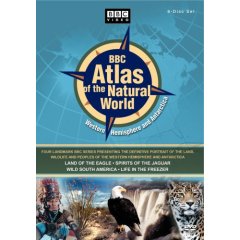
I have always been a fan of the BBC, and here is another reason why: BBC Atlas of the Natural World: Western Hemisphere and Antarctica, a six-disc set that relates the stories of the continents, how they formed, who were the first inhabitants, and how the evolution of creatures and peoples adapted and lived within their environment.

Under the banner are four series, which were created in the previous decade: Land of the Eagle (1990), Spirits of the Jaguar (1996), Wild South America (2000), and Life in the Freezer (1993). The first three series are comprised of four one-hour episodes while the last one is made up of six. With all the history and information contained in this package, trying to view it all at once might make your head explode.

The topic of Land of the Eagle is North America. The episode "Great Encounter" gives a brief history of the native peoples of North America and what it was like before the Europeans landed. It goes on to explain what the new settlers from across the great lake had to face in this new world, such as the weather, the land around them, and all the beasts of the forests that now surrounded them. It goes into the history of the land, how the mountains were formed, and what flora and fauna had evolved.

The series heads south to Central America for Spirits of the Jaguar, which brings the viewer into the realm of the Mayans while Wild South America, whose title needs no explanation, moves on down to the land of the mighty Amazon and the towering Andes. It was the last series to be shot and, thankfully, did so in 1.78 wide screen. Life in the Freezer explores the frozen tundra Antarctica with its penguins, whales, and David Attenborough, the series only host.

If you view the series in Enhanced Content Mode, pop-up windows will periodically appear during the program with added factual content. I know this, not because I know how to view the series in Enhanced Content Mode, but because it says this on the inside cover of the cool box that the set comes in.

With awe-inspiring pictures of the landscape and the animals, bugs, and birds that inhabit these great continents, BBC Video has really out done itself here, almost packing in too much beauty. I think it's their ploy to get us to watch it twice, because that's what I plan on doing tonight. I wonder if a series on Africa and the Eastern Hemisphere will soon end up on DVD. I hope so because this is a fantastic look at our world and its natural beauty.

If I were a seventh- or eighth-grade science teacher, this would be in the lesson plan. The content goes deep enough to give the viewer the facts without getting too technical to cloud the mind. All the images are magnificent, and it is real piece of work from start to finish. For those of us who love natural history, this is one that should be picked up; it is well worth because it is not only interesting and true, but also entertaining and beautiful.

Audio tracks are available in English and Spanish.

Tuesday, November 14, 2006

LIGHTS IN THE DUSK


Written by Carlito de Corea

In his new film, Lights in the Dusk, Aki Kaurismaki strikes our sense of irony and compassion from the beginning as we follow the hero of his story, Koistinen, through a series of misadventures. It is the third film in a trilogy, following Drifting Clouds and The Man Without a Past.

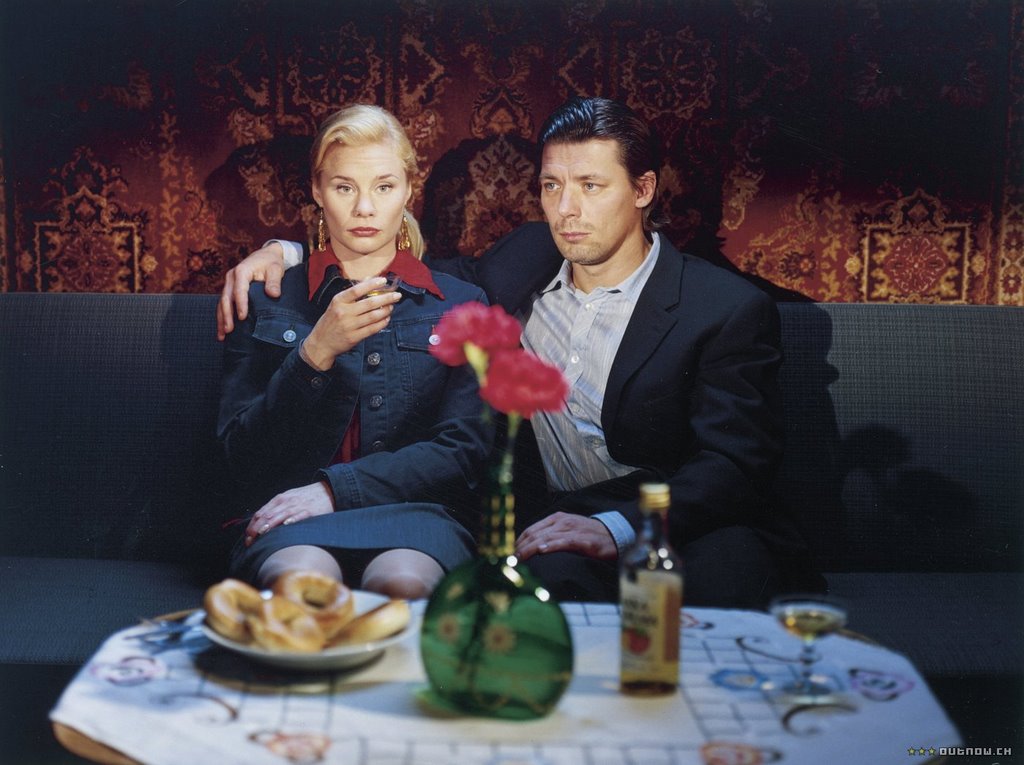
Koistinen is apparently subject to unexplained scorn from everyone he encounters, and as there seems to be no reason for the treatment he receives, we are both compelled to laugh and feel sympathy for him. For a while his luck appears to take a turn for the better when the seductive blonde, Mirja, takes an interest in him, but we soon realize that this too will prove to be a problem. His failure is both funny and moving, as even his attempts to reach out to a neglected dog, whom we sense somehow he identifies with, seem to go wrong.

At times I was reminded of Hal Hartley’s Henry Fool, as Koistinen, dressed in his security guard uniform, wanders from one caustic encounter to another. And as with Hartley’s work, while there is a sardonic demonstration of the cynical world surrounding his characters, there is at the heart of it an underlying lack of cynicism, a compassion for the outsider.

At the same time, I was strangely reminded of Ingmar Bergman, as the camera would suddenly focus on some scene in nature, a growth of wild flowers in the woods, for example. The cinematography, the European feel of Kaurismaki’s work, gives it a different feeling, a muted quality that seems to offset the irony, or absurdism, somewhat. But these elements in his film are somehow complimentary, rather than contradictory.

Lights in the Dusk is a poetic, ironic look at the hard edges of life, which Kaurismaki softens with his particular sensibilities and makes enjoyable to watch. The film is understated, and while perhaps at times slow, I found its blend of pathos and deadpan humor effective and entertaining. Kaurismaki juxtaposes the aspirations of his hero with the indifference, and even maliciousness, of a glib, calloused world in a way that is both touching and funny. I also felt that at the heart of it, along with its sense of beauty, was an underlying hopefulness, an affirmation that things can work out, even for the loneliest people.

These qualities, for me, made Lights in the Dusk a film worth watching. I recommend seeing it.