Monday, January 08, 2007

STREET FIGHT


Written by Fumo Verde

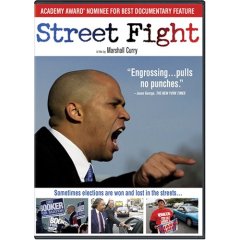
I have always considered American politics as a game of strong-arming and intimidation, and this film has sure cemented my belief in what we like to call "democracy." Politics in the city of Newark, NJ, is definitely a hardball, fast pitch game, but when an old incumbent feels threatened he can and will use whatever means necessary to keep power. This story focuses on Cory Booker, a 34-year-old Rhodes Scholar from Oxford with diplomas from Stanford and Yale Law School, and his battle against long-time incumbent and only the second African American elected as Mayor of Newark, Sharpe James.

In 2002, Marshall Curry set out to make a documentary about the campaign in Newark NJ, but instead stumbled into a fierce battle. Within Street Fight’s first five minutes, Booker is canvassing an apartment building in an effort to make himself known to its residents. He is a member of the Newark City Council and believes he can do better than incumbent James. As Booker talks to the constituents, the Chief of the Housing Authority appears, letting him know that not only is being asked to leave, but the police are waiting outside to escort him if he won't. "The police" is too generic a term because rather than the expected beat cops, Booker discovers the Assistant Chief and the top Sergeant of the Newark City Police. "This is one of the harshest districts in the city. Police rarely patrol here, but I show up and they roll out the big brass. What's the deal?" Booker wonders as he gets into his car.

Next, Curry gets permission to follow the James campaign, but once they find out that he is following Booker too, he is threatened and told that he is not allowed to film the Mayor. “Threatened?” you ask. Yeah, on camera. Curry is good like that; he knows his rights and isn't easily bullied. He's also smarter than the James’ people and gets a reporter to follow the Mayor. On Election Day the reporter is on a bus full of James supporters, heading out to put "boots on the ground." Funny thing about these supporters for the Mayor of Newark, New Jersey, is that they are all from Philadelphia, PA, the city of brotherly love. When these good Samaritans are asked what would bring people from a different state to do this, the number one answer was money. Half of them had no idea who Sharpe James was, and I bet the other half had no idea of where New Jersey was.

If you think that's a little messed up, how about this: both James and Booker are of African descent and registered Democrats. James proclaims at many a rally and in most Jersey newspapers that Booker was not black, wasn’t a registered Democrat, and received money from the KKK and other crackpot groups. Don't mind the issues; hammer your opponent with nonsense. When Booker holds a small town hall meeting, the people ask, "Do you really live in Newark?" "How much money did the KKK give you," and "Ain’t you a Republican?" As the camera fades to black, a little boy turns to Booker and says, "Are you White?"

Other examples of entrenched power are the abuse of city services. Those who openly support Booker are punished, such as three cops who are placed on foot patrol in some of the worst parts of town. The Newark Fire Authority gets into the act to by closing down three shops that show back Booker. Many other shopkeepers said they knew fines and closures would take place if their allegiance was known. The Federal government steps in to enforce the policy that city workers, such as the police and firemen, are not allowed to remove campaign signs until after the election. Yet the Newark Fire and Police are out removing Booker’s signs left and right, while amazingly James’ are untouched.

I believe that our political system is better than what most of the world has, but is it truly? I was totally enthralled by this film as it played out in the streets. Booker tries to get the people to listen to him by going door to door, as James intimidates and bullies. I also believe that when James first got to office he was full of ideas and hope, but once the taste of power and the thrill of using it became the norm, he, like others in that position, was willing to do anything to keep it.
Hands down, Street Fight shows you what we all hope doesn't happen in our cities. Unfortunately, this film sheds light on the dirty, underhanded dealings that a large percentage of our elected officials engage in to avoid the questions and the issues that honestly make differences in our everyday lives. If you want to learn about American politics, here's a crash course. Put on the pads because you will be bruised.

Filmmaker Marshall Curry is going to have a hard time topping this one with what he does next, and I can't wait to see whatever it maybe.

Sunday, January 07, 2007

THE PURSUIT OF HAPPYNESS


Written by Hombre Divertido

The Pursuit of Happyness is just that. You will have to ask yourself if that one hundred and sixteen minute pursuit is worth the happiness gleaned. Reluctantly, I say no.

This is an enthralling film with a fine performance by Will Smith as a man facing one roadblock after another while attempting to not only provide for his son, but also improve their lives.

Based on the true story of Chris Gardner broadcast three years earlier on 20/20, this film takes us through a seven month period in the life of Gardner and his son that includes his wife abandoning them, the loss of more than one domicile, and an attempt to complete a six month internship that comes without a salary.

Smith portrays Gardner with a stoic sense of resolve, and Jaden Smith (Will’s real life son) gives a well-coached performance as Gardner’s son Christopher. Together we watch them deal with situations that would push many beyond their capacity to cope, and can’t help but be drawn into this well paced and directed story.

So, why my reluctant negative to the question posed? Too much of a bad thing followed by not enough good. It’s not difficult to see our ending coming as Hollywood rarely tells us tales with unhappy conclusions, and without being specific; our ending is a happy one. The problem is simply that we as an audience invest so much into our relationship with the characters, that to have the happiness conveyed to us as nothing more than a few paragraphs displayed on the screen is extremely unsatisfying.

The show business creed of always leaving the audience wanting more is generally a good one, but in the case of The Pursuit of Happyness it is nothing but a source of frustration as we know there is no more of this story to come. A sequel would fail, and thus we are left to ponder how our hero copes with his newfound success.

Smith certainly deserves the accolades he is receiving for this performance, and the story garnered both tears and applause in the theater during my viewing, but this is an incomplete story. Perhaps it was the Hollywood unwritten policy of keeping films at two hours, or the failure of the writers to determine a vehicle in which they could properly convey a level of success bestowed upon our characters without instilling a fromage factor upon the endeavor. Either way; after investing the time and feeling the pain, we deserved more satisfaction.

Recommendation: Wait for the DVD, and watch it with Enemy of the State, so you get a chance to see what happens when Will Smith takes control of a situation.

Saturday, December 23, 2006

THE DEAD GIRL


Written by Jámon Y. Huevos

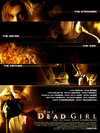
Karen Moncrieff (Blue Car – 2002) has given audiences her take on violence against women in her dark and compelling film The Dead Girl. Five women are deeply affected by the appearance of a young woman’s brutally beaten body in a lonely field. The story unfolds in a sequence of five complete stories revolving around the impact of the corpse on the stranger, the sister, the wife, the mother, and the dead girl.

Each of the five stories is persuasive. The ways in which the dead girl affects the women feels tragically natural. While each of the women acts in ways most of us would hope we could avoid, Moncrieff has written a script in which all the actions are believable; frightening, sure, but these women inhabit a world in which women are mutilated and dumped like so much trash. The Dead Girl does an admirable job of mixing that darkness with hope. All of the women, after all, work steadily toward finding a way to coexist in a violent world.

Movies that tell their stories in a series of what amount to independent short films need to resonate with each other if the audience is to feel connected with a single story arc. The arc in The Dead Girl is the emotional impact of a dead woman in the woods. That is a huge emotional weight, and the film does its best to keep that emotion streaming seamlessly from section to section. The problem is that when we meet new characters every twenty minutes, time is needed for the audience to connect with those people. You will find yourself longing for more in each section; more characterization, longer scenes, a bigger sense of history for each of the characters. There are certain moments and lines we might accept as not being over the top if they’d had two hours to earn them; however, ten minutes into a story arc, when a mother tells her daughter that God took the wrong child from her, it’s hard to stifle a groan.

The film is peppered with fabulous performances. Toni Collette and Giovanni Ribisi are especially compelling in their morbid, and strangely comic, roles in which they give a believable look at a burgeoning, but messed up, romance. Giovanni Ribisi has paid his dues, it is high time for audiences to see him for the stellar actor he is. Also, Brittany Murphy gives a surprisingly emotional performance that has depth and a manic charm. Murphy seems to be in every other film these days; this is the role where she deserves to be taken seriously.

The Dead Girl does need to be seen. For every moment it falls short, there is a moment made beautiful by the gorgeous cinematography, clean editing, and meticulous direction. Modern news has deflated the calamity of violence toward women into a sound bite surrounded by a rush for ratings. The Dead Girl has the necessary impact to break open this topic for serious discourse.

Friday, December 22, 2006

OCEAN ODYSSEY


Written by Fumo Verde

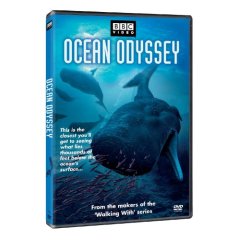
As a surfer and the son of a sailor, Mother Ocean has always called out to me, so when I got wind of this little video, I dove in headfirst. BBC Video has come up with a fantastic story about the life of a Sperm whale. Using live action footage, CGI technology, and the most recent scientific information, Ocean Odyssey takes us on adventure deep into the world of this planet’s largest living mammal, exploring the vast undersea landscape from which all life once came.

This is a great show for anyone interested in the science of the deep. The story starts with a Sperm whale that has beached himself on the shores of New Zealand. From here the narrator raises questions concerning the life of this massive creature of the abyss. We then flashback 80 years ago to 1926 where a ship is repairing telegraph lines that have been laid out across the Atlantic from Europe to America. Out in the mid-Atlantic near the Azores Island chain, a young male calf is preparing to make his first deep dive, something he will continuously to do for the rest of his life.

Whales are always on the search for food as they roam their kingdom. Along this journey our whale discovers his world through the sight of sonar. The clicking and snapping noises that whales make are not just for communication, but also act as radar giving the whale a 3-D map of the world under the water. In his travels, the whale battles Orcas, feasts on giant squid, dodges gas-filled rocks that shoot up from underwater volcanoes, and explores the ice-layered ocean of the Antarctic.

Not only do we learn about the Sperm whale, but we also encounter other strange lands and creatures. Heat vents are sediment deposits that plume like smoke stacks rising off the ocean floor. At seven-stories high, they let out the heat and pressure from deep inside the mantle of the earth; they are also breeding grounds for tiny organisms, which are the building blocks of the greater food chain.

The underwater plains and valleys that our whale roams come alive through computer generated imagery, or CGI. Lighting up the ocean where even the sun cannot penetrate is a sight to see in itself. Using satellite charting of the ocean floor, the filmmakers have blended together a grand picture of what the land looks like under all that water. They show us the tallest mountain on our planet, Mt. Kilauea, which when measured from its base on the ocean floor is one thousand meters taller than Mt. Everest. We also get a CGI look at a curtain of fire, a split in the ocean's Pacific floor. Here the planet is renewing itself as earthquakes and volcanoes force the mantle plates apart and form a new ocean floor. These are some of the aspects of the film that make it stand out among other documentaries. We even have a climax when our whale goes to chow down on the second biggest creature in the sea, the colossal squid.

I was enthralled from the opening of the movie to the very end. This is a single DVD with two episodes, each running 60 minutes. Bernard Hill is the narrator and he does a superb job. The only thing I didn't like, and it’s because I'm a lazy American and I like it that way, is that every thing was in the Metric system. I'm used to feet, miles, and tons rather than meters and kilos (at least not these kilos). Hearing Bernard say that an adult male has to eat up to one thousand kilos of food per day to stay alive made me have to think about how much a kilo is. I found myself backtracking on the disk because I missed something during my thoughts about weight. That's just me; most of you probably won't have that problem.

A great tool for learning and an amazing adventure to embark on, BBC Video makes a big splash with this whale tale. For the young budding oceanographer or anybody who loves the world around them, this movie is great and should be watched by the whole family. This one goes on Fumo's "Very Highly Recommended" list.

Wednesday, December 20, 2006

The Best of The Electric Company, Vol.2.


Written by Fumo Verde

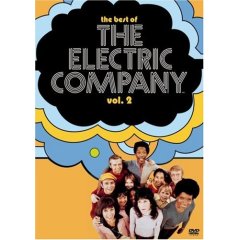
Hey you, guuuuuuuuys!!! The second volume of The Electric Company has made it to DVD. For those of us born between the years of 1967 and 1972, this collection is a throwback to the days when all we had to worry about were the monsters under our beds. At that time, Children’s Television Workshop, creators of Sesame Street, were focused on making learning fun and accessible. Yet The Electric Company wasn't just for kids because the producers, cast, and crew made sure that the parents who watched were entertained as well.

It all came back as soon as the music started, and each episode I watched I remembered vividly. There were two streaks that ran through these shows; one was an emphasis on learning, the other on fun. Some of the best minds in the Education Department of America were brought in to set the curriculum and to make sure that the show stuck to it. Each actor knew what had to be taught. They understood the rules and knew where the boundaries were. They were still given the freedom to adlib, and being actors, they took advantage of this opportunity as much as they could. This is what made The Electric Company entertaining.

All the members of this all-star cast are present among the twenty episodes, which are spread over four DVDs. Morgan Freeman as Easy Reader, Bill Cosby parading around like a Musketeer, and of course, Rita Moreno yelling her trademark, “Hey You Guuuuuuyyyys!!!” The show also boasted appearances by Mel Brooks, Wilt Chamberlain, Victor Borge, Gary Owens, Carroll O'Connor, Jean Stapleton and even Spider-Man. Satirist Tom Leher wrote several songs for the show, such as “Silent E.” It was a community effort to teach the children. The early years of The Electric Company gave the cast and crew little sleep and even less money, but they loved doing it.

The producer/actors Jim Boyd, Skip Hinnant, and Judy Graubart created the show with old vaudeville routines in mind. Rather than having one storyline to follow, each episode contained a multiple sketches, both live and animated, that ran about three to five minutes. Some of the lessons were repeated throughout. This was a smart way to run things due to the fact that most kids have short attention spans. The little vignettes taught them something, made them laugh, and then moved on before the child knew it. It was a winning formula and would probably work today with all these ADD and ADHD kids.

My favorite on these discs aren't the shows, but the extras. There is a remembering of The Electric Company by Skip, Jim, Judy, and Hattie Winston. These four were the roots of the show and they were there from beginning to end, explaining how they did it and the joy they feel even today by being a part of this show. There is a short documentary made in 1975 about the show on disc two, and best of all, an interview with Bill Cosby on The Dick Cavett Show that was broadcast in 1971.

The Shout Factory has given us another great gift with The Best of The Electric Company, Vol.2. Whether you want to get back to the kid deep inside of yourself or you want to turn your kids on to what you were watching back in the day, these four DVDs are a treasure to have. This show was and is a true classic. It taught us how to read and write with smiles on our faces as well as theirs.

Sunday, December 17, 2006

Tony Lucca: Canyon Songs


Written by Fumo Verde

All right, katz and kittenz, it's Fumo here with a smile on his face. After having to force myself to listen to Drake Bell’s It’s Only Time, Tony Lucca’s Canyon Songs has saved the day. Lucca, who is another graduate of the star-spewing Disney Studios, but unlike any of his fellow alumni, actually has true talent. He wrote all the songs and music and proves on this CD that not only is he a finely tuned musician with a soft and powerful voice, but a genuine artist who can paint vivid pictures with his words of love, pain, sorrow, and happiness.

The title itself, Canyon Songs, brings up images of old cowboys in beat-up pick-up trucks traveling alone on long dusty roads that stretch endlessly into the setting sun. With the first track, "Death Of Me," Lucca captures the spirit of Western Blues. He plucks and strums his acoustic guitar with the occasional slide, giving the tune a Willie Nelson-twang to it and weaves a tale that most can relate to when someone you love doesn't seem to love you. "You told me you would always be there, I guess I heard you wrong./ If I held my breath, you'll be the death of me."

Yet Lucca isn't just a country blues singer; he considers himself the love child of Sade and James Taylor. His other influences, from Steve Wonder to Bruce Springsteen, can be felt throughout the album. "Darling I" has a definite Springsteen root in the beat and rhythm of the drums and guitar. The song is about an old relationship that's being held onto by someone who doesn't want it to end. "Got no story that ain't been told, just tired excuses,/ Girl, they're getting old..." Weathered words sung by a man who is writing what he feels and how it affects him. This is what the radio needs right now. "The Hustler, The Widow, and The Boy from Detroit" is another Springsteenesque song with its haunting harmonica calling out from beyond. It is a sad tale of death and loss with the chorus letting you know that "bad things happen to good people all the time."

Lucca has put his heart into this CD and it shows. He is a talented wordsmith reflecting the images his life has seen and the pains that he has experienced, making this a great album. He takes control and leads the listener down open roads, reminding them that even as the sun sets, it rises again. The best illustration of this is "Songbird," which definitely brings to mind James Taylor.

As for my favorite song, it has to be "Sara Jane" (No, it's not about the weed.). It is a song for Lucca's sister who is the only one who can cheer him up when he's down and make everything all right. Its upbeat rhythm and fun lyrics remind some of us how lucky we are to have a cool sister like that.

I have to thank Tony Lucca for all what he has done. He has brought spirit and soul back to the world of singer/songwriters and for this Canyon Songs unquestionably needs to be added to the music library. He has lived life outside of the walls of the Disney Channel and has put his blood, sweat, and tears into this disc. One only has to listen to understand and catch what Lucca is all about. He sums it up by saying, "I think that when what you aspire to do is of a timeless, classic nature, it will inevitably outlast the trends and the uncertainty of whatever business you're in." Brother, you sure did that here. And all without getting into a car wreck and having his jaw wired shut.

Monday, December 11, 2006

HAPPY FEET


Written by Jámon Y. Huevos

Since audiences flipped over the documentary March of the Penguins (2005), there have been more penguins in the media than you can shake a seal club at. Because of this penguin mania, it was inevitable we would get a fully animated production in the form of Happy Feet.

Penguins have a heart song. This is their personal ad that helps them find a mate, keep warm in the scary winter, and express their individuality. Sadly, Mumble (Elijah Wood – and you will be amazed by how much that fuzzy penguin really looks and acts like Elijah Wood), is born devoid of a heart song. The kid can dance, though. Too bad dancing is completely frowned upon. Mumble journeys away from the flock and runs into a group of wild and crazy penguins who know how to have a wild and crazy time. This is exactly when the film turns dark, dark, dark.

This darkness occurs in all exceptional animated features (have we forgotten the gunshots and their targets in 1942’s Bambi?). “Happy Feet” is absolutely about finding your so-called heart song, but it is also about environmental disaster, human encroachment, border issues, homosexuality (discussed as arguments about the immorality of being different), and fighting the power. All these issues are deftly handled with humor and (usually) even-handedness. It isn’t hard, though, to see which side of the political fence the filmmakers lean on. If your six-year-old notices the political innuendoes, then, dang it, pat her on the noggin’ and be proud of your genius offspring.

What makes the movie a great work are the direction and animation. The chase scenes are so well imagined that young children are going to be scared. Those scenes are as close to being on a roller coaster as one can get. The incredible animation is revealed slowly but surely, building and building as the scenes unfold. Because of this, the initial reaction is that the animation is okay, but two-thirds of the way through the movie you will be asking yourself if the humans are animated or filmed (filmed). Finding the live-action segments to be this confusing is an amazing feeling. How do you get cartoon penguins (and I mean these are obviously cartoon penguins) seem so alive next to real humans? Answer: ridiculously well crafted animation. You may, however, tire of the if-a-blue-penguin-eye-fills-the-screen-you-should-feel-melancholy shot.

There are tons of popular songs in the movie (sitting through the music credits takes as long as sitting through Woodstock). Unfortunately, those songs are jim-jammed into any available moment without a whole lot of attention to efficacy or theme. I always prefer hearing original songs, and can only think of two examples of movies that used popular music to intelligent effect: Moulin Rouge (2001) and (yep, no joke) Muppets in Space (1999 - check it out if this bothers you).

The voice acting is mostly great. Robin Williams is excellent as two very different penguins. Hugh Jackman, on the other hand, gives the worst Elvis impersonation since my uncle’s parole hearing. The film is about penguins; penguins that sing and dance; penguins that sing and dance and are really fuzzy and adorable. It’s a no-brainer; get your children to Happy Feet.

Saturday, December 09, 2006

Robert Plant - Nine Lives (Sampler)


Written by Fumo Verde

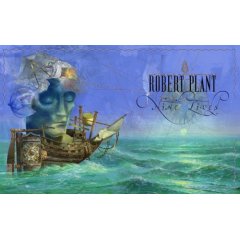
Are you ready for this? Nine Lives is a ten-disc box set that includes all nine of his solo albums, remastered and expanded with some "extras," if you know what I mean. It also includes a sixty-minute film on DVD that takes you on a tour of Robert's solo career, which began after Led Zeppelin disbanded in 1980. But that's not all on the DVD. There are interviews with Plant about each of the albums and with other musicians who know him and are still to this day inspired by his artistry, such as Roger Daltrey, Tori Amos, and Lenny Kravitz.

This would have been an awesome set to get to review, but unfortunately I could only get a sampler CD. This disc pulled together fourteen songs, including radio hits "29 Palms," of which I can never get enough, and "Ship Of Fools," which is one of the soundtracks to my life. It also has B-sides, "Far Post" and "Oompa (Watery Bint)," and previously unreleased songs. "Turnaround" is classic Plant with a rocking blues beat and his cool melodic vocals. I swear that this man sounds just as good in 2006 as he did back when Jimmy and John heard him wailing the blues in 1968. Another unreleased demo is a sweet tune called "Rollercoaster". A jazzy, retro keyboard sound provides the backdrop as Plant causally recants a tale of love in almost a whisper.

Hey, babies, if the sampler CD is this good, I can only imagine what this ten-disc pack is going to be like. The collection includes 1982’s Pictures at Eleven, 1983’s The Principle of Moments, 1985’s Shaken ‘n’ Stirred, 1988’s Now and Zen, 1990’s Manic Nirvana, 1993’s Fate of Nations, 2002’s Dreamland, 2005’s Mighty Rearranger, and even The Honeydrippers EP. Plant has had a long and incredible career spanning over thirty years, and yes, that's including the Zeppelin years. Say what you like, but he is a world-class music icon. After such a powerful rock band breaks up, the brightly lit stars usually burn out, but not Plant. His ideas and insights keep getting stronger with every new song he puts out.

The sampler's liner notes also tell me that not only do you get the DVD and nine CDs but also a sixty-page book with rare pictures and artwork are also included in this box set. As soon as this hits the stores, I am going to get myself a Christmas present. Just reading the liner notes on this sample sleeve made my mouth water. For those who are fans of Robert Plant, this is a must-have. Expanded CDs, a bonus-packed DVD and a sixty-page photo book makes Nine Lives my pick of the year for box sets.

Friday, December 08, 2006

Drake Bell: It's Only Time


Written by Fumo Verde

Yes, it was only time until Drake Bell made the jump from The Amanda Show on Nickelodeon to making music, or at least trying to. Bell, who had started his acting career at the age of five, began playing the guitar at age thirteen, and now at the ripe old age of twenty has come out with his second CD, It's Only Time. Bell has a great-looking resume that includes some made-for-TV movies and shows on Nickelodeon, but that's where he should have either stopped or got off the bus. There's no other way to put this: this album sucks. I don't know what his first one sounded like, but some record executive should have probably listened to it, so I wouldn't have had to suffer through this one.

We start out hearing sounds from the bridge of a submarine. Admiral C.J. Abraham greets our ears with his faceless voice. Abraham co-wrote all these little ditties along with Bell and Michael Cocoran. You would think that with three of them working on songwriting one would have had something to say. "Up Periscope" is the first track, and when the music started, I thought I had popped in one of my eight-year-old nephew's CDs. Not only does Bell come to us from Nickelodeon, so does his music. "Up Periscope," like all the songs, is super upbeat and "happy-happy." It's the type of music that makes me angry. Angry that anyone would spend money on making bad music like this when there are kids starving on the streets of America as we speak.

This whole CD sounds like it was made for a pre-teen, after-church TV special. "The entire world is beautiful and I love you" is the theme on It's Only Time and that course is never strayed from. If Bell is trying to break from his youthful ties, he best get off the set of Nickelodeon and go into the word on his own. The songs are contrived and the melodies bounce around like odd jams by The Beatles on bad acid. Like all sugarcoated pop artists, Bell has the illusion of being brokenhearted and blue, but there's no feeling to it. No soul or spirit and nothing that catches the listener’s attention.

Even when I read the liner notes and the song lyrics, there wasn't anything I could relate to. Some of his words were so out of whack, I had to refer to my buddy Ferg to see if he could make heads or tales of what Bell was saying. For example, in track number eight, "Fallen For You," the song opens with "The first time I saw you, I thought you were barefoot. Your hair pulled back, your jelly shoes. Should I lie about my age? Your Buddy Holly glasses on a Betty Davis negative." As these lifeless words are being spewed out, the music is moving at a Sesame Street-pace. Words like that with children’s music backing it up make my brain feel like it's going to have an aneurysm. The fourth line in the title track states "I'm more refined in my recent years." Yeah, that's a big jump from eighteen to twenty, a coming of age so to say.

The worst thing to say about this CD is that it probably won't be Bell's last. But if he does come out with another one, I hope he lives more of life than what lays within the studio compound of Nickelodeon and The Amanda Show.

Thursday, December 07, 2006

TENACIOUS D IN THE PICK OF DESTINY


Written by Jámon Y. Huevos

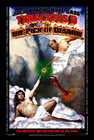
Jack Black and Kyle Gass have had a career as the world’s most awesome rock band, Tenacious D, since their pretty damn funny but short-lived series on HBO. That series, and a 2001 album, have garnered them a loyal following of fanboys and fangirls who like their twisted, sexually explicit, and wonderfully disgusting humor. Their movie, Tenacious D in The Pick of Destiny, attempts to introduce their comedic, but actually solid, musical talents to a broader audience.

The film is split in two halves. The first half chronicles the meeting of JB (Jack Black) and KG (Kyle Gass) and the formation of Tenacious D. Once the band is assembled and ready to rock our socks off, the second half of the movie has the pair traveling Abbott and Costello style to the Rock and Roll Museum (that’s right, Museum) in search of the single guitar pick that all the greatest rockers (Dude! Eddie Van Halen!) have used to get their careers headed directly into the pants of hot babes. The fact the pick was forged from one of Satan’s own front teeth can only lead to mayhem and hijinx.

The Pick of Destiny tries to recreate the best bits from the HBO series. Fans will be left scratching their heads wondering why a comedy team would steal from themselves. Their biggest fan ever, Lee, flits in and out of the movie with as much a sense of necessity as a pickle spear leaning against a Chevy. A song from Tenacious D’s first album, “Kyle Quit the Band,” is re-crafted and made less funny and less comically poignant in the movie as a song titled “Dude (I Totally Miss You)”. None of their old material was made better by a bigger budget or more time to flesh out their ideas. This is doubly unfortunate since the new material gets less play because the old material is taking up much needed space.

The movie does have its moments, and there are enough solid one-liners to keep you smiling from scene to scene. Pick of Destiny works best when it is a rock opera, and is punctuated by fantastic, belted out cameos by Meatloaf and Ronnie James Dio. Sadly, it is not a rock opera often enough. It is also a mystery as to why Tenacious D pulls so many punches. Instead of the outrageous ten-minute skits from the HBO series, we are left with a string of sketches that don’t add up to much, mostly because Black and Gass appear frightened to push the boundaries of their R rating. In theatres where JB and KG are fighting for screen time with the likes of Borat, you’ll be left asking for a bit more social commentary than farting and pot smoking.

There is a scene tacked on to the end of the credits (much like this sentence dangles from this review) that is an absolute must-see if you are twelve years old and mildly retarded.