Sunday, September 17, 2006

Canned Heat: Live At Montreux 1973


Written by Fantasma el Rey

This DVD presents hard-hitting blues band Canned Heat in a rare live performance from the renowned Montreux Jazz Festival in 1973. Out of the dozens of white blues rockers to emerge from the 1960s, Canned Heat was by far the best in the fact that they never strayed too far from their roots or the intention of the band, where others ventured into the heavier sounds of 1960s rock ‘n’ roll.

Led by front man and co-founder Bob “The Bear” Hite, the band rolls and stomps though ten cuts, dripping with funk and their core boogie. By this time in their career they had already lost Alan “Blind Owl” Wilson, who died at twenty-seven, just before the band’s third European tour. The Blind Owl’s high-pitched vocals were the perfect contrast to the Bear’s heavy vocal growl. Also missing from the original line-up is Larry Taylor on bass; he would eventually rejoin the band years later. The Bear’s little brother Richard Hite, who does a fine job, as we shall hear about later, picks up bass duty.

Kicking things off with their huge hit “On The Road Again”, the Heat set the pace for the show. Solid drumming by the Mexican-born Fito De La Parra and stellar guitar playing by Henry “The Sunflower” Vestine are what keep this tune as jumping as ever. The Bear’s harmonica playing and vocals drive this thing over the top. The original version had Blind Owl on vocals but the Bear does a fine job and makes it more of a solid blues tune.

The next four tracks feature Texas blues legend Clarence “Gatemouth” Brown, who leads the band well and with somewhat of an iron fist for their first time playing together. On “Please Mr. Nixon”, “About My Oo Poo Pa Doo”, and the generically title “Funk” he waves the band to a complete stop so he can take center stage and perform his solos. On “Nixon” he digs into his bag of tricks to fetch out an electric violin. While on “Funk”, which is a traditional blues that has lost its true title, “Gatemouth” makes his guitar “talk” by holding the strings down and doing some various scratching techniques, which make a sound very much like that of the adults in the “Charlie Brown” cartoons. The revival “hymn” as “Gatemouth” calls it, “Oo Poo Pa Doo” is the classic New Orleans-styled call-and-response song done with flair and gets the crowd going.

With “Night Time Is The Right Time” we get to hear second guitarist James Shane do one of his two vocals. The song is perfect for his voice because he sounds like Ray Charles. On his second song “Looking For My Rainbow” he plays slide guitar on his “shiny dobro get fiddle” and shows his importance to the band, by being able to perform in this classic blues style. For this track the band sits back a little and lets Shane lead, coming in halfway through the song to pick it back up. Fito’s drumming is perfect, a subdued yet solid jazzy tap, which along with Hite’s steady bass makes this seldom heard track a real bonus.

The Heat’s version of the Wilbert Harrison-penned “Let’s Work Together” is awesome and has the band back stomping and getting “Snorty” according to the Bear. “Rock And Roll Music” is the band’s tribute to the Rock ‘n’ Roll of the 1950s that they grew up with. Here I should note that what brought this band of blues brothers together was their love and passion for record collecting, especially blues and R&B from the ‘50s. The Bear, the Blind Owl and Vestine were reported to have had extensive collections.

To close the show the Heat go into one of their well known, ten-minute-plus jams, calling this one “Shake ‘N’ Boogie”. The Bear himself even picks up a guitar for this one. The band jumps on this tune from start to finish with each key member getting a chance to shine in a solo. Bass man Hite thumps his way along with some classic, no-frills, funky work. Vestine goes into some heavy shredding and shows that he can throw down a solid rock sound with the best of ‘em; this brother is a bad ass. Next up and finishing out the solo runs is Fito who’s simply drumming mad, from jazzy cymbal taps to heavy march rolls to all-out insanity. He’s all over the place with his drumsticks of fury. I have to stop typing just to stomp along with him. Halfway through you expect Fito to start tearing up his kit and jump into the crowd chasing women ala Animal from “The Muppets”, especially with his woolly beard. The band picks back up, winding themselves into frenzy. Right before they blow their top, they end the show, simply walking off the stage.

This DVD performance is a must for fans of Canned Heat; it’s a chance to see this straightforward, blues boogie band at their hard driving best. You can easily see why legends like Clarence “Gatemouth” Brown and John Lee Hooker enjoyed working with them so much. “Gatemouth” and the boys supposedly had a studio collaboration started, but all that came to an end when Brown and Vestine decided to settle a dispute with their fists. Canned Heat still plays gigs today with Fito at the helm as “survivor in charge”, seeing as the world lost the Bear in 1981 just before a gig in Hollywood. So there you have it, hard-hitting blues from a hard-hitting, hard-living band.

Check it out and…Don’t forget to boogie.

Saturday, September 16, 2006

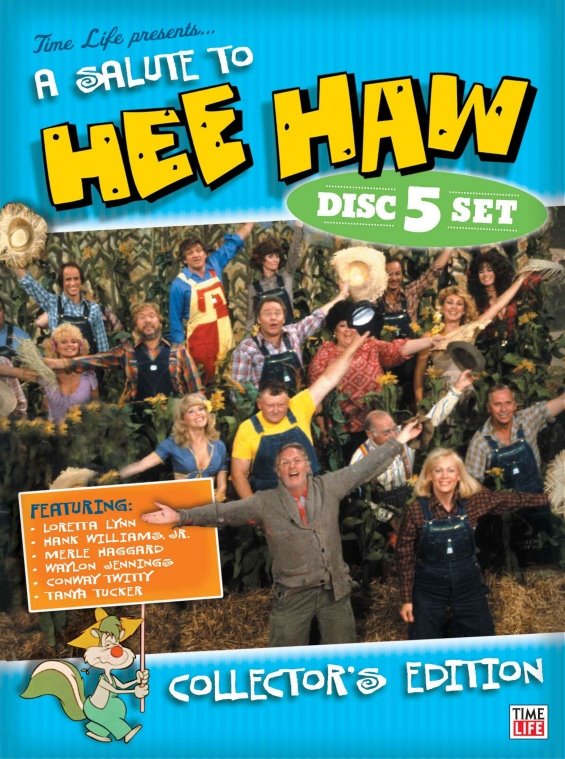
A Salute To Hee Haw - The Collector’s Edition


Written by Fantasma el Rey

Can I get a ‘yee haw’ for Hee Haw, y’all!

In a five-DVD boxed set, Time Life presents a television institution, the classic country and western variety show, which first hit the airwaves in 1969 on CBS. It contains eight episodes from the show’s early years: two from ’69, four episodes from ‘70, and one apiece from ‘73 and ’74, both after the show had moved to syndication. Packed with more corny jokes than you can shake a stick at and anchored by good performances by top country artists of the day, this set is a true treat.

The settings for the Hee Haw skits include a barbershop, a hayloft, front porches, basically anywhere that country humor can be found. Some jokes are told in story form and take a little longer in the telling while others are simple, quick hit jokes, seemingly influenced by “Laugh-In, which premiered a year earlier. There are also prerecorded scenes of country folks running around chasing each other or the very pretty females in the cast; I guess it was their attempt at being Benny Hill-Billy.

Led by co-hosts Buck Owens and Roy Clark, the cast is what holds it all together and makes the cornball jokes and gags come off so well. Junior Samples is the best example of this. With no professional stage training, he is outstanding; his simple, thick country delivery and lack of fancy “citified” ways makes him believable and lovable. It’s awesome to see Junior goof on the “big” words whose meaning he admittedly doesn’t know. Watching him during the cornfield jokes is just hilarious; the poor man tries his best at words like “geometry” and other polysyllables and simply sits back down after his fumbled attempts. These bloopers are left in the show and make it that much more fun to watch. After a season or two he even got his own segment, “Samples Sales,” as a used car salesman looking to make you a deal, even if it meant dressing up like a clown. All you had to do was call “BR-549.” For those of you familiar with the band of the same name, Junior’s number is precisely where they got it from.

The rest of the cast does a fine job as well. Two standouts were Canadian actors. Don Harron delivers news segments as Charlie Farquharson and Gordie Tapp as a Southern gentleman, who always has odd advice on life and is constantly getting blown up or whacked by a rubber chicken. “Pickin’ and Grinnin’” is probably the most fun to watch because it’s cool to see Buck and Roy play together and ad-lib some of their jokes, seeing them truly having fun is entertainment all its own.

The writing staff has to be given credit for being able to come up with material for so long, seeing as how the show ran for over twenty years. From show to show, the writers in these years varied slightly including performers Archie Campbell and Tapp. On the early shows legendary, cowboy sidekick Pat Buttrum gets some credit as well.

The musical performances stand above everything else. In every show, Buck and Roy do a couple of tunes. Roy has some fine numbers such as “Yesterday When I Was Young” and “Do You Believe This Town”, the latter looking at the hypocrisy of small-town life, which is very interesting and perhaps at odds with the show’s target audience. The Hager Twins did fine covers of solid country hits including Dave Dudley’s “Six Days On The Road”. Grandpa Jones shows how hard he can rock with some of his numbers, done with such speed and enthusiasm that you would think he was a rock ‘n’ roll star, not to mention his dancing and playing of the cowbells.

Some country legends show up to make appearances early in their careers, such as Hank Williams, Jr. and Tanya Tucker. Even future outlaws Merle Haggard and Waylon Jennings turn up to say hey and contribute very solid tunes; although Merle and Hank do look a might uncomfortable during their second songs. Yet with acts like these and surprises like Ray Charles, who apparently insisted on getting in on the comedy routines, it’s no wonder that week after week folks would tune in to see who would turn up.

Disk five is a very interesting and entertaining, providing an hour and twenty minutes worth of interviews with surviving cast members. Roy Clark, George Yanok, Lulu Roman, George “Goober” Lindsey, and The Hager Twins are the most insightful as to the shows beginnings and the good times had on set.

A Salute to Hee Haw is a fine set for any one with a major interest in the show and is a great look at what was probably the last of the true “family variety shows”, where everyone would gather around to see who would appear that week and laugh the week’s worries away. I myself can remember sitting around during my youth with my folks on a Saturday catching Hee Haw while we’d have a light dinner and a corny, hillbilly-inspired laugh.

Tuesday, September 12, 2006

Reel Big Fish: Our Live Album Is Better Than Your Live Album


Written by Fumo Verde

Anyone ready to ska out with Reel Big Fish?

Get ready katz and kittenz, cause RBF comes out strong with Our Live Album is Better Than Your Live Album and shows us why they rock so hard. After dropping Jive Records, RBF is on its own and doing what it likes, such as this triple-disc release of two CDs and one DVD recorded live during a seven-show tour. If you think that these guys were just a one-hit wonder, guess again.

Sure you won't hear them on the FM dial, maybe "Sell Out" if that, but then again what FM station would play "Turn the Radio Off". There isn't a non-public station on the dial that has the balls to play any of these songs. Some say their lyrics are more comedic than touching, well fuck them. RBF plays to the thoughts and ideas of their fans and this set gives it back to those who have followed them from the beginning. The CDs were recorded over a seven-show stretch and then edited, giving the tracks a better flow; the DVD was recorded live at the Alley in Fullerton, CA.

Disc One has 17 tracks that include "Trendy", "Everything Sucks", "Beer" and the Ah-Ha song "Take on Me". Songs such as "Ban the Tube Top" and "She's Famous Now" rock hard and have classic lyrics, classic in the sense that not only do you sing along but your laughing at the same time because of what's being said. That's what Reel Big Fish is about, good music and having a good time. They also cover The Cure's "Boys Don't Cry", and create a ska-punk version of a depressing song, lifting it up and making it fun.

The second CD has 18 tracks that include "Kiss Me Deadly", "Your Guts (I Hate'em)" and my all-time favorite "She has a Girlfriend Now". It ends with the band’s only radio hit "Sell Out", which propelled them into the spotlight back in the early ‘90s. (That's was when Matt Wong, the bassist, was trying to date my cousin Lil', but that’s a story for another time.) All the tracks on both of the CDs are full of energy coming from both the band and the audience.

The DVD is awesome and it starts out with the high dose of power. Starting off by ripping into "Trendy", the band jams on "Everything Sucks", before moving onto "Turn the Radio Off". RBF takes all three and stretches them out into what seems to be one continuous lyrical jam. The strength of the band shows clearly here as they warm their audience up, preparing them for one hell of a rockin' show. All of the songs on the DVD can be found on the CDs, but they are arranged differently, which makes the DVD seem like a whole other show.

The DVD also has a special guest. Rachel Minton from Zolof the Rock and Roll Destroyer drops by to lend vocals on "She Has a Girlfriend Now", which was originally recorded with Gwen Stefani. Not only does she have a beautiful voice, but she is smoking hot too. "Unity", which is a song done by Operation Ivy is also covered. Ali Tabatabaee from Zebrahead lends his hot rapping vocals to this track and shows why he has an awesome flow. The extras on the DVD include a band rehearsal, what happens in the editing room, and special day with Aaron and Scott "Aaron and Scott Unplugged" which is fucking hilarious.

Reel Big Fish is totally underrated and doesn't get the respect from the music industry or the radio networks. That's fine, because RBF, now own a label, and don't need the hype that the industry shits out. They have their fans, and what loyal fans we are. RBF is to ska what the Grateful Dead were for up-and-coming jam bands. They follow their own path and make music the way they want without having to sellout.

If you want to know why these guys rock so hard, all the evidence is here. As for me, I can't wait till they come back around on tour again, 'cause babies, I'll be there in the pit, sweating like a pig going crazy with Reel Big Fish. Thanks again, boys, for over a decades worth of great music and a shit load of fun.

This is Fumo telling you that yes, their Live Album IS Better Than Your Live Album, and you can bet your ass on it.

Monday, September 11, 2006

Los Lobos: The Town and The City


Written by Fantasma el Rey

Los Lobos still are as good as ever. Hitting us with 13 tracks on their killer, thirteenth full-length album, The Town And The City. The band expands their roots-rock sound by adding darker tones and themes. Where Kiko has a psychedelic dream vibe to it, The Town And The City has more of an experimental blues feel, which allows them to still hit hard and rock as they have done in the past.

The Town And The City opens with the dark, mellow blues of “The Valley” and “Hold On”. Both have solid drums, percussion and are filled with light guitar picking (both acoustic and electric) and background sounds that help to set the mood. The lyrics here are also linked in their solemn tone and by David Hidalgo’s easy going and here mournful yet passionate vocals. “Hold On” describes how in a sunrise things can change and how easy it can be to slip into a world of abuse, be it self or substance. I dig this moody number with its tribal drums and chorus of “killing myself to survive”. It hits the working man hard, making you reflect on why and how you can get up every morning to continue doing what you think is right.

With the third track “The Road to Gila Bend” things start to jump and the band kicks into the house rockers that they are; the drums thump, the bass is solid and the guitar soars. Hidalgo’s vocal pick up as bit as well as they always do on such songs. The lyrics are about the twist and turns on life’s road: how it seems there is no end and no place to lay one’s head.

“Chuco’s Cumbia” is the first of three songs in Spanish, each with a different feel and vibe. Cesar Rosas delivers it with authenticity in Pachuco Calo, a Spanish-English slang developed by zoot-suited Mexican-American hepsters in the 1930s and ‘40s. The song reflects the title, a danceable cumbia beat filled with swinging horns and Rosas’ vocal pep. “Luna” is the band’s take on the traditional sounds of Mexico, pushing it into something all their own. Twisting the acoustic guitar and bass just far enough to keep a psychedelic feel to the song. “No Puedo Mas” is a song where you can hear some of Los Lobos’ “Eastside sound” influences, from such local bands as Malo and El Chicano. Heavy organ, hard-edged electric guitars, funky bass lines and Rosas’ Chicano soul vocals fuel the track.

Two standout tracks are “If You Were Only Here Tonight” and “Two Dogs And One Bone”. “If You Were Only Here” is a slow blues driven by Hidalgo’s sorrowful vocals about the absence of someone special’s presence, even just the sound of their voice, and how that could keep you from doing something that you might regret. The powerful lyrics of the night slowly becoming another day have this one hitting home for me: “what am I to do/ when the clock says half past two/ do I stare out in the dark/ or try to look for you” and “wouldn’t have did what I have done/ if you were only here tonight”. On the opposite end of the ladder is “Two Dogs”, a jump tune that’s power comes through its music rather than its words, reeling and rocking the blues away.

“The City” and “The Town” the dual title tracks are excellent numbers that explore the themes, feel and difference of those locales. “The City” is a study of the calling of the neon nightlife and the vices it offers. A very lively yet dark tune, propelled forward and downward by heavy organ and plunking piano, in the middle of the track there is an odd sound as if a dogs barking. It captures the scene of a late night out perfectly, how it can spiral out of control into the break of day. “The Town” is a reminiscence of the place of one’s youth and how that place in time can seem more innocent and somewhere that your heart truly resides, a place where all your friends and family are together, at least in dreams.

The rest of the album rounds out with three very 1960s soul inspired tunes, “Little Things”, “Don’t Ask Why” and “Free Up”; these songs are very much in the vain of soul legends Solomon Burke and Otis Reading as well as local Chicano hero’s Thee Midniters and Little Ray. Los Lobos’ soulful influences shine on this CD and they twist it just far enough to make it all their own as they have done with everything else they’ve done in the past.

So what does the new Los Lobos CD say to me? It screams that after all these years David Hidalgo, Cesar Rosas, Conrad Lozano, Louie Perez and Steve Berlin have stuck together to create the music that they want and love. They have formed a brotherhood and are strong enough and talented enough to keep turning out solid, thought-provoking albums that can reflect the world around you as well as the one inside you. That this band can go through these ups and downs and still lean on each other as friends as well as a musical unit is something that we can all learn from. Friends, like true talent and really good albums, are hard to come by, so appreciate what you have. As for Los Lobos, here’s to lucky number 13 and may you provide us with many more as the years roll on!

So yeah, run out and grab this one. Go now! Come prepared, bring something with you and take something as you go. I’m sure the band wouldn’t have it any other way.

Sunday, September 10, 2006

The Monkees & More of the Monkees


Written by Hombre Divertido

In 1966, the legendary Don Kirshner, who was the Head of Music for Columbia Pictures’ Screen Gems, which produced television shows such as Gidget, I Dream of Jeannie, and Bewitched, was called upon to craft a soundtrack for a show about an out-of-work rock band and their madcap adventures. Kirshner said that he would outsell The Beatles, and people laughed. They laughed until The Monkees sold four million copies.


Rhino has re-released The Monkees on CD, as well as the follow-up album More of the Monkees. These CDs along with the insert booklet penned by Andrew Sandoval who authored The Monkees: The Day-by-Day Story Of The 60’s TV Pop Sensation, tell an extremely interesting story, and offer insight into not only the creation of each song, but the selection process for each album.

Whether your opinion of The Monkees is “Who?”, “Stupid television show”, “Milli Vanilli of the Sixties”, “Some guys with a television show who made good music”, or something in between, you can’t help but be intrigued by this piece of both music and television history.

The numerous hands in this cookie jar, or monkee cage if you will, are evident in these two albums as the style of music ranges from bubble gum pop to country, and from rock to pure novelty. Even the style differences of The Monkees themselves were extreme, and though it would appear that their input was minimal when this adventure began, you still get insight into them as individual artists.

With the first album containing “(Theme from) The Monkees”, “Take a Giant Step”, and “Last Train to Clarksville”, and the second outing holding “Mary, Mary”, “(I’m Not Your) Steppin’ Stone”, and “I’m a Believer”, you can see not only that both contain what would be called Monkees classics, but you can also see the evolution of the music.

By releasing the two albums separately, Rhino stays true to the original vision, and the inclusion of some of the cuts that did not make the cut, as well as different versions of songs, really paints a complete picture. Unfortunately, providing us with both the stereo and mono versions of all the tracks looks like they were trying to fill space. Some may say that here is too much filler here, but reading the inserts while listening to the songs create an atmosphere that pulls you into the studio, and includes you in the process.

Recommendation: This is a must for the true fan of The Monkees or television and music history. The diverse style of music contained in these collections would fit well into anyone’s music library.

Friday, September 08, 2006

LOOKING FOR COMEDY IN THE MUSLIM WORLD


Written by Hombre Divertido

This film is intriguing, but will leave you looking for comedy.

Albert Brooks is a funny man, and his deadpan and sarcastic delivery are ever present here, but there are just not enough quality lines to deliver.

Like a good joke, this film opens with a set-up that is encouraging and certainly creates anticipation. Like a bad joke, this film ends up going nowhere and the ending leaves the audience unsatisfied and disappointed.

In somewhat of a mockumentary, the U.S. government called upon Brooks to travel to India and Pakistan in order to discover what makes a 300-million strong Muslim community laugh. Though the premise is controversial, and the fish-out-of-water concept should be ripe with laughter, the humor never really materializes, other than that which is sorely forced.

There are a few genuine funny concepts here that have Brooks written all over them. An office on the same floor as his in India is full of people taking calls. Each time Brooks passes said office on the way to his, we hear the people answering the phones in different ways from Target Customer Service to Onstar Roadside Assistance to Dell Technical Support and many more. The concept of all such services originating in one office in India is terrific; unfortunately the execution is so subtle, that it does not quite come off.

There are many such poorly executed bits in this film. Brooks does a stand-up act for hundreds of Muslims that, for lack of a better term, bombs. Brooks asks if they understand English, and raises his own hand to indicate how he wants them to answer. The entire crowd raises their hands. This leaves the audience of the film to speculate whether they do understand English, or are just following the proverbial leader. Again, the concept of a comedian looking for an out to a failed routine by hoping that the audience does not speak English, only to find out that they do is classic Brooks, but the poor execution, causes the bit to bomb as well.

Probably the most unsatisfying aspect of this film is how rapidly it winds up, while the audience is still waiting for it to get started. The ongoing bit about the size of the report that Brooks is expected to write generates a few laughs, but the fact that the trip is cut short due to some conceptually funny irony, and the report never really gets finished, is ironically indicative of the film itself. At 98 minutes, there was a lot more work to be done here.

The extras on the DVD are nothing to speak of. An added commentary by Brooks probably would have made this film worth having, as it hopefully would have answered some of the questions.

Recommendation: As you sit waiting for the Brooks humor boat to pull into port, you will smile at a few dinghies floating by, but in the end, you will be left feeling like you missed the boat.

There are far superior Brooks efforts out there to rent, so go look for comedy there.

Tuesday, September 05, 2006

INVINCIBLE


Written by Hombre Divertido

Invincible: A Recipe for Success.

Success in school used to be based on what our grandparents called the three R’s: Readin’, ‘Ritin’, and ‘Rithmatic. In the case of the new film Invincible(2006) starring Mark Wahlberg and Greg Kinnear, and directed by Ericson Core, it’s three different R’s that lead to success.

Take some Rocky, sprinkle in some Rudy, add a pinch of The Rookie and give it to Disney to prepare it with class, and you get Invincible.

Yes, we’ve tasted this story many times, but let’s face it; pizza is simple, and it often tastes better reheated. Well, this story is simple, but when prepared with the right ingredients, it tastes oh so good and satisfying.

Sure, perhaps we’ve never heard of Vince Papale, the real-life, part-time bartender, part-time teacher, and full-time Philadelphia Eagles fan, who attends an open tryout, and ends up making the team, but we have heard the story of the “smaller than the rest of the guys” underdog who beats the odds, and becomes successful.

Disney has proven that they can tell inspirational sports stories well with Remember the Titans and not so well with Glory Road. Why the story is told well in Invincible is easy: this is more than a one-dimensional story about an underdog with heart trying to make it in the NFL. This is the story of everyman fulfilling a dream, the story of a city struggling through tough times, the story of a first-time head coach in the NFL, and most importantly, a story of relationships.

At the center of our story, is Papale, played with masterful subtleness by Wahlberg, who is growing into a fine actor. Papale is a down-on-his-luck guy, with a down-on-his-luck dad and down-on-their-luck friends, who gets an opportunity not only to help himself, but to inspire others as well. The key here is that writer Brad Gann and director Core give us just enough of the other stories to allow us to care, without allowing the story to sag like a fallen cake.

The only aspect of this film that does not work is the sound mixing. Though the score is excellent, too often the audience was turning and asking each other what the actor just said.

I have never been one for applauding at movies unless someone involved in the film is there, otherwise, whom are we doing it for: The projectionist? In this case, I could not help but join in with the rest of the theatre as they put their hands together for what is sure to be a new classic on TBS quite soon.

Recommendation: Yes, we think we know how this is going to taste before we put it in our mouths, but it will taste much better than you think.

See it at the theater, and then give the DVD to your family for Christmas instead of the fruitcake.

Monday, September 04, 2006

SAVING SHILOH


Written by Fumo Verde

Here's one for the kiddies. Saving Shiloh is the third film based on the trilogy of novels by Phyllis Reynolds Naylor about a boy and his beagle. The first two were Shiloh and Shiloh 2: Shiloh Season. The series has been adapted into films by writer/producer Dale Rosenbloom. This is definitely a "family values" movie. It stars Jason Dolley as Marty, a kindhearted 13-year-old (that's hard to find) with an extreme fondness for animals, especially dogs. I haven’t seen the other films nor read the books, so I can’t make any comparisons.

In Saving Shiloh, Marty has previously rescued Shiloh from his mean old neighbor Jed Travers (Scott Wilson), who everybody in town hates for one reason or another. It seems that Marty and his father, Ray Preston (Gerald McRaney), helped Jed in some way, so he feels indebted to repay the family. Unfortunately, he brings over some dead squirrels. "They make good stew. I eat 'em all the time."

Although Jed likes to beat his hunting dogs for fun, Marty sees the goodness in him and is on the path to find it. Shiloh, on the other hand, still remembers the way his previous owner treated him. Marty's trust gets shaken when he and his girlfriend, Samantha, who never gets closer than three feet to him, find a car that has been abandoned in the woods near the kids’ school.

It is discovered that the car belonged to a man who has been missing for a while, and is assumed dead. Controversy and speculation along with the regular gossip fly through the town and Jed becomes a suspect because they had a fight in a bar before the man’s disappearance. So much so, that the authorities bring Jed in for questioning. Meanwhile, the town is experiencing a rash of thefts. Tools from barns and sheds and emergency supplies for a terrorist attack have been taken and that blame is placed on Jed as well.

It isn't until Marty and Shiloh find the hideout and capture two escaped federal prisoners that Jed’s name is cleared. Still, folks all believe that he's the meanest son of a bitch around, except for Marty, although he has his doubts when he sees Jed throw one of his dogs across the yard. Jed tries to apologize but Marty isn't sure, until Marty's sister, Daryl Ann, falls into the river.

Of course Marty, being the good brother we all wish we had growing up, dives in to save her. Shiloh also dives in, and why not? He found the hideout and caught the inmates, so why not save the bratty sister? But Shiloh over-estimates his own powers and finds himself traveling downstream to what looks like will be a watery death for the little brown and white beagle. As Marty tries to save his four-legged friend from going over the falls by swimming to the rescue, his foot gets caught in the branches of an underwater tree. Never to fear, mean old Jed is here to save the day, and he does. Not only does he save Marty, but he also saves Shiloh. In the end, everybody lives happily ever after, including Jed.

This is one of those movies you sit through and wonder if anybody in the real world acts like these characters do, and if so, what are they taking that the rest of us are not. The story touches on certain ideals that certain American parents would like their children to have. It also touches on the subject (and I'm talking it barely touches) of the old American value of being innocent until proven guilty (see Articles V & VI of the U.S. Constitution-- The Bill of Rights), but yet plays it off, kind of like our justice system does in real life.

McRaney has now taken over the part of Ward Clever and Ozzie Nelson as the new "American Father Figure", and he does a damn good job at it. Wilson also does a good job as the mean old redneck that was beaten as a boy by his father. "Sometime he would beat me when he was sad, sometime he would beat me when he was happy, and sometime he was just happy to beat me."

For young impressionable kids, and adults who have lived a semi-sheltered life, this movie pulls on the heartstrings. For a guy like me, I couldn't wait for it to be over. It was a decent movie, if you were viewing it with your young kids, but as for something to really engross your mind, Saving Shiloh doesn't catch the intellectual fastball that hardcore movie watchers would go to see.

The extras on here include the usual interviews with the cast and director, and the music video for the end theme "Open Your Heat", plus an interview with Shiloh himself, or herself...I didn't really follow up on the extras, I was just happy to see the credits roll. I can't say that this was a bad movie. It's great for kids, but for the adults, well gang-- just don't look too deep into this, you're not going to find anything out you didn't already know.

Saturday, September 02, 2006

HOW TO EAT FRIED WORMS


Written by Hombre Divertido

Question: How to make an audience prefer the eating of fried worms to watching a movie?

Answer: Make the movie How to Eat Fried Worms.

A friend of mine's ten-year-old daughter wanted to see the movie How to Eat Fried Worms for her birthday. Apparently it is one of her favorite books. Seemed reasonable to me, and as I had seen good movies based on children’s books before, I agreed to attend.

We are introduced to eleven-year-old Billy, and spend a painful amount of time establishing that he has a weak stomach. Little did I know that the reason the audience is subjected to so much screen time expended on Billy’s touchy tummy, is because there is not enough story here to warrant a motion picture.

Based on the novel by Thomas Rockwell, whose father could draw, How to Eat Fried Worms tells the story of Billy whose family moves to a new town. We get the standard "new kid" storyline that starts with his first day at school. Billy meets a bully and makes him mad a la My Bodyguard. Said conflict results in Billy having to eat ten worms in a single day or face the consequences.

Well, of course Billy manages to do it, depending on your ability to count. Either way, the audience is left wondering what happened to the weak stomach we saw so much of. This is the least of the problems with this film.

Yes, Billy meets and aggravates the school bully, as we have seen many times. What he does not do is find the unusual sidekick. Oh, one is introduced eventually, but it is unclear whose side he is on, and he lacks the personality that normally endears a character to an audience as, for example, the characters in Sandlot did. Like everything else in this film, the relationships between the characters are unexplored.

This is a one-dimensional mess. The story is trite, the acting is uninspired, and the characters are poorly developed.

This film starts slow and slows down to the speed of a worm.

It is so sad that the most inspired aspect of this film, is how the worms are prepared. Unfortunately, this too makes little sense. The preparation reasoning is never made clear, nor is the acquisition of the culinary skill.

For what it is worth, the 10-year-old loved it, which could easily make some say that it is a film made for kids that age. Many films are made for kids that age, and they are excellent. This film is not. The fact that my 10-year-old friend loved it simply makes me weep for the future.

Recommendation: Get a pan, and some worms, and fix yourself a meal. You will enjoy it far more than How to Eat Fried Worms.

Tuesday, August 29, 2006

THE ODD COUPLE: Season One


Written by Fumo Verde

Time/Life and CBS Paramount present The Odd Couple: Season One starring Jack Klugman and Tony Randall. This was a funny show for its time and the writing still holds true for life today, and why not, Neil Simon is one of the best playwrights of our time. Simon's The Odd Couple premiered at the Plymouth Theatre in New York City in 1965. It starred Walter Matthau as Oscar Madison and Art Carney as Felix Unger. In 1968, Matthau reprised his role in the film version and Jack Lemon played the role of Felix.

Klugman and Randall have the same chemistry that Matthau and Lemon do. That's due in part to the writing of Simon, but also the creative talents of Executive Producer Gary Marshall and Director Jerry Belson, who developed it for television. Klugman and Randall starred in the show, but Marshall and Belson were the creative souls that made it into a hit.

I grew up watching TV in the ‘70s and ‘80s and I remember watching this show. It started out with, "On October 16th 1965, Felix Unger was asked to remove himself from his place of residence. This request came from his wife." Then the theme music would start. Simon's idea of bringing a neat freak into the home of the super slob of the century was bound to create laughter.

The review disc only came with the first episode, "The Laundry Orgy". Marshall and Belson brought lots of elements from the play into this first show and added some of their own flavors to it. As the show opens, Oscar scores dates with the Pigeon sisters, two English women that live upstairs from Oscar and Felix, who were characters in the play. Unfortunately, Oscar makes the date for Friday, the night of the guy’s poker game. Felix, still suffering from his divorce doesn't really feel right about going on a date and doesn't want to cancel the poker game.

Instead of telling their friends, all who are married, that they have to cancel the poker game because they have dates, they try to scheme their way into ending the game early. First, Oscar says he feels sick, but that doesn't work. Then he hides a card, "We can't play with only 51 cards...I guess the game is done for tonight." To his dismay, the boys have Felix draw the missing card on a napkin. Finally, they try and sweat the guys out by turning up the heat, due to Felix's allegories.

When the women finally show up, Felix and Oscar take their dates out, kind of. Instead of spending the evening at home with the two ladies, they take them to the only place a professional photographer and a sportswriter can afford to take dates: the laundry room in the apartment complex. Smooth. As I remember them doing in every episode, Oscar gets mad at Felix, who in turn gets mad at Oscar. Oscar throws Felix out, but then they both say they are sorry and will try to understand how the other sees things. They live happy until next week’s episode.

I found myself laughing at jokes I had heard over two odd decades ago, yet the funniest material was the commentary by Belson and Marshall. Gary Marshall, to put it in the most basic language as possible, is just one funny freakin' guy. I found myself wiping the tears out of my eyes from what he was saying. Belson was funny too, but Marshall had me rolling, especially when he was telling the story of how the network wanted the show to have lyrics to the theme music, stating somewhere in the lyrics that "we’re not homosexuals...." as he chants the The Odd Couple theme music. Back then, if older men were living together they weren't considered roommates, and at the time, the network didn't want to imply anything. Wow, have times have changed.

The four-DVD set contains all 24 episodes from the first season. The set has a great collection of Special Features, including audio intros for every episode by Marshall, two other commentaries featuring Marshall and Klugman separately, appearances by Klugman and Randall on The Mike Douglas Show, and Klugman accepting his 1971 Emmy Award.

So if you’re into ‘70s sitcoms, this is one for the collection. The writing holds up and so does the acting, unlike some programs we see today. If you want to watch a show that had some substance, along with some good laughs, The Odd Couple is the answer.