Showing posts with label Eric Dolphy. Show all posts

Friday, August 17, 2007

Charles Mingus Sextet with Eric Dolphy: Cornell 1964


Written by Fumo Verde

Blue Note wowed me again with another previously unreleased recording of the Charles Mingus Sextet. This two CD-set contains material that, before this recording was discovered, the good folks at Blue Note thought came about a little later than it actually did. This album predates by three weeks, the Sextet’s adventure from a Town Hall Concert on April 4th through a European Tour and ending at the Monterey Jazz Festival. It also includes Eric Dolphy, who besides being a revolutionary alto sax player was the first important bass clarinet players in jazz, along with being one the first significant flute soloists. There are jazz players, there are jazz artists, and then there’s Charles Mingus. This live show at Cornell makes clear why.

The opening is the applause from the students as the band takes the stage. Jaki Byard is on the piano and he immediately charges into “ATFW You,” a tribute to Art Tatum and Fats Weller. This solo is a melody of all the old piano riffs and hooks you’ve heard in many a ragtime gangster movie. It is followed by Mingus himself in a solo of Ellington’s “Sophisticated Lady.”

From there, we take the ride with the “Fables of Faubus.” This thirty-minute tune drives us on a journey as the band explodes with fury and fire, then cools down for a night on the town. Johnny Coles on trumpet and Clifford Jordan on tenor sax fly about the scales like birds of prey fighting for a meal, while all along singing in harmony. Dannie Richmond pounds out the drums to the point of exhaustion, only to have Byard save him by playing “Yankee Doodle” on the ivories. After the good old American battle theme and with a few magic strokes of the keys and some plucks of the bass, the jam starts up again. The horns come alive along with Dolphy on the bass clarinet, adding a spicy flavor to the melody. A duel comprised of tenor sax, the drums, and deep in the background, the bass clarinet rages like a squall, then disappears. We haven’t even come close to the middle of this jam and the surprises down the line are well worth waiting for.

The first disc finishes up with a seventeen-minute “Orange Was the Color of Her Dress,” which Mingus had recorded as a piano solo in ’63 but hadn’t fully developed it until what feels like right at that moment. The final song on disc one is a fifteen-minute “Take the ‘A’ Train” which re-ignites the abidance.

Disc two has just as much power and fun the first part of the show had. It also introduces us to Mingus’ “Meditations,” another half-hour jam that takes us on a tour inside the mind of this jazz author. Jazz musicians practice their whole life to sound sporadic and off the cuff, yet Mr. Mingus was born like this. His talent reached way beyond what jazz was thought to be. “Meditations” reaches in with its sad, off-key intro that slowly winds its way into a piano walk filled with the bird sounds of flutes, trumpets, and saxophones. Mingus appears to be playing his bass with bow, sounding more like a cello to my ears.

“So Long Eric” is actually a tribute to the presence of Dolphy that night, but it became a lament after his death in June of that same year. Interestingly enough, Mingus goes green as the band plays his idea of “When Irish Eyes Are Smiling.” The quick tempo and upbeat rhythm feel as if the audience is moving around in their seats. The show ends with a Mingus-style “Jitterbug Waltz” leaving the students energized and excited. Again the band explodes as the music goes wild.

This live recording is something new, and if it wasn’t for Sue Graham Mingus, we would not have been so lucky to hear this. For the ultimate jazz enthusiasts this double CD-set is worth the price of admission. To hear Charles Mingus along with the Eric Dolphy playing alongside can only be explained in one word, awesome. If you are looking for something less contemporary, just outside of mainstream jazz, then Charles Mingus is your man and this live show at Cornell in ’64 will open your eyes to a whole new idea of what jazz could be.

Saturday, October 07, 2006

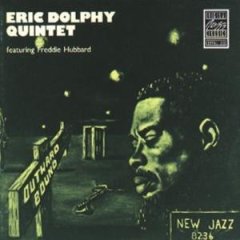
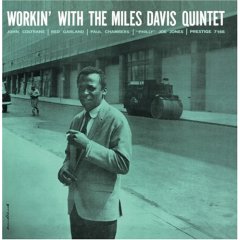
Miles Davis: Workin’ & Eric Dolphy: Outward Bound

Written by Fantasma el Rey

Prestige has been re-releasing a series of albums under the label Rudy Van Gelder Remasters, named after the legendary jazz engineer. Two of the entries are solid platters that come from two of the best leaders of anytime, backed by their talented, handpicked professionals. Both quintets have a solid rhythm section that stand on their own and can carry a number as good as any trio put together.


Workin’... is the third in a series of quintet albums, recorded to recapture the vibe that this group projected while playing at the CafĂ© Bohemia in 1956-57, the same period as these sessions; the mood is mellow while losing none of its jump or flow. Miles Davis and John Coltrane on the same recording is awesome enough, throw in Red Garland’s piano prowess, Paul Chambers’ bass and Philly Joe Jones on drums and you’ve got more than just something to work with. For a better backstory on those two jazz legends, see my pal and fellow Snob, Fumo Verde’s review on Davis’ Walkin’ and Coltrane’s Soultrane. He does a fine job in summing up their beginnings.

This set opens with the beautiful “It Never Entered My Mind”. Red’s piano starts us off, followed by Miles’ plaintive trumpet. With the low bass plucks sprinkled in, it makes me thirst for gin and can’t help thinking of the fact that liquor sometimes eases pain and sorrow.

Then Philly Joe kicks me awake with his machine gun intro to “Four”, while Miles and Trane fly right in, reminding me that jazz, like life, can jump and spring up like fire. This tune, as well “Trane’s Blues” and “Ahmad’s Blues” represents this unit’s creative drive and ability to move, keep you boppin’. The highlight to “Ahmad’s” is the bowed bass solo by Chambers, no boundaries, baby. “Trane’s Blues” is where we get to see Coltrane work some of his magic on one of his own compositions, a mellow swinger that sees him soar yet stay smooth.

“Half Nelson” sends this disc someplace else; taking you on a wild ride that seems out of control, yet you know that these men are in full possession of the wheel, total control. It shows on their solos as they soar and narrowly avoid crashing into walls, leaving the room filled with smoke from the inferno they’ve begun in your ears.


In an all-too-short career, before his early death due to complications from diabetes, Los Angeles-born Eric Dolphy had learned from and played with many jazz greats, including Charlie Mingus, Buddy Collette and Red Callender. Moving East in 1958 with the Chico Hamilton Quintet got this multi-talented instrumentalist going, and it is during this time that he began to step forward and truly shine on his own. Outward Bound is Dolphy’s debut as leader. A masterful album that jumps from the get-go, Dolphy’s group pours their heart out and sends you towards the jazz heavens.

“G.W.” starts off with drummer Roy Haynes and his Tommy gun attack. From there Dolphy, on alto sax, and trumpeter Freddie Hubbard begin the upward- and outward-bound ascent, while the remainder of the group bop in to let us know they're here too: Jaki Byard on the 88 keys and George Tucker on bass. Each having his turn to take the reins and drive the sound further out, as they will do again with force on the rollicking “Les”, which spins out of this world and leaves a blazing trail towards its end.

“On Green Dolphin Street” and “Miss Toni” are showcases for Dolphy’s bass clarinet, an instrument that adds an air of playful fun to the mix of solid jazz that the boys drive home around him. “Glad To Be Unhappy” is the only ballad on this album and a tune that brings Dolphy’s flute to the fore. Listen closely and you can hear him breathe, which for me only adds to the mystic. Halfway through the song, he takes it a few notches higher and sends the flute, and us, soaring into the open expanse of the jazz universe.

The flute makes a return for the bonus track “April Fool”, a peppy number that fits with the playful side of this CD and takes absolutely nothing away from the drive of the album as a whole. The two other bonus tracks are extended versions of the jammin’ “G.W.” and the bluesy “245”, Dolphy’s street number in Brooklyn. On “G.W.” the solos are longer, giving the musicians a bit more time to wax creative.

So there you have it, bop kats. Here springing from 1956 to 1960 are gathered masters thrown together to help spread the word that jazz is boundless, especially in the hands of such as these. Many would follow the trail that they blazed.