Showing posts with label jazz. Show all posts

Friday, August 31, 2007

Bruce Hornsby/Christian McBride/Jack DeJohnette: Camp Meeting


Written by Fumo Verde

Bruce Hornsby is back and his range has expanded. He has made a fantastic career of blending musical genres, such as jazz, bluegrass, and folk, into his own distinct kind of blue-collar rock n’ roll sound. Camp Meeting is a serious jazz album with a wide variety of compositions that include jams from Monk, Miles, and Trane. Along with Christian McBride on bass and Jack DeJohnette on drums, two highly accomplished jazz musicians themselves, Camp Meeting proves beyond any doubt the talent of these three men.

I have to start with the first track “Questions and Answers.” Composed by Ornette Coleman but never released, the trio brings it to life as a quick and chipper tune that pounces about. Jumbling and almost unorganized, the music opens up as the piano zips amongst the scales while bass and drum push the tempo along firing away like a six-cylinder engine. This is followed by “Charles, Woody, and You,” (a Hornsby-Charles Ives composition) which has a backbeat that sounds like Miles’ Kind of Blue, yet it contains a sporadic Charles Mingus charm.

“Solar” follows, and on this track Miles would be proud. It shows how well these men have honed in their talents. Be it Hornsby’s effortless dance with the keys or McBride’s stroll along his bass chords, the solos reflect the hard work and effort these guys put into this CD. DeJohnette rips into a drum solo that finishes off with cymbal shots that boost the energy this trio puts out.

“Camp Meeting” the title track, has a rock rhythm to it. McBride’s bass seems to swing about as DeJohnette drives the beat and Hornsby’s piano tells the tale. This is an original by Hornsby and if anyone has ever had doubts about his ability to compose jazz, this track will put them to rest. But he isn’t the only master musician here and he would be the first to point that out.

Christian McBride is the son of the great jazz bassist Lee Smith and his uncle is Howard Cooper, another amazing jazz bassist. McBride has played with a wide range of people that include Chick Correa, Herbie Hancock, Diana Krall, and James Brown. In 2000 he fronted his own band called the Christian McBride Band. Jack DeJohnette has a resume a mile long too, and it includes artists such as Keith Jarrett, whose composition “Death and Flowers” is the fourth track on the album. It has a delicate piano solo that captures the grace and spirit of what true artistry really is. Both DeJohnette and McBride have made their names in the world of jazz and bringing their talents together was a great idea. Hornsby knows how to surround himself with incredible musicians and Camp Meeting isn’t any different.

Whether it’s the improvised style of Monk or the genuine soul of Miles or the swinging structure of Coltrane, the trio tries to capture it all in eleven tracks, and they do a pretty damn good job. Anyone with an ear for jazz will enjoy this CD as it ranges the jazz spectrum. Camp Meeting brings all the ideas together, and what great ideas they are.

Friday, August 17, 2007

Charles Mingus Sextet with Eric Dolphy: Cornell 1964


Written by Fumo Verde

Blue Note wowed me again with another previously unreleased recording of the Charles Mingus Sextet. This two CD-set contains material that, before this recording was discovered, the good folks at Blue Note thought came about a little later than it actually did. This album predates by three weeks, the Sextet’s adventure from a Town Hall Concert on April 4th through a European Tour and ending at the Monterey Jazz Festival. It also includes Eric Dolphy, who besides being a revolutionary alto sax player was the first important bass clarinet players in jazz, along with being one the first significant flute soloists. There are jazz players, there are jazz artists, and then there’s Charles Mingus. This live show at Cornell makes clear why.

The opening is the applause from the students as the band takes the stage. Jaki Byard is on the piano and he immediately charges into “ATFW You,” a tribute to Art Tatum and Fats Weller. This solo is a melody of all the old piano riffs and hooks you’ve heard in many a ragtime gangster movie. It is followed by Mingus himself in a solo of Ellington’s “Sophisticated Lady.”

From there, we take the ride with the “Fables of Faubus.” This thirty-minute tune drives us on a journey as the band explodes with fury and fire, then cools down for a night on the town. Johnny Coles on trumpet and Clifford Jordan on tenor sax fly about the scales like birds of prey fighting for a meal, while all along singing in harmony. Dannie Richmond pounds out the drums to the point of exhaustion, only to have Byard save him by playing “Yankee Doodle” on the ivories. After the good old American battle theme and with a few magic strokes of the keys and some plucks of the bass, the jam starts up again. The horns come alive along with Dolphy on the bass clarinet, adding a spicy flavor to the melody. A duel comprised of tenor sax, the drums, and deep in the background, the bass clarinet rages like a squall, then disappears. We haven’t even come close to the middle of this jam and the surprises down the line are well worth waiting for.

The first disc finishes up with a seventeen-minute “Orange Was the Color of Her Dress,” which Mingus had recorded as a piano solo in ’63 but hadn’t fully developed it until what feels like right at that moment. The final song on disc one is a fifteen-minute “Take the ‘A’ Train” which re-ignites the abidance.

Disc two has just as much power and fun the first part of the show had. It also introduces us to Mingus’ “Meditations,” another half-hour jam that takes us on a tour inside the mind of this jazz author. Jazz musicians practice their whole life to sound sporadic and off the cuff, yet Mr. Mingus was born like this. His talent reached way beyond what jazz was thought to be. “Meditations” reaches in with its sad, off-key intro that slowly winds its way into a piano walk filled with the bird sounds of flutes, trumpets, and saxophones. Mingus appears to be playing his bass with bow, sounding more like a cello to my ears.

“So Long Eric” is actually a tribute to the presence of Dolphy that night, but it became a lament after his death in June of that same year. Interestingly enough, Mingus goes green as the band plays his idea of “When Irish Eyes Are Smiling.” The quick tempo and upbeat rhythm feel as if the audience is moving around in their seats. The show ends with a Mingus-style “Jitterbug Waltz” leaving the students energized and excited. Again the band explodes as the music goes wild.

This live recording is something new, and if it wasn’t for Sue Graham Mingus, we would not have been so lucky to hear this. For the ultimate jazz enthusiasts this double CD-set is worth the price of admission. To hear Charles Mingus along with the Eric Dolphy playing alongside can only be explained in one word, awesome. If you are looking for something less contemporary, just outside of mainstream jazz, then Charles Mingus is your man and this live show at Cornell in ’64 will open your eyes to a whole new idea of what jazz could be.

Sunday, June 17, 2007

AMERICAN PASTIME


Written by Fantasma el Rey

American Pastime is set during World War II and is the story of a Japanese American family’s relocation to an internment camp. Revolving around baseball, jazz, and family, it is a good-hearted movie that tells a wonderful tale but at times takes the all-too-beaten path in doing so. An enjoyable film and in some respect one could call some of the themes timeless.

Spanning the years 1941 to 1946 we see how the Namuro family copes with life in Camp Topaz, Utah. Attempting to make the place more than merely livable, they begin to fix the camp by giving it a feel of home. Youngest son Lyle (Aaron Yoo) loves jazz and baseball and aided by the latter was to be the first Namuro to attend college. Then along came Pearl Harbor, bringing Lyle’s dreams to an abrupt end. Lyle grows to hate baseball rejecting his father’s offer to play on a camp team. Instead Lyle starts a swingin’ jazz band and, to help ease his misery, sells booze and gambles.

He also takes interest in Katie (Sarah Drew), the daughter of the camp’s military supervisor (Gary Cole). This of course causes greater tension in the nearby town of Abraham. Lyle finds himself at ends with his father and now with Katie’s pop as well. As if that weren’t enough, rebellious Lyle and his respectful, older brother Lane begin to feud over right and wrong. To ease the tension between town folk and “prisoners,” a climactic baseball game is arranged that pits the local pro team, including Katie’s father, a long time Yankees prospect, against Camp Topaz’s best. Of course, Lyle makes a return to the diamond in this ultimate showdown.

The Romeo and Juliet love story and the effect it has on the two different families is a story we’ve seen before as are the clashes that go on within the two lovers’ families. The squabbling brothers and the squabbling father and son, while the understanding mother tries to hold it together and play peacemaker, are very familiar plotlines as well. Not surprisingly, the game’s final outcome is decided between Lyle and Katie’s father. We’ve seen these formulas enough and I would rather watch a documentary on baseball and the interment camps. Although I can see how it must be told this way in order to reach a wider audience, which allows for some fine performances from Aaron Yoo, Sarah Drew, and Gary Cole.

To his credit Director Desmond Nakano does well in mixing actual vintage footage throughout the film. I do admire the fact that he also includes a scene where camp dissidents try to rally other internees to ask questions. Like why other Americans weren’t put into camps. The Germans and Italians were also enemies of The U.S.. Were they not interred because they were harder to spot, making them less of a target for violence? If that’s the case, then I guess it was for their own protection that the Japanese were locked away and forced on their “trail of tears.”

Overal, American Pastime has accomplished its goal in telling a story about a little know fact of our history and how baseball, that all-American game, played its part by presenting the story in an entertaining way everyone can relate. When I’m in the mood or if it’s on television I will probably watch again, which is the mark of a good movie.

Friday, March 09, 2007

Norah Jones: Not Too Late


Norah Jones is back with her third CD titled Not Too Late, and it’s never too late for anything from this sexy, smooth-voiced, dark-eyed cutie. My ears first perked to this kitten via her work with The Little Willies, a swinging country band from N.Y.C. From her first vocal appearance on that album, I was gone, hooked, a fan for life. I then devoured her first two CDs and longed for this one. It’s here and packs the punch that I hoped it would.

Miss Jones delivers as much as she has in the past; her writing and skills on the 88s remain magnificent. Her band remains just as strong, filled out by the core of Lee Alexander, returning to produce and play both up-right and electric bass, Andrew Borger on drums, and the guitars of Jesse Harris, acoustic, and Adam Levy, electric. A handful of others appear on this album, including Richard Julian, who pops in to provide some vocal support. Many of these players haven’t been heard from since Norah’s first CD, Come Away With Me, while others where prominent features on her second, Feels Like Home.

Not Too Late opens with the somber “Wish I Could,” which leads off with just a guitar followed by Norah’s sublime vocals. This one is heavy for an opener, with lyrics about the unfairness of love in war. What kicks are lines like “I don’t tell her that I once loved you too” and “We met in a place I used to go/ Now I only walk by slow/ Can’t bear to go in without you, you know/ Wish I could.” Words that hit hard, as do the rest of the lyrics on this CD written by Norah or the team of Jones/Alexander.

“Sinkin’ Soon” is a more playful little ditty with a 1930s swing/jazz jump. The trombone and mandolin punctuate the track while Norah tickles the ivories and the drums roll. Borger even hits the pots and pans, lending a back porch feel to the jam. Norah shows her vocal swagger here, as she sways and rises with the flow of the band, again showing how keeping a tight group of musicians together is beneficial.

“The Sun Doesn’t Like You” and “Until The End” are a couple of mellow country numbers that highlight Levy’s picking. “The Sun” is driven by it along with Norah’s piano and Borger’s wonderful shuffling brushes. On “Until The End,” the Hammond B-3 organ quietly sighs in the background while Levy’s slow picking holds up the bridge.

“Not My Friend” has an eerie backwards electric guitar, and Norah’s tapping on the piano keys give it an oddly pretty, dripping sound, added to by the marimba doing the same. The acoustic guitar gives off a dreamlike sense of darkness that the vocals second; throughout the track, there is a tapping noise that adds to the haunting air of the entire tune. The lyrics are just as darkly dreamlike: “Your voice is ringing/ Just like the boys who laughed at me in school” and “You found a place/ No one should ever go” followed by “I’ll be o.k./ ‘Cuz when I back away/ I’m gonna keep the handle of your gun in sight.” This one has Fantasma in a spin. I can’t stop clicking on the back track button. I’m in a zombie trance over this one, I swear. Now that I’ve broken out of my trance thirty minutes later (no joke), on with the review…

Next is the single “Thinking About You,” which kicks us back up with the lively trumpet and tenor sax. The Hammond B-3 returns, a compliment to the Wurlitzer that Norah is pushing on. The solid, time-keeping drums and steady, soulful bass thump round out the rhythm, setting your head to boppin’ along. The lyrics aren’t happy pap on this either. It’s not that starry-eyed “thinking about you;” it’s more along the lines of “You hold my hand, but do you really need me/ I guess its time for me to let you go.” Shivers, daddy-o.

“Broken” finds the band as a three piece with a twist. Alexander plucks the “bowed basses,” Julia Kent gently saws at the cellos, and all the while our girl Norah strums the electric guitar. Now as far I know that’s a first right there but it gives the song a certain pop adding to the wisdom of these musicians and songwriters.

“My Dear Country” has the sting of political criticism and deals with the horrors of the day after the election. The trombone and tenor sax return, joined by the tuba for a quick romp for you see this one begins with just piano and vocals. After over two minutes, the rest of the band joins in for roughly twenty good seconds before quietly becoming the backdrop of the tune. “My Dear Country” is all Norah, taking you on a ride with her talents.

The album contains more country nods that find our kitten showing off that voice of hers on strong songs that spotlight the band as well. “Wake Me Up” has Norah on acoustic guitar this time, as well as the pump organ. Borger brings back the brushes and Alexander balances his up-right bass plucking with the lap steel that weeps softly throughout the song. “Rosie’s Lullaby” contains two electric guitars and turns the super-trooper (spotlight) on Robbie McIntosh on the solo. The twin guitars blend well and cry out gently to one another as Norah urges Rosie to close her eyes and dream.

“Little Room” and “Not Too Late” have the band broken down to three again. The first is a peppy number that has Norah in an upbeat mood while once more strumming on the acoustic guitar as Alexander gently slaps the bass and Daru Oda whistles up a storm. The title track is the closing tune, and we are left with the core three of Jones, Alexander, and Borger. A slow song about meeting with an old love, perhaps only in the mind and how we long to know what they have been up to. Oh, how much we can miss someone, knowing full well it can never be the same between us. Yet love is there but must be put aside for the simple reason that the relationship is harmful to both parties and separate paths have been chosen and must be followed. Love, as life is never easy.

This darkly poetic album has me caught in its net. From start to finish Norah Jones’ vocal prowess is outstanding and has her shining once more. Her voice and the master musicians behind her are as good as ever and again leave us longing for more. This forty-five minute CD, which I turned into three hours of listening pleasure, is well worth any wait that this dark-eyed kitten put us through. Until her next release I only hope that we can see another Little Willies platter put out, because if you can’t tell, Fantasma digs those kats the most. No matter what the future holds I’ll be spinning this one over and over again.

So that’s it and that’s all. I’m “trancing” out to track 5, ghoulies. Good night.

Sunday, February 25, 2007

Sonny Rollins - Plus 4 & John Coltrane - Traneing In


Written by Fumo Verde

The stars of Rollins and Coltrane were on the rise during the late ‘50s and early ‘60s but it wasn't until recently that jazz musicians and fans have truly realized the impact that these two men had on contemporary jazz. Plus 4 featuring Rollins and Traneing In by Coltrane are two of the finest examples of art in motion, or at least the sound of motion.

First, a glance at Plus 4. This CD features Rollins on tenor sax along with Clifford Brown on trumpet (except track #4), Richie Powell on piano, George Morrow on bass, and Max Roach on drums. It contains five tracks with 32 minutes of swinging jazz, from “Valse Hot” right through to “Pent-Up House.”

Not since Monk had interpreted “Carolina Moon” could anyone else successfully grasp the idea of a jazz-waltz, yet Rollins does it with “Valse Hot.” He makes a waltz feel like you're dancing through the clouds, climbing and reaching with every note. Rollins likes to take notes and stretch them for all they are worth then puts them back all hot and wet. This sweet eight-minute jewel is followed by Sam Coslow’s “Kiss and Run.” The liner notes say that Rollins does more running than kissing in his version, and you can tell that to be a fact as soon as the song starts. Once again his tenor sax is jetting up and down the scales, pulling and pushing on every note in his path. That's Rollins; like our never-ending universe, he is always expanding and stretching forward.

“I Feel A Song Coming On” is another freight train rolling down the tracks at break-neck speed. Rollins and Brown square off for a duel of reed vs. brass as the drums, piano, and bass scurry around to get the best seat in the house to watch the brawl. This song’s energy and drum solos by Roach make it my favorite off the album.

Like a supernova, Plus 4 gets the feet tapping and the heart jumping. Even “Count Your Blessing Instead Of Sheep,” which has a slower tempo than all the others, still gives Rollins the opportunity to push the architecture of how to utilize a tenor sax in a traditional jazz band. To me, I feel that Sonny Rollins is the spirit and the heart of the tenor sax. The tenor sax has a mind and a soul too; it goes by the name of John Coltrane.


Traneing In is another incredible drop of water in the river of music that ran out of John Coltrane. Like Rollins, Coltrane fundamentally changed the way the tenor sax was used in jazz bands, and this is one of those albums that highlight this fact. It is comprised of Red Garland on piano, Paul Chambers on bass, Arthur Taylor on drums, and Coltrane with blueprints for a new era in jazz.

On the title track, Coltrane brings it on strong with a twelve-and-a-half minute jam. The mind of Coltrane takes over here, giving the voice of the sax room to breath, to think about where to flow to next. Coltrane runs the scales also, but with slight pauses before jumping to the next note or two, the anticipation of what follows gives the song its cleverness.

It is followed by “Slow Dance,” which opens with Chambers tickling the bass chords, bringing in a softness that allows Coltrane to cry out this song’s soul with the utmost tenderness. Timing is everything, and Coltrane knows when to let it out and when to keep it in. After a sweet, slow solo Coltrane lets Garland, Chambers, and Taylor take the wheel of the car and follow the route in their own direction, but not for too long.

“Bass Blues” follows, and you would think that the tempo and rhythms would be similar; well, think again. Coltrane gives a jump-start to it by revving up his sax and letting some steam out. Again Coltrane thinks before he steps, and by doing this, he raises the level of play amongst the other musicians.

Does it matter that Rollins has only three original compositions on Plus 4 and that Coltrane has only two on Traneing In? No, because any artist can translate any song, and though the song remains the same, the feeling and images the music brings about will always reflect the musician playing it. On these albums Coltrane and Rollins create from the experiences they have accumulated over their travels. The wisdom gained through other musicians, such as Dizzy Gillespie, Charlie Parker, Lester Young, and Coleman Hawkins and from each other, allowed Coltrane and Rollins to reconfigure how jazz sax should and could be played. They did it with different styles of play, but no matter how you look at it these two men were the pioneers of their time.

These two CDs are a history of how and when John Coltrane and Sonny Rollins started to rearrange the sounds of the tenor sax. Plus 4 and Traneing In are two very different CDs by two very different musicians who showed the world that anything is possible.

Saturday, October 07, 2006

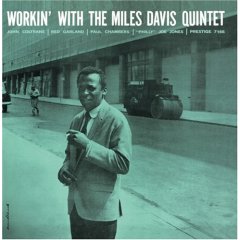
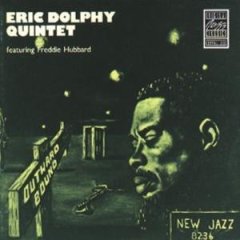
Miles Davis: Workin’ & Eric Dolphy: Outward Bound

Written by Fantasma el Rey

Prestige has been re-releasing a series of albums under the label Rudy Van Gelder Remasters, named after the legendary jazz engineer. Two of the entries are solid platters that come from two of the best leaders of anytime, backed by their talented, handpicked professionals. Both quintets have a solid rhythm section that stand on their own and can carry a number as good as any trio put together.


Workin’... is the third in a series of quintet albums, recorded to recapture the vibe that this group projected while playing at the Café Bohemia in 1956-57, the same period as these sessions; the mood is mellow while losing none of its jump or flow. Miles Davis and John Coltrane on the same recording is awesome enough, throw in Red Garland’s piano prowess, Paul Chambers’ bass and Philly Joe Jones on drums and you’ve got more than just something to work with. For a better backstory on those two jazz legends, see my pal and fellow Snob, Fumo Verde’s review on Davis’ Walkin’ and Coltrane’s Soultrane. He does a fine job in summing up their beginnings.

This set opens with the beautiful “It Never Entered My Mind”. Red’s piano starts us off, followed by Miles’ plaintive trumpet. With the low bass plucks sprinkled in, it makes me thirst for gin and can’t help thinking of the fact that liquor sometimes eases pain and sorrow.

Then Philly Joe kicks me awake with his machine gun intro to “Four”, while Miles and Trane fly right in, reminding me that jazz, like life, can jump and spring up like fire. This tune, as well “Trane’s Blues” and “Ahmad’s Blues” represents this unit’s creative drive and ability to move, keep you boppin’. The highlight to “Ahmad’s” is the bowed bass solo by Chambers, no boundaries, baby. “Trane’s Blues” is where we get to see Coltrane work some of his magic on one of his own compositions, a mellow swinger that sees him soar yet stay smooth.

“Half Nelson” sends this disc someplace else; taking you on a wild ride that seems out of control, yet you know that these men are in full possession of the wheel, total control. It shows on their solos as they soar and narrowly avoid crashing into walls, leaving the room filled with smoke from the inferno they’ve begun in your ears.


In an all-too-short career, before his early death due to complications from diabetes, Los Angeles-born Eric Dolphy had learned from and played with many jazz greats, including Charlie Mingus, Buddy Collette and Red Callender. Moving East in 1958 with the Chico Hamilton Quintet got this multi-talented instrumentalist going, and it is during this time that he began to step forward and truly shine on his own. Outward Bound is Dolphy’s debut as leader. A masterful album that jumps from the get-go, Dolphy’s group pours their heart out and sends you towards the jazz heavens.

“G.W.” starts off with drummer Roy Haynes and his Tommy gun attack. From there Dolphy, on alto sax, and trumpeter Freddie Hubbard begin the upward- and outward-bound ascent, while the remainder of the group bop in to let us know they're here too: Jaki Byard on the 88 keys and George Tucker on bass. Each having his turn to take the reins and drive the sound further out, as they will do again with force on the rollicking “Les”, which spins out of this world and leaves a blazing trail towards its end.

“On Green Dolphin Street” and “Miss Toni” are showcases for Dolphy’s bass clarinet, an instrument that adds an air of playful fun to the mix of solid jazz that the boys drive home around him. “Glad To Be Unhappy” is the only ballad on this album and a tune that brings Dolphy’s flute to the fore. Listen closely and you can hear him breathe, which for me only adds to the mystic. Halfway through the song, he takes it a few notches higher and sends the flute, and us, soaring into the open expanse of the jazz universe.

The flute makes a return for the bonus track “April Fool”, a peppy number that fits with the playful side of this CD and takes absolutely nothing away from the drive of the album as a whole. The two other bonus tracks are extended versions of the jammin’ “G.W.” and the bluesy “245”, Dolphy’s street number in Brooklyn. On “G.W.” the solos are longer, giving the musicians a bit more time to wax creative.

So there you have it, bop kats. Here springing from 1956 to 1960 are gathered masters thrown together to help spread the word that jazz is boundless, especially in the hands of such as these. Many would follow the trail that they blazed.