Friday, October 20, 2006

The Essential Alice In Chains


Written by Fumo Verde

The first time I heard Alice In Chains I thought, “Whoa, finally a band out of Seattle where you can actually understand the lyrics, and the music and melodies are fantastic.” The song I heard on the radio was "Man In The Box"; it blew me away. "I'm the man in the box/ Buried in my shit." Man, I could relate to that, and so did most of us who are labeled Generation X or whatever.

For me, the sound coming out of the Seattle in the early ‘90s was hard, raw, and passion-driven. It had to be to scrub out the ‘80s glam-pop still echoing on the radio. Alice In Chains was one of those bands that quietly exploded on to the scene as compared to Nirvana or Soundgarden, but everybody was listening. AIC blends their well-polished playing with deep passionate lyrics that reflect the pain, the frustration, and the ever-present dissatisfaction with life.

The first disc has 16 tracks that cover the albums of Facelift, Dirt, and the EP SAP. Track # 1 is "We Die Young", which has a heavy metal tone with its charging guitar and steady rock beat. “Man In The Box” follows it. Other tracks go deeper into the minds of Jerry Cantrell and Layne Staley, such as "Rain When I Die." The song starts out with an ominous vibe from Mike Starr's thumping bass riffs. Cantrell stretches and twists the notes crying out from his guitar. Both combine with Staley's voice and Sean Kinney's driving drumbeats into pain and loss. Also included on this disc are "Angry Chair," "Brother," "Dirt," and concluding with "Rooster," one of AIC's most notable songs.

Disc two contains 12 tracks from the albums of Jar of Flies, Alice In Chains, and two tracks recorded for MTV’s Unplugged. Starting out with "No Excuses", which became a radio favorite when it was released, AIC was coming into their own and their music was just getting better. Jar of Flies" still sits close to my CD player and gets played at least once a month.

"I Stay Away" comes next and this song proves what Steffan Chirazi said in the liner notes about these men not just being simply musicians or artists, but they are craftsmen, who don't come up with a bunch of throwaway shit and keep what works. They nurture and develop a song, improving on it and always fine tuning it until it is perfected. The song is a prime example of how the band blends the harmonies of bass (then being played by Mike Inez), guitar, drums, and vocals into an almost symphonic sound that resonates throughout the complete works of the band.

Although AIC has a very distinct sound, no songs sound alike due to the band’s eclectic sense for music in general. “Would?” finishes out the second disc; another signature song that even today gets radio play on the rock channels around the country. Even though they have suffered the untimely death of Staley via drug overdose, and long periods in between new recordings, AIC still has a strong following and are just recently resumed touring. This 2-CD set is an essential collection even if you just like them a little. If you lend an ear to this set, I'm sure you'll become a fan for life.

This is Fumo saying, take care babies.

Wednesday, October 18, 2006

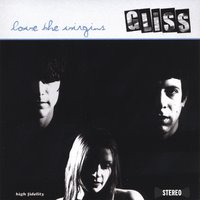
Gliss: Love the Virgins


Written by Fumo Verde

The first time I heard Gliss was on KCRW out of Santa Monica, CA. Driving guitar licks, a thumping bass line, and thrashing drum jams is the signature sound of this three-person band. A twist for Gliss that sets them apart is that all three; Martin, Victoria, and David can, and do, swap instruments. What I'm saying is that Victoria plays drums, guitar, and bass and this goes for Martin and David also. So Gliss has the talent, but do they have the sound to match?

The first track off Love The Virgins is a song called "I Want You". This track has an ominous tone to it, with its synthesizer intro that gently brings in the guitar and bass chords. As the drums pick up the beat, the song comes alive with either Martin or David's voice. The liner notes don't let you know who’s on first here, so I can't be to sure who is singing and who's on what instrument. The voices of both men are different, and you can tell right off the bat. The voice in the second track, "Huh, What?" has a higher pitch to it, but blends well with this type of song. The bass and drums are banging hard as the guitar rips through the beat and connects the singer to the song. "You gotta grab that oar/ you gotta settle the score" is sung over a rapping sound of the snare drum, giving this song the fuel that lifts it off the ground and sends it on a roaring trip.

Although the sound feels like it’s coming in from a different orbit, the root all 12 tracks have is a rock and roll rhythm that keeps each note on the right beat. Beneath that raw rock sound, lay the pedigree of a down-to-earth rock band. "Blue Sky" displays this concept fairly well. It has a steady beat with the bass and guitar jamming along, never straying far from the rhythm. Drum rolls bridge the gap between the melody and the chorus with winding string chords following the same path.

"Falling to Pieces" brings out the darker side of these three talented individuals. The beat is almost waltz-like, as the guitar plays out more like a crying violin, and though the song’s tempo is somewhat melancholy, the soul of the vocals gives this tune its pain as stated in the title. A pain everyone has felt at one time or another. "Kissing The Boulevard" also has that dark love lost feel to it. Its beat is more up-tempo than the previous track, yet the vocals really bring out the sadness. "Life means nothing when you're talking to her you can't understand/ life means nothing when you just can't find it/ love."

From what I understand, this is their first full length CD, if so, wow! Hearing them briefly on the radio got me interested, but this CD has made me a fan. If one were to mix Sonic Youth with Love and Rockets, that would be very close to the music that Gliss brings. I hate doing that, comparing or whatever, but those are two of my favorite bands, and Gliss is starting to become another.

Love The Virgins is a great album and it definitely deserves a listen to, by anyone with an ear for a fresh vibe. Gliss brings us into their world, one of contrasting sounds of hard and soft, all within the perimeters of rock and roll. I can't wait for their next one.

This is Fumo, saying.... Love the virgins...as many as you can.

Tuesday, October 17, 2006

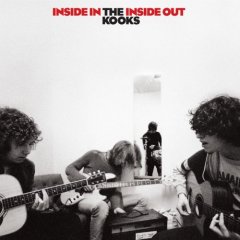
The Kooks: Inside In/Inside Out


Written by Fantasma el Rey

“The Kooks are out in the street”, where you should be, spreading the word about this fresh new band from the U.K. and their inspired debut album, Inside In/Inside Out. These young men (Luke Pritchard vocals, Hugh Harris guitar, Max Rafferty bass and Paul Garred on drums) are driven and well versed in the power of rock. While drawing from many influences ranging from soul, punk, reggae, and good ol’ rock ‘n’ roll, these Kats give off an early Beatles/Kinks vibe. The album and songs are short, just over 44 minutes, yet they leave their mark, and leave you wanting more.

The CD opens with the acoustic “Seaside”, which sets the tone for the lyrical content, the ins and outs of relationships. Here we get a good taste of Pritchard’s voice and his awesomely thick English accent. From there, The Kooks kick the door open wide on “See The World” and let us into theirs, filled with thick bass lines, thundering drums, and heavy guitars with amps turned up to eleven. The vocals jump up as Pritchard shows that he can rock with the best of them.

“Eddie’s Gun” is the first single and a pop/rock masterpiece; it contains nearly everything a good tune should. The drums roll and the guitar works you into frenzy; in less than a heartbeat you’re hooked and moving with the beat they are putting down. The chorus and background vocals get you singing along and you almost forget that poor Eddie’s gun doesn’t work properly. The guitar solo is to the point and in no way overdrawn. Before you know it two minutes have past and it’s over, forcing you to play the thing at least one more time. The CD also has an enhanced portion that contains the video to “Eddie’s Gun”, so don’t forget to check that out as well. Cut from this mold, “You Don’t Love Me” is another track that will drive you mad with its heavy drums and fuzzed-out guitar.

“Ooh La” and “She Moves In Her Own Way” are where The Kooks slow down a bit, while still maintaining all of their drive and pop sensibility. The lyrical flow and chorus are what work best on “Ooh La”. The music bounces along behind the vocals. “She Moves In Her Own Way” starts out calm and picks up a little, keeping the mood bouncy and light. Dig the background handclaps on this track.

The lyrics to “Matchbox” are in step with the band’s other jump tunes and the chorus again has that sing-a-long quality to it, and yes, I am singing along as I type them: “All of us/ we're going out tonight/ gonna walk all over your cars/ The Kooks are out/ in the street/ oh they're gonna steal your skies”. “I Want You” is their “dark” number. It is complete with a heartbreak beat from the rhythm section and is surrounded by shadows and shades of The Cure. The music stays lightly funky but carries a vibe of gloom to go with lyrics, “Take me back to the place where I/ loved this girl for all time.” There is even a muffled, creepy sounding organ at the close of this track. The band closes out the album by drawing from more of their influences on the bluesy “Got No Love” and the country/rock of “Do You Still Love Me?”, which is a song similar to one of my favorite bands, The Black Crowes.

So there you have it, folks. The Kooks’ Inside In/Inside Out is a masterful rock album debut that flows well and keeps its forward drive. So does that mean the short, catchy tunes, cutting guitar, steady funk-dripping bass lines. and solid drum thumps have this one passing Fantasma’s test of a truly great album? Can I play this disk over and over again without skipping from track to track? Yes, yes I can, and will, as should you, so hit the street and pick up a copy.

Friday, October 13, 2006

Get The Message: The Best of Electronic


Written by Tío Esqueleto

When word first surfaced back in 1988 that New Order frontman Bernard Sumner and The Smiths guitarist/all-around Manchester-darling Johnny Marr were to collaborate on a side project, the UK music scene was all ears. Could it get any better than one part Joy Division/New Order and one part The Smiths? Having worked together briefly in 1983 for fellow Factory mates Quando Quango, longtime friends and mutual fans of each other Sumner and Marr met up in the summer of 1987 and decided to hit the studio with the hopes of adding something new to the scene they had both helped to create: the amalgamation of music, drugs, fashion, and technology that was the Manchester music scene.

With Electronic, both Marr and Sumner saw this as a chance to take a break from their current mainstays (Sumner having just finished recording and touring New Order’s Technique, and Marr rounding out a stint both on record and on tour for The The’s seminal Mind Bomb album), and to further the marriage of Manchester indie guitar-pop with a growing dance music scene. They also saw it as a catalyst to collaborate with people they’d always wanted to work with, starting quite simply with each other. In 1989, Pet Shop Boys Neil Tennant and Chris Lowe entered the fold and what resulted was something not quite New Order, The Smiths, or Pet Shop Boys, but rather something very unique and most importantly, very Manchester.

Get The Message: The Best of Electronic is the first hits compilation from this UK super duo, now legends in there own right. The 15-track disc spans three albums over nine years; represented here are various choice cuts from 1991’s Electronic, 1992’s stand-alone single, “Disappointed”, 1996’s Raise The Pressure, and 2000’s Twisted Tenderness.

It opens with “Forbidden City”, the opening track from Raise the Pressure. Out of all the tracks penned by Sumner/Marr, none scream The Smiths/New Order more so than this, the perfect trumpeting of their ‘96 return. Marr’s guitar jangles and wails behind Sumner’s sweetly melancholic vocals. One has to wonder if this isn’t what the beginnings of an unrealized Smiths album would have sounded like had Morrissey lent his signature croon back in 1996, or the same side of the opposite coin had Peter Hook lent one of his signature bass lines to the mix.

“Getting Away With It” is the song that started it all. It reached #11 on the UK charts, hit the Top 40 here in the states, and still holds its own nearly 16 years later. Co-written by Tennant, who also sings the chorus, it is “the” Electronic song to those who never heard more than this first single and have since distorted and wondered all these years “whatever happened to that one New Order song with the guy from the Pet Shop Boys?”. Unlike “Forbidden City”, “Getting Away With It” is a sound all its own, the sound of Electronic.

From the same vein we get the bouncy singles “Get the Message” and “Feel Every Beat”. Both are very much a Sumner/Marr product and both scream Manchester, not unlike early Stone Roses or Happy Mondays of that period. Sadly, these are the only three songs represented from that first album. The one glaring omission being “Patience Of A Saint”, another track co-penned and sung by Tenant.

Track five is the single mix to 1992’s “Disappointed”, the highly anticipated follow-up to the debut album. Again, co-written and this time sung entirely by Tenant, “Disappointed” is a piano-heavy, Euro-House track that falls a hair short of expectation. It is aptly titled, but I must say it sounds better to me today than it ever did then.

What follows is a mixed bag of singles and prime cuts from the remaining two Electronic albums, Raise The Pressure and Twisted Tenderness. The former finds Marr and Sumner working with former Kraftwerk member Karl Bartos, a legend both Marr and Sumner had longed to work with since their humblest beginnings. “Second Nature”, “For You”, and “Imitation Of Life” are all worthy selections, the latter being the B-side to the already mentioned “Forbidden City”. Again, there are glaring omissions form the source material. Foremost is “Dark Angel”, a driving song that is representative of the dance music revolution of the mid 1990’s. A tad dated, probably, but its absence is certainly noticed in a collection of hits.

Twisted Tenderness saw a return to the rock roots of both Marr and Sumner’s prospective pasts. Not nearly as fun and accessible as prior Electronic releases (it actually serves more as foreshadowing for what would be Sumner’s next New Order release, Get Ready), it did however provide “Out Of My League”, another classic Electronic song.

Get The Message is an unexpected surprise. Not that it’s surprisingly good, quite the contrary. It’s great! The surprise is that it was ever conceived of in the first place. A Greatest Hits from a band (a side project, no less) scarcely heard of by those outside “the know”. One would think that anyone interested in a Greatest Hits, from a band like this, would already own all of the source material. Sure, but to that I say here they are, all in one place, abridged, and with only a few minor omissions/complaints. The packaging is pretty nifty too! A-

Wednesday, October 11, 2006

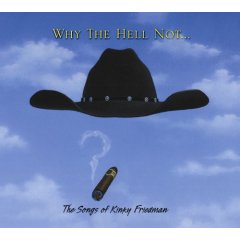
Why The Hell Not?....Songs of Kinky Friedman


Written by Fumo Verde

Although I'm not a big fan of country music, I do enjoy a few who transcend the genre: Willie Nelson, Johnny Cash, Merle Haggard, Dolly Parton, Loretta Lynn, and of course, Kinky Friedman and his Texas Jewboys. This CD is a special tribute by some of country music’s top performers to an American icon. Stars such as Dwight Yoakam, Charlie Robison, and Asleep At The Wheel strip away the sarcasm and fun-loving wit that is Kinky Friedman. These singers put their own twist to the music of a man they admire.

Kevin Fowler starts off the set with "Get Your Biscuits in the Oven" which is Kinky's take on the whole women’s liberation movement, or at least it’s what Kinky is telling his old lady. Fowler with his rough gravelly voice gives the song a deep southern fried sound that comes from heartland of the U.S.A. Lyle Lovett croons one of Kinky’s greatest tunes, “Sold American”. It’s the story of how the American economy and public have been sold off to the highest bidder; our capitalist ways cause us to sell ourselves out to the rest of the world. If you offer an American the right price, they'll sell it. Lovett's haunting voice turns the tune into a song of sorrow, and of warning.

My two favorite songs by Kinky are included. The first, sung by Todd Snider, is "They Ain't Makin' Jews Like Jesus Anymore", which tells the sad tale of a redneck getting his ass kicked by our favorite Texas Jewboy. Snider nails it as he rumbles us through one of Kinky's more explosive adventures. It's also the most politically charged of all the tracks on this disk. Since Kinky is running for Governor of Texas, I can guess Snider will be voting for Kinky. That is if he lives in Texas.

My other favorite song on this CD is "Ride Em' Jewboy" sung by none other than the aforementioned Willie Nelson. With Willie's voice and that slide guitar, Western Swing is here to stay. Willie's style, along with the small band feel, gives you that sense of being in one of those lone truck stops out along the Texas desert, drinkin' bad coffee and bummin' cigarettes from Flo the waitress.

All the tracks on this disk provide what Kinky's America looks like. Seen through the eyes of other stars, such as Delbert McClinton, who sings "Autograph", and Jason Boland & The Stragglers, who lend their talents to "The Gospel According to John", it’s obvious these singers, at some point in their lives or careers, have been touched by Kinky and his music.

This tribute album to Kinky does the man justice. These songs, refreshed by these talented people, still provide an insightful view of a man who loves this country and the people who make it their home. With fun-loving cynicism and an artful way to bring about real American feelings, Why The Hell Not?... is a testament to the character and stature of who Kinky Friedman is.

This is Fumo Verde urging all in Texas to Vote for Kinky. WHY THE HELL NOT KINKY?!

Tuesday, October 10, 2006

MAN OF THE YEAR


Written by Hombre Divertido

This Man of the Year doesn’t deserve your vote.

So much for truth in advertising as this film fails to be the comedy that it is billed as, but instead, a combination of Dave and The Net, where the worst of both films are brought together.

The philosophy of keeping it simple seems to have escaped writer/director Barry Levinson, who apparently felt that a comedic talk-show host being elected president was not enough fodder to fill 115 minutes, and thus felt the need to include a conspiracy that is as ridiculous in its conception as it is embarrassing in its execution.

Of course, the plot might have been better appreciated, had it not been given away in the first 15 minutes of the film. So, the audience is left to laugh at the few moments of humor generated by Williams who seems restrained by the script and direction of the usually competent Levinson. Other than that, the most you will hear from the audience at this film is: “What were they thinking?”

Christopher Walken is his usual enjoyable self as the manager of Williams, but the rest of the supporting cast borders on annoying. Laura Linney, in what would be the Sandra Bullock Net role, handles her assignment with the subtleness of a D-actress being chased by Jason in a Friday the 13th film. Perhaps that is why the release date was chosen?

The actors can only be saddled with so much responsibility here other than they should have impeached Levinson, as this failure resides primarily on his shoulders. He had Robin Williams playing a comedian/ talk show host, in the mold of Bill Maher or Jon Stewart, who runs for and gets elected president. He had Christopher Walken playing the manager. How could that not be a hit?

How? Easy. Never let the story go where we all want it to, and where you are lead to believe it will by the commercials. Of course you certainly can’t blame the marketing department. No one would go see this convoluted mess if they tried to sell it any other way. This film is a huge disappointment, and exemplifies the often-heard statement: “They showed the best parts in the commercials”

Recommendation: If you are expecting a comedy about an unlikely character being president, this is not it. Go rent Dave. If you are looking for a good collaboration of Levinson and Williams with a story that delivers, this is not it. Go rent Good Morning, Vietnam. If you are looking for a solid Levinson take on the political machine, this is not it. Go rent Wag the Dog.

SPOILER WARNING: The following run-on sentence contains key story points that you won’t figure out until 15 minutes into the film.

If you are looking for a film where Robin Williams appears lost, rarely gets to display his talent, and is trying to make the best of a script that has him playing president elect Tom Dobbs, who meets Eleanor Green (Linney) under the most contrived circumstances, and tries to help her as she is being stalked by her former employers, who want to silence the fact that their advanced computer polling software was unable to count accurately, and thus fraudulently placed Dobbs in the presidency, then wait for this mess to come to television as the edited version may not be better, but it will be shorter..

Saturday, October 07, 2006

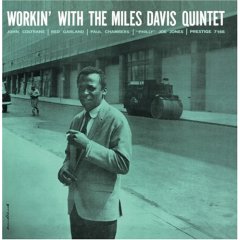
Miles Davis: Workin’ & Eric Dolphy: Outward Bound

Written by Fantasma el Rey

Prestige has been re-releasing a series of albums under the label Rudy Van Gelder Remasters, named after the legendary jazz engineer. Two of the entries are solid platters that come from two of the best leaders of anytime, backed by their talented, handpicked professionals. Both quintets have a solid rhythm section that stand on their own and can carry a number as good as any trio put together.


Workin’... is the third in a series of quintet albums, recorded to recapture the vibe that this group projected while playing at the Café Bohemia in 1956-57, the same period as these sessions; the mood is mellow while losing none of its jump or flow. Miles Davis and John Coltrane on the same recording is awesome enough, throw in Red Garland’s piano prowess, Paul Chambers’ bass and Philly Joe Jones on drums and you’ve got more than just something to work with. For a better backstory on those two jazz legends, see my pal and fellow Snob, Fumo Verde’s review on Davis’ Walkin’ and Coltrane’s Soultrane. He does a fine job in summing up their beginnings.

This set opens with the beautiful “It Never Entered My Mind”. Red’s piano starts us off, followed by Miles’ plaintive trumpet. With the low bass plucks sprinkled in, it makes me thirst for gin and can’t help thinking of the fact that liquor sometimes eases pain and sorrow.

Then Philly Joe kicks me awake with his machine gun intro to “Four”, while Miles and Trane fly right in, reminding me that jazz, like life, can jump and spring up like fire. This tune, as well “Trane’s Blues” and “Ahmad’s Blues” represents this unit’s creative drive and ability to move, keep you boppin’. The highlight to “Ahmad’s” is the bowed bass solo by Chambers, no boundaries, baby. “Trane’s Blues” is where we get to see Coltrane work some of his magic on one of his own compositions, a mellow swinger that sees him soar yet stay smooth.

“Half Nelson” sends this disc someplace else; taking you on a wild ride that seems out of control, yet you know that these men are in full possession of the wheel, total control. It shows on their solos as they soar and narrowly avoid crashing into walls, leaving the room filled with smoke from the inferno they’ve begun in your ears.


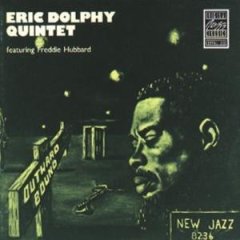
In an all-too-short career, before his early death due to complications from diabetes, Los Angeles-born Eric Dolphy had learned from and played with many jazz greats, including Charlie Mingus, Buddy Collette and Red Callender. Moving East in 1958 with the Chico Hamilton Quintet got this multi-talented instrumentalist going, and it is during this time that he began to step forward and truly shine on his own. Outward Bound is Dolphy’s debut as leader. A masterful album that jumps from the get-go, Dolphy’s group pours their heart out and sends you towards the jazz heavens.

“G.W.” starts off with drummer Roy Haynes and his Tommy gun attack. From there Dolphy, on alto sax, and trumpeter Freddie Hubbard begin the upward- and outward-bound ascent, while the remainder of the group bop in to let us know they're here too: Jaki Byard on the 88 keys and George Tucker on bass. Each having his turn to take the reins and drive the sound further out, as they will do again with force on the rollicking “Les”, which spins out of this world and leaves a blazing trail towards its end.

“On Green Dolphin Street” and “Miss Toni” are showcases for Dolphy’s bass clarinet, an instrument that adds an air of playful fun to the mix of solid jazz that the boys drive home around him. “Glad To Be Unhappy” is the only ballad on this album and a tune that brings Dolphy’s flute to the fore. Listen closely and you can hear him breathe, which for me only adds to the mystic. Halfway through the song, he takes it a few notches higher and sends the flute, and us, soaring into the open expanse of the jazz universe.

The flute makes a return for the bonus track “April Fool”, a peppy number that fits with the playful side of this CD and takes absolutely nothing away from the drive of the album as a whole. The two other bonus tracks are extended versions of the jammin’ “G.W.” and the bluesy “245”, Dolphy’s street number in Brooklyn. On “G.W.” the solos are longer, giving the musicians a bit more time to wax creative.

So there you have it, bop kats. Here springing from 1956 to 1960 are gathered masters thrown together to help spread the word that jazz is boundless, especially in the hands of such as these. Many would follow the trail that they blazed.

Wednesday, October 04, 2006

Joshua Radin: We Were Here


Written by Cara De Pescado

Joshua Radin is one of the artists that should be glad he’s a friend of Zach Braff. Zach Braff likes music, as can be seen by putting together the soundtrack for films like Garden State and The Last Kiss as well as his TV show Scrubs. I’m not sure if Scrubs or Zach Braff’s blog is what tipped me off on Joshua Radin first, but I am glad it did. Even then, Joshua Radin would have been able to find his way to the limelight without a leg up.

We Were Here was initially available exclusively on iTunes where it easily because the Number 1 bestselling folk album and was in the Top 30 overall. Not bad considering it is Joshua Radin’s first full-length CD; 2004’s EP First Between 3rd & 4th contained only six songs.

Radin wrote ten of the eleven songs on We Were Here, with Vince Clarke’s “Only You” being the only cover. Yaz or Enrique Iglesias fans will recognize “Only You,” no it isn’t the song John Lennon and Elvis sing of the same name. I’d never heard it sung without a thick accent and it really is a gem when Radin sings it.

Which is really the point of the whole CD, Radin is truly a diamond in the rough. His voice is unique, almost a whisper, making it seem more intimate. The breathiness to his voice is the perfect match to the airy songs he writes. Centering on love, both new and lost, his voice contains a sort of romanticism that seduces you to join his journey.

Not only is his voice exquisite, but Radin really does have a talent for songwriting. The Singer-Songwriter genre is full of people who can’t sing, can’t write, or both. But he is the light in the distance, the beacon for which the others must strive. With a few words he can entice you, inciting emotions so strong you would think they were your own instead of his. Add moving cello arrangements on top of the beautiful words and you have the recipe for a great CD.

The opening track, “Sundrenched World,” beautifully explains insecurities in love. Yet his vulnerability lacks the in-your face heart-on-your-sleeve feeling of the likes of James Blunt. Although hailed as the new Elliot Smith, Joshua Radin maintains his individuality.

“Star Mile” has a more ditty-like feel to it with more obvious rhyming but it isn’t so sing-songy as to beat you over the head with it. The song also beautifully showcases how well Priscilla Hartranft and Radin harmonize. “These Photographs” is more upbeat and demonstrates the intelligence behind his songs. I mean, how many artists mention Sylvia Plath, Simone de Beauvoir, Nina Simone, and Mary Cassat in one song? And what fitting people to connect to the images he keeps in his mind of his loved one.

While “Only You” is great for being recognizable, “Winter” is my favorite song on the album. With lyrics like “your voice is the splinter inside me,” how can you not feel the pain and longing Joshua Radin is singing about?

The airiness to his voice makes ballads a great match for Joshua Radin. Personally, I love the ballads. However, I can understand where some would find it repetitive and wish for some variety. Either way, Joshua Radin’s music speaks to that place in your heart where you know you are home and everything is at peace.

And if you can’t tell, I really like Joshua Radin's CD.

Tuesday, October 03, 2006

All That Remains: The Fall Of Ideals


Written by Fumo Verde

The first thing I thought when I heard this was, “Great. Another ‘I can scream louder than you’ metal CD.” The kind of music that I have no idea what the fuck is being said. Initially, I had a headache when I started my listening session with The Fall Of Ideals, so after the second song, I turned the thing off. A few days later, and a fresh new bag sitting on my lap, I once again attempted to listen to this crazy style of metal that I never seemed to get a grasp on.

I sat through all eleven tracks, starting with “This Calling”. The scream starts off the ditty, like the sound of a German Stukka dive-bomber charging to the deck below. As it levels out, that lead-in howl of a voice, the rocket burst of the drums force of the guitars and bass to join together into a pulsating chorus. When the guitars do have solo time, their sounds twist and echo with a scream sweeter than the grunting, chanting, hard gravel voice that barks out the lyrics like a drill instructor on Parris Island. At this moment I grabbed the liner notes. Thank the Gods, these katz put in the lyrics. Major A+ on the Fumo-rating chart.

Now I was armed with the power to hear what was being grunted. It’s amazing how accessible the song becomes when you can understand what is being said. For example, on “We Stand”, the lyrics read, "Walk a darkened road and we will be our own light/ Our foundation our core is strong/ Stand for what's right”. These guys are giving you parts of themselves, who they are. What I thought was violence, is actually passion with fury. It still sounded like angry music to me, but now I understood why.

“We Stand” and “It Dwells In Me” had some of the most charging guitar riffs I had heard in a long time. I was not thinking of these guys as just a bunch of head bangers who only know so many chords that they strike them real fast. This band is a group of very talented musicians. The structure and the rhythm aren’t extremely complex, but the timing and the power are totally detailed. This group knows what it's doing.

“Six” which is track seven, reminded me of my all-time favorite heavy metal band, Iron Maiden. The guitars start off with what sounded like the beginning of “Aces High”, and then in came the banshee cry. Te jam lit up and exploded into a chase between the drums, the guitars, and the voice of the singer/shouter, whatever you're more comfortable with. The song takes you on a hell of a ride, and then halfway in, like being on the inside of a deep tube, silence. Guitars, gently drift in, until the green room is about to close, and boom! The chainsaw guitar work, along with the jackhammer drilling of the drums tossed you up on shore for the final end of the song.

As The Fall of Ideals came to a close, my mind had changed about this band, and the sound it was pumping out. On “Empty Inside", the lyrics are, “Don't want to lose everything/ Just want to feel again...." You can feel the pain of wanting someone back, and by now, you can see why one might be shouting it until one’s throat was soar. At first, like I said, I’m not much into bands that have a sound that reminds me of the dog barking out jingle bells on the radio, but All That Remains have more than just a bark to them, and if you listen closely, it has a bite to it as well. Will I go see these guys in concert? It depends on if I feel I have the energy to keep up with them or not.

Remember when Metallica had that raw edge to them? I think these guys have that. Watch out for them.

Friday, September 29, 2006

BEOWULF & GRENDEL


Written by Fantasma el Rey

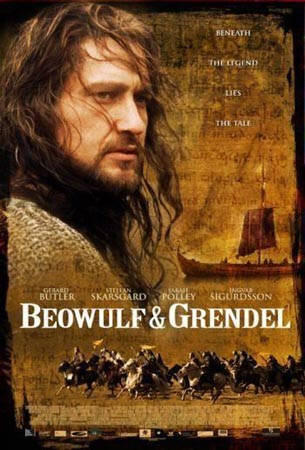
Director Sturla Gunnarsson brings to life Beowulf & Grendel, one of the earliest Anglo-Saxon epic poems. Rather than a literal adaptation, he presents us a story that could have inspired the myth. The film traces the poem as it progresses and many familiar scenes are brought to life with an added air of truth and reality. Some scenes add more depth to the story, as do certain characters; the best being the somewhat-mad, Christian priest, who gains converts throughout the film, including Danish King Hrothgar, who Beowulf and his fellow Geats have come to help. By the end, a few of Beowulf’s men have converted and we see how the Christian faith came to be a part of this heroic tale. On the other hand, we have Selma the witch, who can be seen as a link to Grendel as well as to the old gods of the land.

Beowulf & Grendel opens with a prologue as to why Grendel hates the Danes; his father was killed as a very young Grendel looked on. Throughout the film Beowulf has to put this story together for himself, with the aid of Selma. Along the way he draws his own conclusions and can see that Grendel’s fight is not with him and that is why Grendel will not fight Beowulf or his men. As Beowulf learns more, he seems less enthused about fighting Grendel, although while trying to accomplish their task to rid Daneland of this evil they bring Grendel’s wrath down upon themselves.

Yet, even the death of Grendel seems less at the hands of Beowulf and more Grendel’s own doing. Grendel’s death is a good example of clearing away the myth; we get a more realistic take on how this encounter between these two warriors might have ended. The poem has Beowulf’s grip so powerful that he just rips off Grendel’s arm but here we have Beowulf tying his arm in an effort to capture him. As Grendel makes his leaping escape from the top of the mead hall, he becomes trapped and like a caught animal hacks his own arm off rather than be taken alive.

Now the death of Grendel’s sea hag mother is truly at the hands of our hero, and even with this myth-buster approach to the story, it seems unrealistic. It’s one of the only aspects of the film that doesn’t jive so well, along with Sarah Polley as Selma the witch. She’s not bad, but her voice is out of place with this cast of European-born, heavy-accented actors. I find the sea hag monster unbelievable where the forgotten Neanderthal view of Grendel the troll makes more sense. With no computer graphics, the special effects costumes, at times, look a bit hokey.

We see events through Beowulf’s reasonable eyes and learn how some things a hero must do aren’t always justified. His struggle is what makes for a fascinating watch. Gerard Butler as Beowulf does a fine job making a very believable hero in a time of change. The film also gives us a good look at Beowulf and his Geat pals’ camaraderie, as we see them laugh and enjoy themselves like boys on an adventure. At times, Beowulf & Grendel is intentionally comical, with scenes very reminiscent of Monty Python and the Holy Grail, making the film much more entertaining. In some of the deleted scenes we can see more of that comic, playful side to these men.

In the audio commentary and the “Wrath Of Gods” short featurette from the documentary on the making of Beowulf & Grendel, we learn of the harsh weather conditions in this beautiful land and the effect it had on the shooting of this film. Many times production was almost stopped due to extremely high winds and hard falling rain. No one was seriously hurt, but some equipment and a few vehicles where damaged. Thankfully the film was finished and we get to see another attempt to put Beowulf on film in a somewhat factual manner, much the way Michael Crichton tired to do with his book Eaters of The Dead, which was made into The 13th Warrior staring Antonio Banderas.